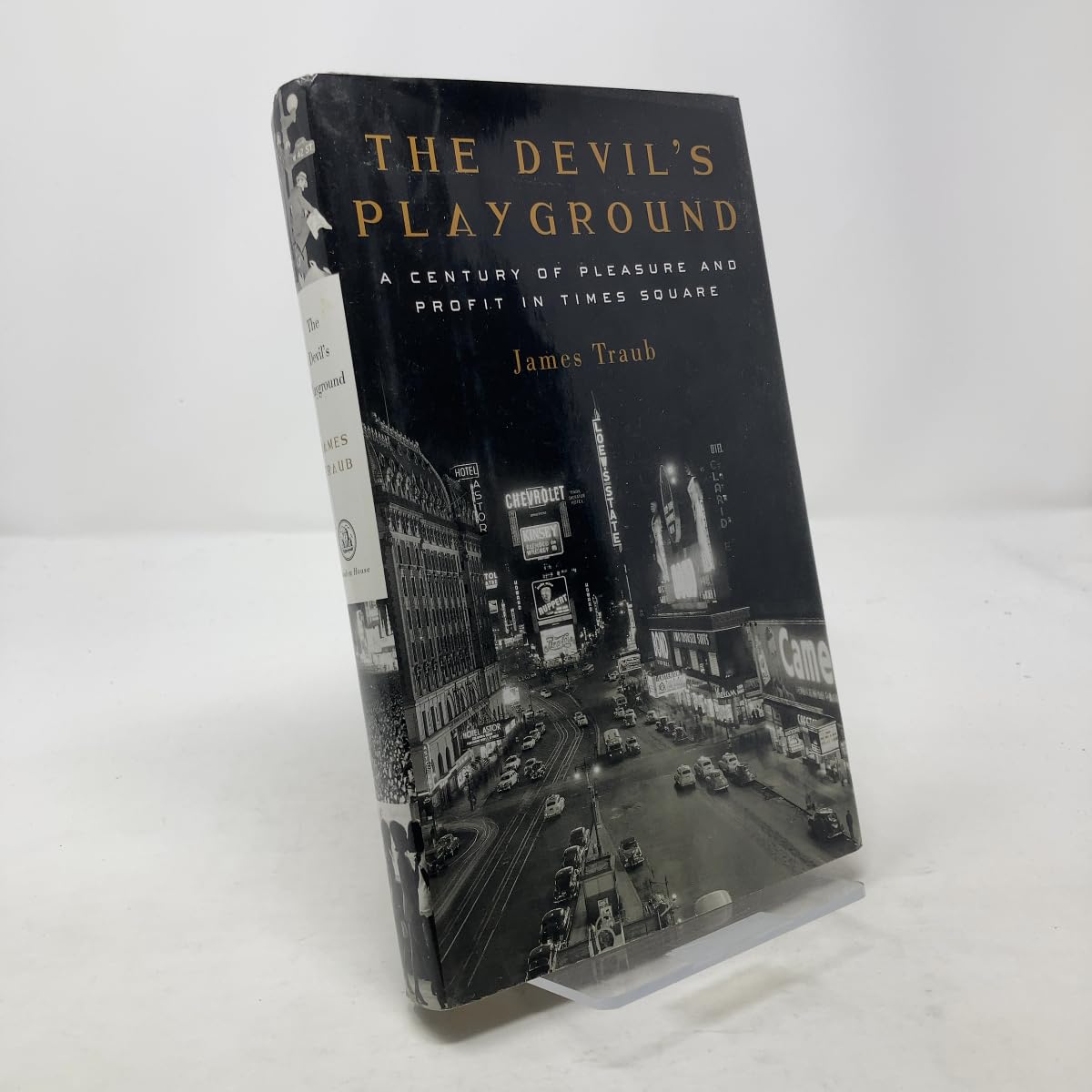
The Devil's Playground: A Century of Pleasure and Profit in Times Square
$21.71
by James Traub



As Times Square turns 100, New York Times Magazine contributing writer James Traub tells the story of how this mercurial district became one of the most famous and exciting places in the world. The Devil’s Playground is classic and colorful American history, from the first years of the twentieth century through the Runyonesque heyday of nightclubs and theaters in the 1920s and ’30s, to the district’s decline in the 1960s and its glittering corporate revival in the 1990s. First, Traub gives us the great impresarios, wits, tunesmiths, newspaper columnists, and nocturnal creatures who shaped Times Square over the century since the place first got its name: Oscar Hammerstein, Florenz Ziegfeld, George S. Kaufman, Damon Runyon, Walter Winchell, and “the Queen of the Nightclubs,” Texas Guinan; bards like A. J. Liebling, Joe Mitchell, and the Beats, who celebrated the drug dealers and pimps of 42nd Street. He describes Times Square’s notorious collapse into pathology and the fierce debates over how best to restore it to life. Traub then goes on to scrutinize today’s Times Square as no author has yet done. He writes about the new 42nd Street, the giant Toys “R” Us store with its flashing Ferris wheel, the new world of corporate theater, and the sex shops trying to leave their history behind. More than sixty years ago, Liebling called Times Square “the heart of the world”—not just the center of the world, though this crossroads in Midtown Manhattan was indeed that, but its heart. From the dawn of the twentieth century through the 1950s, Times Square was the whirling dynamo of American popular culture and, increasingly, an urban sanctuary for the eccentric and the untamed. The name itself became emblematic of the tremendous life force of cities everywhere. Today, Times Square is once again an awe-inspiring place, but the dark and strange corners have been filled with blazing light. The most famous street character on Broadway, “the Naked Cowboy,” has his own website, and Toys “R” Us calls its flagship store in Times Square “the toy center of the universe.” For the giant entertainment corporations that have moved to this safe, clean, and self-consciously gaudy spot, Times Square is still very much the center of the world. But is it still the heart? *Starred Review* Traub has made a career out of writing about New York and its institutions. He has the right: he lives and breathes the city, and his prose tumbles out sparkling and effortless. His history of Times Square--its name was changed from Longacre Square in the spring of 1904 for the newspaper headquartered there--is a vivid and remarkably nonjudgmental tale. The "iron law" of Times Square, he writes, is "real estate turned to its most profitable use," and he carries that idea from rooftop gardens, vaudeville, and the magical year of 1927 through the speakeasies and nightclubs of the 1930s to the sinkhole of the 1970s and the square's current incarnation as the site of a family carnival. He doesn't miss a character--what made Times Square happen were personalities from reporter Walter Winchell and nightclub queen Texas Guinan to designer Tibor Kalman and the real estate Dursts. He segues smoothly from the assignations of boxer Primo Carnera at the Forrest Hotel to the effect of crowds on MTV's Total Request Live . He pauses in his archaeological reconstruction long enough to marvel at the length and depth of Irving Berlin's career and to admire the Ferris wheel inside the Toys R Us store. A fabulous read that quite nearly captures the "gorgeous disarray" and "epic higgedly piggedly" of the world's gathering place. For other slices of New York life, see Donna Seaman's Read-alike column, "Walkabout, New York Style," in the February 1, 2004, Booklist . GraceAnne DeCandido Copyright © American Library Association. All rights reserved praise for James Traub's previous works: City on a Hill “An excellent if sorrowful study of what City College has become since open admissions...informed, sympathetic, a heartbreaking picture of New York today.” — Alfred Kazin , The New York Observer “This is a deeply reported, lucidly written and clearly thought-out book—a book of merit.” — A. M. Rosenthal , The New York Times Book Review Too Good to Be True: The Outlandish Story of Wedtech “Traub...brings a novelist’s sensibility to the vastly complex story; his characters are so alive and the narrative so vivid that you feel like washing your hands every time you put the book down.” — John Schwartz , Newsweek As Times Square turns 100, New York Times Magazine contributing writer James Traub tells the story of how this mercurial district became one of the most famous and exciting places in the world. The Devil’s Playground is classic and colorful American history, from the first years of the twentieth century through the Runyonesque heyday of nightclubs and theaters in the 1920s and ’30s, to the district’s decline in the 1960s and its glittering cor