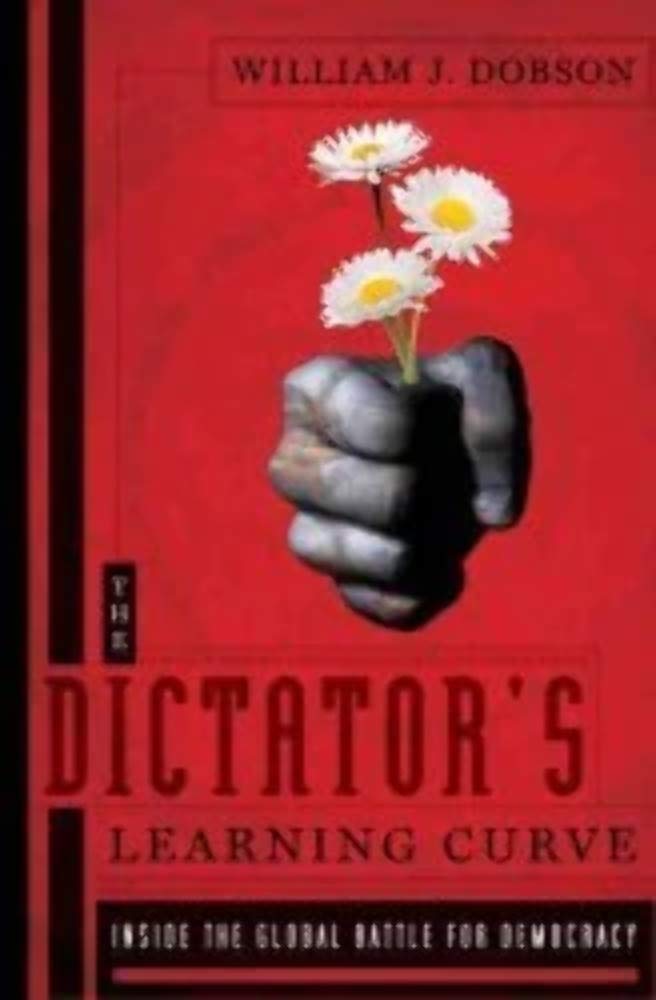
The Dictator's Learning Curve: Inside the Global Battle for Democracy
$23.73
by William J. Dobson



In this riveting portrait of authoritarianism in peril, acclaimed journalist William Dobson takes us inside the relentless battle between dictators and the people challenging their rule. We are witnessing an incredible moment in the war between dictators and democracy—waves of protests are sweeping Syria and Yemen, and despots have fallen in Egypt, Tunisia, and Libya. But the Arab Spring is only the latest front in a worldwide battle between freedom and repression, a battle that also rages in a dozen other countries from Venezuela to China, Russia to Malaysia. It is a struggle that, until recently, dictators have been winning hands-down. The reason is that today’s authoritarian regimes are nothing like the frozen-in-time government of North Korea. They are ever-morphing, technologically savvy, and internationally connected, and they have replaced more brutal forms of intimidation with seemingly “free” elections and talk of human rights. Facing off against modern dictators is an unlikely army of democracy advocates—students, bloggers, environmentalists, lawyers, activists, and millionaires—who are growing increasingly savvy themselves. The result is a global game of cat-and-mouse, where the future of freedom hangs in the balance. Dobson takes us behind the scenes in both camps, and reveals how each side is honing its strategies for the war that will define our age. Praise for The Dictator’s Learning Curve “Intelligent and absorbing…Dobson has interviewed more than 200 people, and his closely observed accounts of dictators’ increasingly sly methods to control their populations are haunting…. The Dictator’s Learning Curve is agile and light on its feet, but among its salient points is that pro-democracy movements need to be more than that. Happy thoughts and hippie clothes are not enough….Mr. Dobson’s book, with luck, will find its way into the hands of people who aspire to be free. They’ll find optimism here, but hard realities as well.” —Dwight Garner, The New York Times “Tough-minded without being cynical, and hopeful without being optimistic, The Dictator’s Learning Curve is a rare book—and a bracing read.” — The Atlantic “Dobson has invested time and insight, from China to Venezuela, and Egypt to Russia, trying to capture the shape-changing nature of modern authoritarianism, and the resourcefulness and wit of its opponents….[He] captures empathetically the skill and insight of modern neo-despots – in much the way their more successful opponents do….Rare is the book on dictatorship that can end on an uplifting note that its narrative carefully substantiates." — Financial Times “When Dobson is in conversation with the people who are finding new ways to work against the more 'nimble' systems of today’s autocrats, the book is at its best. We meet a Chinese free-speech lawyer, a Russian environmental activist, and an Egyptian cop-turned-human-rights-lawyer-turned-exiled-dissident, who offers tips to youth activists on what police response they can expect. We meet Egyptian protesters who take the brunt of later-2011 military violence, and we join in an afternoon walk that’s actually a political protest in Beijing. We watch with Dobson as the Chinese use not tanks and guns, as in Tiananmen Square in 1989, but 'street repair' closures and sidewalk-washing tasks to clear crowds who’d thought they might try a 'Jasmine Revolution.' It’s a far subtler form of power, but just as effective.” — Christian Science Monitor "After a remarkable year in which citizens of a dozen countries have challenged their authoritarian governments, readers will welcome veteran journalist Dobson’s overview of the complicated dance of adaptation by the world’s dictators and those who resist their oppressive power....A timely, valuable contribution to readers’ understanding of global unrest." — Booklist "[Dobson] writes with exemplary clarity and a sharp eye for color....Timely, authoritative, and as readable as a novel, this is one of the season's most resonant books — not least because it ends on a note of guarded hope for the future." — Prospect “William J. Dobson’s exploration of the contest between contemporary dictatorships and those who rebel against them is valuable because it offers a sober analysis of both sides. Dobson traveled nearly 100,000 miles researching this book, which takes a close look at the face of modern authoritarianism....His book may be about the struggle for freedom of other countries’ citizens, but there are lessons in it for the preservation of our own.” —Washington Post “[A] thoughtful journey through formidable dictatorships of our time...Instead of offering caricatures of vintage dictators, Dobson observes the more dangerous trend – of dictators adopting the form of democratic governance, while draining it of any substance.” — The Independent “Colorful and sharply reported.” — Bloomberg BusinessWeek “Fascinating...Some of Dobson's most astute observations come from his re