The Disability of Color: Gulf Coast Creoles Reclaim A Future – 1800 to Present (Torn Apart)
$24.00
by Richard Hobcraft Allan III



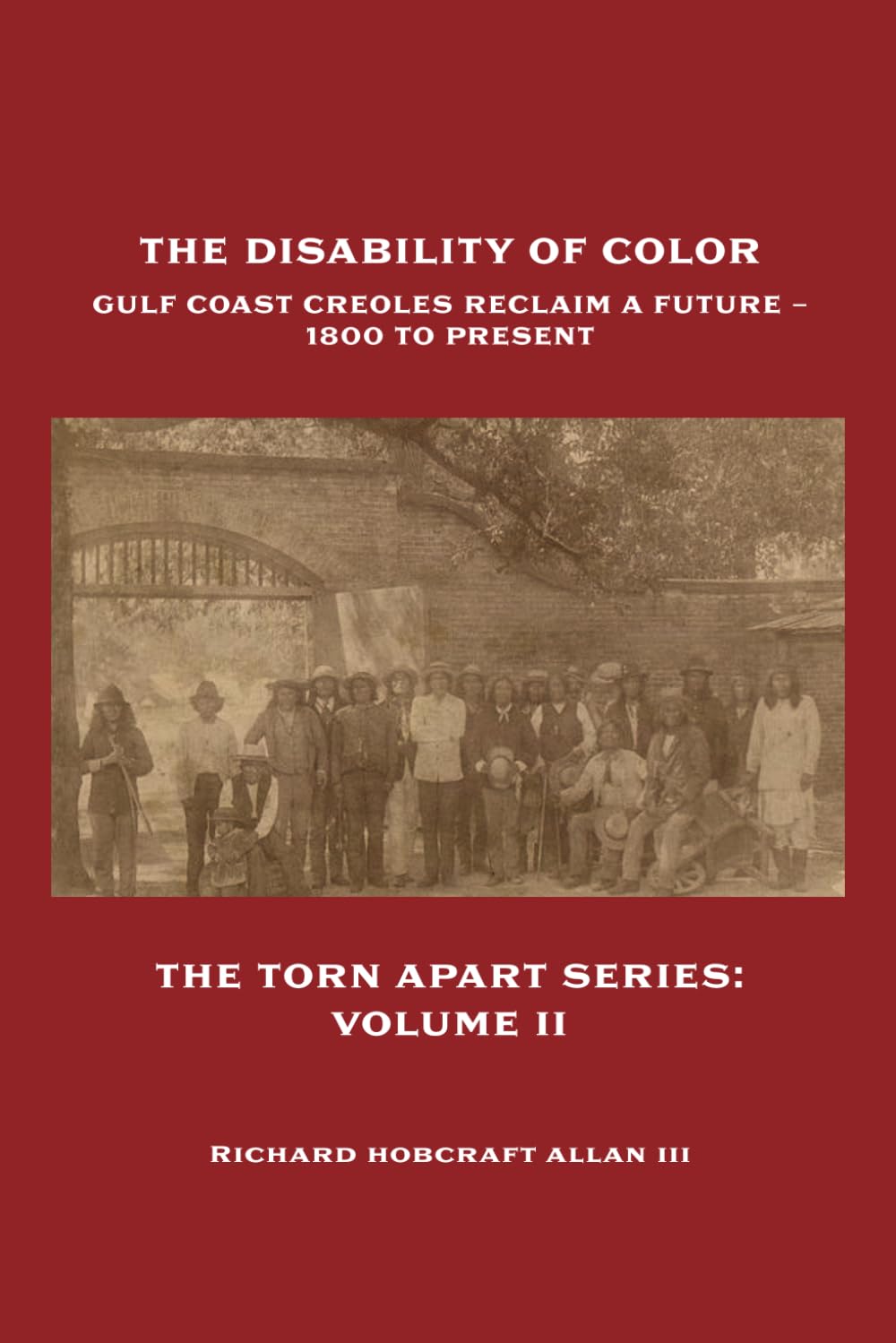
Volume II, The Disability of Color' s first segment is Book Three— Welsh Clanne Lewis , as Edwin Lewis marries into the Gulf Coast Baudrau family. Book Four, The Disability of Color, heralds the arrival of Anglo-American racism in the Cotton South. On the Gulf coast this harmed and disinherited the tribal people who managed to escape transportation to Indian Territory. The history of the Live Oak Choctaw tribe that emerged after the 1830s was one of severe discrimination for almost a century. In the Jackson County Mississippi and MoWa Choctaw Alabama regions, large land parcels reserved for them were stolen or usurped by official corruption. In 1814 a valuable 90-square-mile tract of virgin timber and farmland was recorded in Louisiana colonial deeds by the J-B Baudrau extended family lines, who protected it in the name of white and Black Creole Indians living along the central gulf coast. Readers who have studied the life of John-Baptiste Baudrau II (Vol. I of the Torn Apart series) are aware of his heroism and tragic death. The latter exemplifies an early decision by governments to impose denial of civil rights to dark-skinned people in the new-designated Mississippi Territory. Edwin Lewis and Alfred E. Lewis - that giant Choctaw leader’s grandson and great grandson – experienced lives of complicated struggle during the 1812-1886 era. Each of them became land-reclaiming leaders supporting the Creole families surrounding them. Each faced vicissitudes and conflicts as challenging as their Indian ancestors. Their strong wives Marguerite and Ann worked beside them in a time when Choctaw and French were the primary languages and culture. West Florida’s rebellion, Jackson’s repulse of British invaders, slave smuggling commerce and vast cotton riches led to the Mobile assassination of abolitionist Sheriff Edwin Lewis. Pascagoula Choctaws emigrated west to avoid coming Anglo oppressors and Creole gypsies moved down to occupy their Iowana village. Bands of Coushattas and Alibamons also moved to Spanish Texas. The life of Creek War leader Jim Boy exemplifies this tragic era. Coming outcomes of Mexican War impact the French Coast, foreshadowing secession and the Civil War. Although Lewis and Lord families joined the Confederacy, dozens of Colored Creoles and other enslaved workers escaped to barrier islands and served on Admiral Farragut's gunboats. Black Cattleman Severin Baudrau gave his 200 head of livestock as food for these Union Navy vessels as they halted blockade runners, captured Mobile, and signaled the big war’s end. White Camelia and Jim Crow oppressions commenced. An Epilogue mourns the imprisonment near Mobile of our country’s last Indian resisters, Geronimo and his Chiricahua band. Yet it also celebrates the rise of Creoles and others in modern times to challenge racism, welcoming in a new progressive spirit to the old French Coast. Help spread the word about the Torn Apart series, an inspiring and too-long-kept-hidden history of North America.