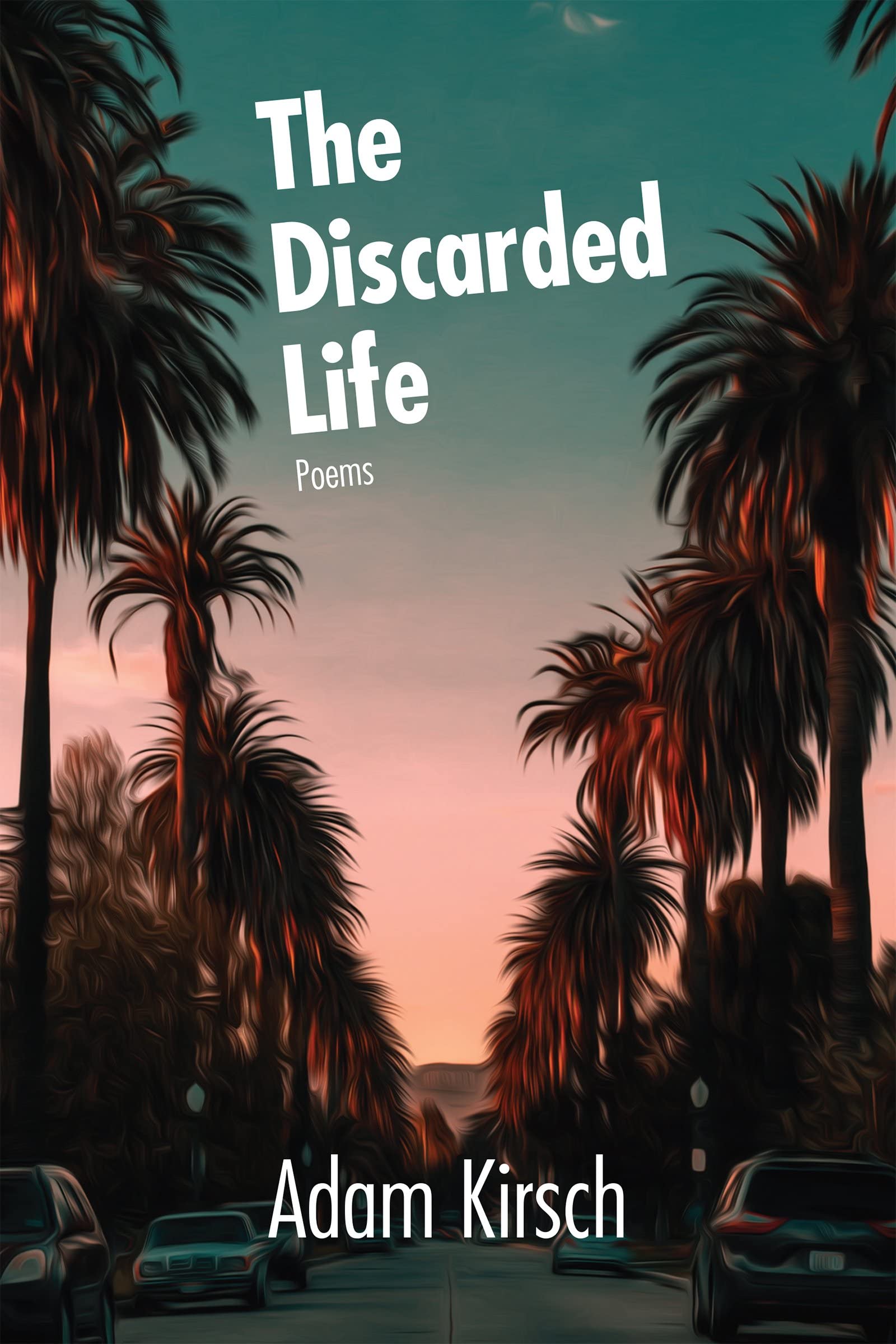



In these moving and meditative poems, Adam Kirsch shows how the experiences and recognitions of early life continue to shape us into adulthood. Richly evoking a 1980s childhood in Los Angeles, Kirsch uses Gen X landmarks—from Devo to Atari to the Challenger disaster—to tell a story of emotional and artistic coming of age, exploring universal questions of meaning, mortality, and how we become who we are. "Out of memory’s dreamlike whoosh, Adam Kirsch fixes scenes of his Californian boyhood in flowing blank verse, holding each cameo up to the light then setting it back down with 'the reckless joy of getting rid.' Most moving are the child’s deep misgivings about a world he can only begin to know in fits and starts, the unnerving self-doubt that resolves itself into poetry. This is an artist’s coming-of-age for the ages. It took my breath away." —David Yezzi, author of Black Sea “'There is no I,' writes Adam Kirsch, 'to be born or die.' His new collection takes the stuff of selfhood—memories, longings, disappointments—and gives them 'a decent burial in words.' It is an autobiography, a farewell, and a reckoning, best illuminated by his own culminating image of a bonfire—or, perhaps, a funeral pyre—incinerating the fond vestiges of childhood and adolescence. Each act of disposal is an act of composition, and in these poems, Kirsch composes the years of his life into treasures." —Amit Majmudar, author of What He Did in Solitary "The Discarded Life is a wonderfully seaworthy and streamlined vessel that carries us capably through the treacherous straits of youth and the pensive, open seas of adulthood." —Leslie Monsour, The Los Angeles Review of Books "Kirsch writes poetry that is self-effacing but not abject, whose formal audacity is undercut by its sense of perspective. The poet’s mind, Kirsch seems to suggest, grows when it knows its limits."—Anahid Nersessian, The New York Review of Books Adam Kirsch is a poet and critic whose writing appears regularly in The New Yorker and other publications. He is the author of three previous collections of poetry and several books of criticism and biography, and has received a Guggenheim Fellowship. An editor at the Wall Street Journal , he has taught at Columbia University and Sarah Lawrence College. He was born in Los Angeles and now lives in New York City. Three muppets, alternating in a rhyme— Cat, sat, hat, perhaps, or ball, hall, wall— Seemed as surprised as I was when a fourth Darted between them and the camera lens, Shouting the rhymes that he had taken over As if they were a war-cry or a curse. Whatever gentle souls at PBS Designed the skit or held the muppet-strings Would have been shocked to see the way I tore In sudden terror from the living room, A categorical, instinctive fear That had no remedy or explanation, And wouldn’t be repeated till the night, Years later, when the screen of my Atari, Normally filled with blocky cars and spaceships, Vomited up a solid wall of symbols— Hashmarks, exclamations, ampersands— My brain could not decode or tolerate. If nothing’s been as terrifying since, Perhaps I owe it to those early glitches That taught me how to apprehend the form Disaster takes, the sudden rushing-up Of something that is not supposed to be.