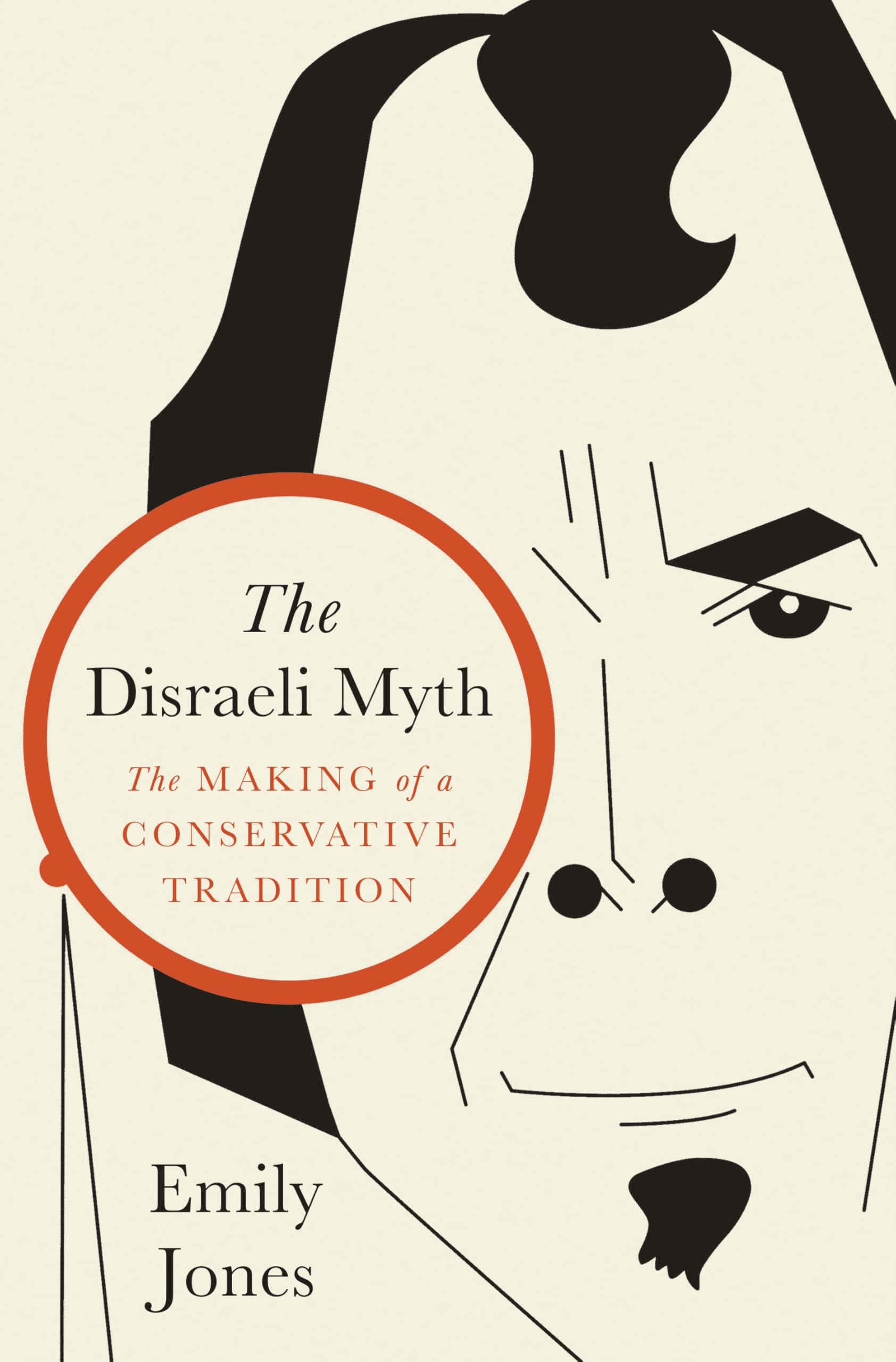



Tracing the multifaceted construction and deployment of the Disraeli myth and its legacy in Conservative (and conservative) politics During his lifetime, Benjamin Disraeli, the late-Victorian Conservative Prime Minister (and popular novelist), was often branded as unprincipled and opportunistic—claims that were frequently laced with antisemitism. Yet in the century following his death in 1881, Disraeli’s life and ideas were appropriated, reconstructed and circulated to cast him as the founder of a socially minded “One Nation” brand of British conservatism. In this compelling study, Emily Jones traces the mythologising that made Disraeli a touchstone for Conservative (and conservative) politics. Jones shows how each generation and its political thinkers—from Karl Marx to Margaret Thatcher—has made and remade Disraeli in its own image, seeing in him a source of inspiration or legitimation in different contexts and in support of disparate policies. Drawing on sources that range from political speeches to Hollywood films, Jones charts the posthumous transformation of Disraeli into a paragon of “One Nation” conservatism. A mythical Disraeli was invoked by contemporaries developing distinctly Tory conceptions of democracy, empire and social policy that nonetheless reaffirmed the importance of social hierarchy, private property and low taxation. As the two-party system began to realign around an axis of welfare and economic management in the interwar period, Disraeli’s political utility reached its zenith—a position, Jones shows, significantly bolstered by new interpretations of Disraeli’s Jewishness, the emerging university disciplines of history and English literature and the rise of the Labour Party. Jones’s authoritative account offers an illuminating new perspective on the role historical narratives have had in shaping accounts of political reality, ideology and identity in modern Britain. “Consistently interesting, intelligent and clear. Jones’s handling of the stages of Disraeli’s rehabilitation, prewar and then interwar, and her ability to tie it to contemporary events, are authoritative. No one has previously shown this systematically in the way that she does here.”— Jonathan Parry, University of Cambridge “Thoughtful and wide-ranging. What this book offers is the story, not of a ‘great man’ and his memory, but of a living tradition, made and remade in changing political contexts, that tells us as much about the politics of those who sought to shape that tradition as it does about the object of their admiration.”— Robert Saunders, Queen Mary University of London “A compelling and timely account of the afterlives of Disraeli. With flair and great originality, Emily Jones shows how the most enigmatic of Britain’s prime ministers has been kept alive by posterity, not just as a lodestar for conservatism, but also as a cultural icon. Modern political history does not come much better than this.”— Miles Taylor, author of Empress: Queen Victoria and India “A stunning and thought-provoking history of modern C/conservatism. In this deeply researched and elegantly written account, Emily Jones reveals when, how, and why Benjamin Disraeli came to occupy an exalted, mythologized position as the founder of “One Nation” Conservatism. The Disraeli Myth cements Jones as a foremost authority on the history of C/conservative thought and politics. Indispensable reading for anyone interested in the relationship between myth-making and political ideology in the twentieth century.”— Claire Arcenas, author of America's Philosopher: John Locke in American Intellectual Life “Few political figures in British history have inspired as many overlapping and sometimes conflicting political movements and traditions as Benjamin Disraeli—from Tory socialism to “One Nation” Conservatism, Tory democracy or Thatcherism, and everything in between. Emily Jones masterfully shows how Disraeli’s admirers and opponents flexibly, contentiously and creatively reinterpreted his life, ideas and legacy, laying the foundations of modern conservatism in the process. At a time when the meanings of conservatism and democracy have become newly fraught and fragile, this book reminds us why Disraeli’s afterlives continue to matter.”— Glory Liu, author of Adam Smith’s America: How a Scottish Philosopher Became an Icon of American Capitalism Emily Jones is senior lecturer in modern history at the University of Manchester and the author of the prize-winning Edmund Burke and the Invention of Modern Conservatism, 1830–1914: An Intellectual History . She has written for such publications as The New Statesman , The Financial Times and History Today and she has appeared on BBC Radio 4, ORF Austria and ABC Australia.