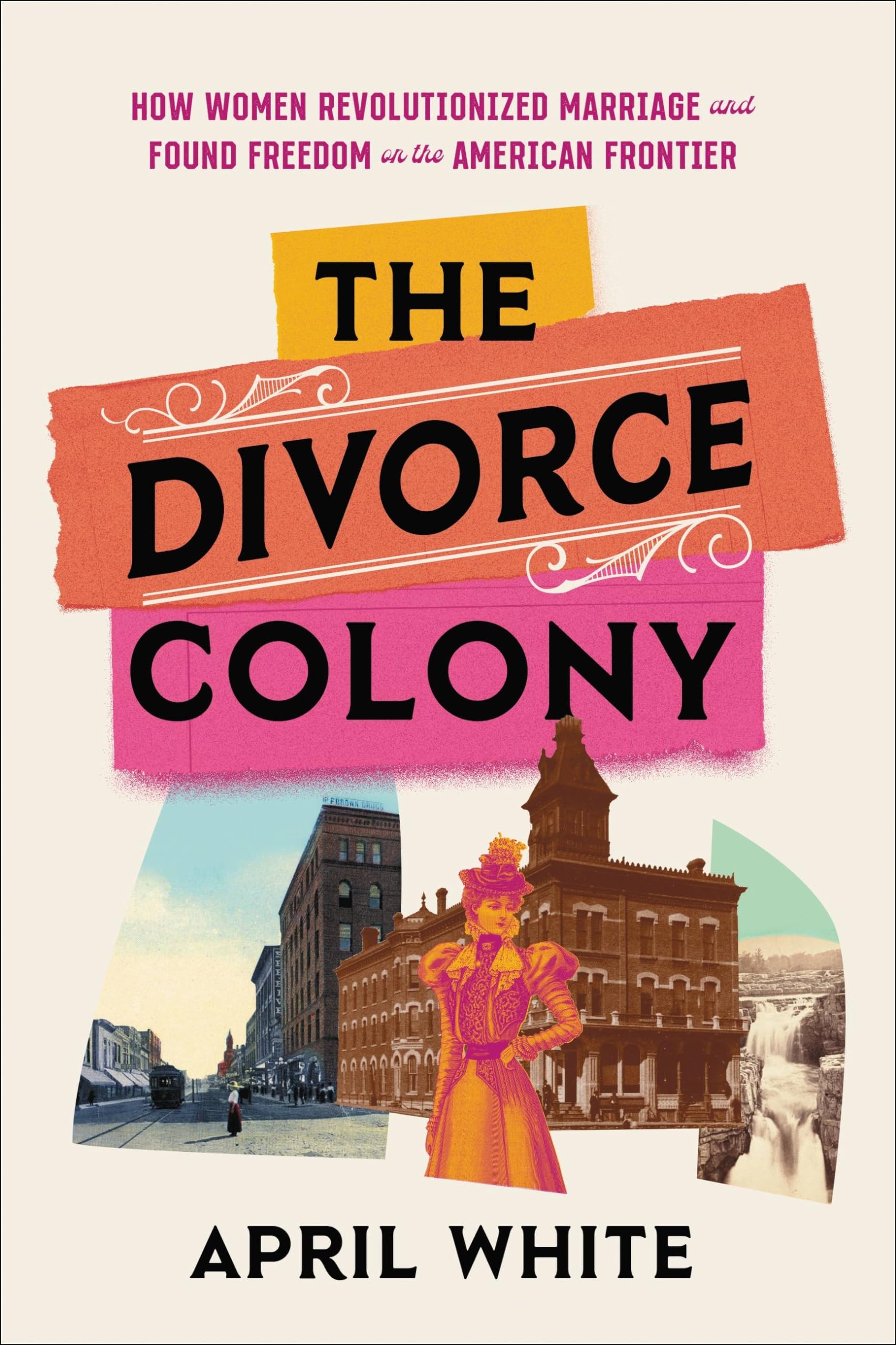
The Divorce Colony: How Women Revolutionized Marriage and Found Freedom on the American Frontier
$15.48
by April White



** SMITHSONIAN MAGAZINE, "10 BEST HISTORY BOOKS OF 2022"** **AMAZON, "BEST BOOK OF THE MONTH (Nonfiction)"** **APPLE, "BEST BOOK OF THE MONTH"** From a historian and senior editor at Atlas Obscura, a fascinating account of the daring nineteenth-century women who moved to South Dakota to divorce their husbands and start living on their own terms For a woman traveling without her husband in the late nineteenth century, there was only one reason to take the train all the way to Sioux Falls, South Dakota, one sure to garner disapproval from fellow passengers. On the American frontier, the new state offered a tempting freedom often difficult to obtain elsewhere: divorce. With the laxest divorce laws in the country, five railroad lines, and the finest hotel for hundreds of miles, the small city became the unexpected headquarters for unhappy spouses—infamous around the world as The Divorce Colony . These society divorcees put Sioux Falls at the center of a heated national debate over the future of American marriage. As clashes mounted in the country's gossip columns, church halls, courtrooms and even the White House, the women caught in the crosshairs in Sioux Falls geared up for a fight they didn't go looking for, a fight that was the only path to their freedom. In The Divorce Colony , writer and historian April White unveils the incredible social, political, and personal dramas that unfolded in Sioux Falls and reverberated around the country through the stories of four very different women: Maggie De Stuers, a descendent of the influential New York Astors whose divorce captivated the world; Mary Nevins Blaine, a daughter-in-law to a presidential hopeful with a vendetta against her meddling mother-in-law; Blanche Molineux, an aspiring actress escaping a husband she believed to be a murderer; and Flora Bigelow Dodge, a vivacious woman determined, against all odds, to obtain a "dignified" divorce. Entertaining, enlightening, and utterly feminist, The Divorce Colony is a rich, deeply researched tapestry of social history and human drama that reads like a novel. Amidst salacious newspaper headlines, juicy court documents, and high-profile cameos from the era's most well-known players, this story lays bare the journey of the turn-of-the-century socialites who took their lives into their own hands and reshaped the country's attitudes about marriage and divorce. **Smithsonian Magazine, "10 Best History Books of 2022"** ** Library Journal , "Best Books of 2022"** **Washingtonian, "Best Books of 2022"** **Mental Floss, "Best Books of 2022"** Apple, “Best Books of the Year So Far" (2022), Apple, "Best Books of the Month” (June 2022) Amazon, "Best Books of the Month" in Nonfiction (June 2022) Booklist, "Book Buzz: Top Book-Group Picks for Adults From PLA 2022" Philadelphia Inquirer, "Best New Books to Read in June" Arlington Magazine , "10 Books to Read in June" The Everygirl, "The Most Anticipated Books of Summer 2022" Dakota News Now, "Popular local books to add to your must-read list" "An entertaining and edifying account of the divorce industry that emerged in Sioux Falls.”― Wall Street Journal "Filled with lurid details from contemporary newspapers, which breathlessly covered the most salacious divorce cases, the book cleverly examines how these bids for marital freedom reflected broader societal changes in Gilded Age America."― Smithsonian Magazine “White’s history of the Sioux Falls divorce colony is narrated energetically... A reminder, bright and sparkling for those who need it, that when endings are out of reach, so too are new beginnings.”― New Republic "April White’s riveting, proudly feminist book offers everything you’d expect from a rousing historical drama, but it’s entirely true... White vividly and entertainingly reconstructs a largely forgotten but vital chapter of American history."― Mental Floss "It’s essential feminist history. In White’s telling, it’s also a gossipy story of misogyny, millionaires, and murder."― New York Daily News "Through well-documented research, White melds the changing stances within the worlds of politics, religion, the courts and the growing nation's social culture, all of which were moving slowly, incrementally, more tolerant of necessary divorce."― Star Tribune "White’s book is as readable as her research is thorough. Her writing style is so engrossing that the book could be historical fiction, [even though] it is not."― The Sun "A fascinating read, and eerily pertinent to the rights of women today."― Historical Novel Society " The Divorce Colony delivers a delicious, cinematic tale of real-life scandal, suspense, and above all else, survival. It’s beautifully written, fiercely feminist, and best of all, a true page-turner from start to finish. It's a story I wish I had written." ― Abbott Kahler , New York Times bestselling author (as Karen Abbott) of The Ghosts of Eden Park "For those out there who have an ab