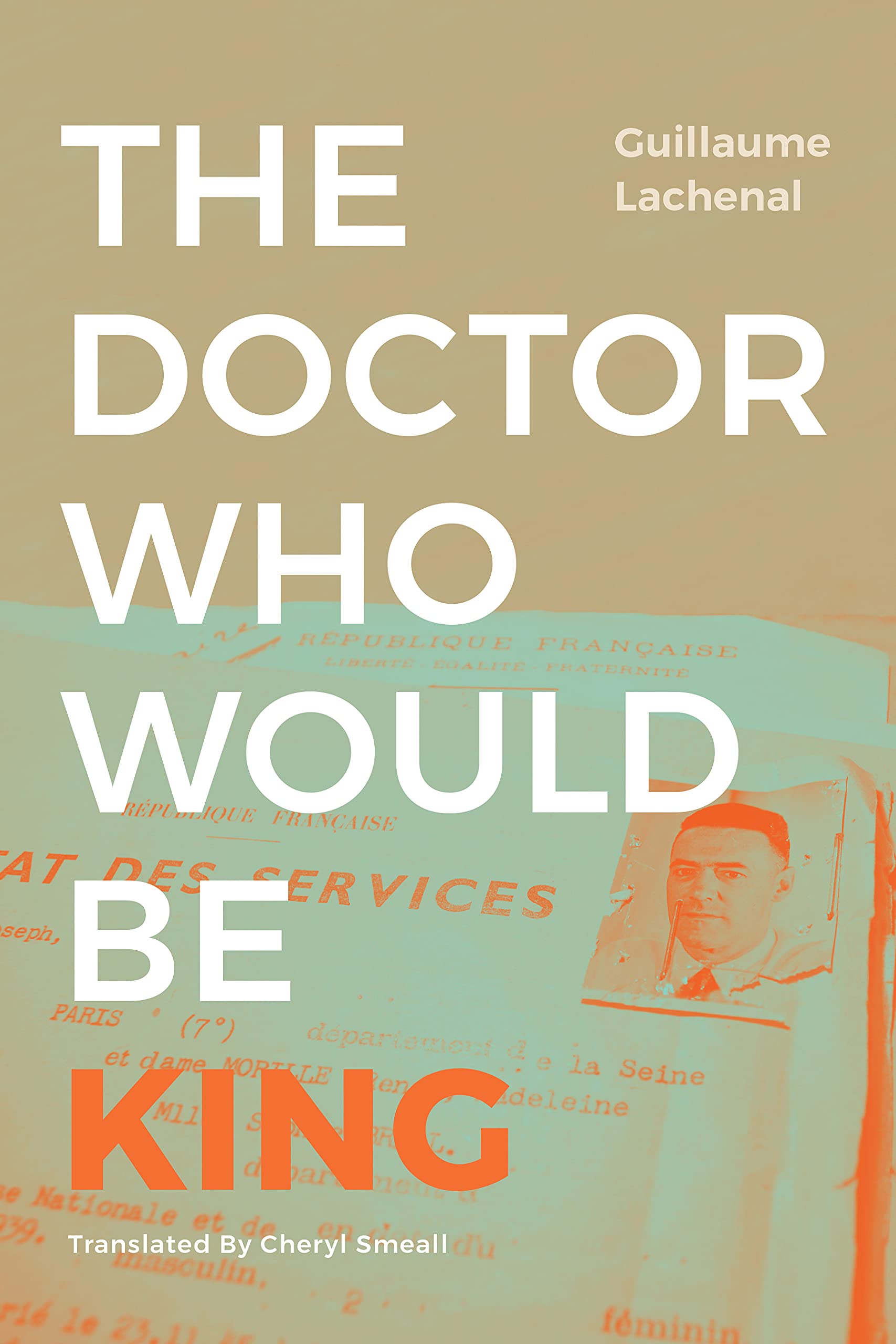



In The Doctor Who Would Be King Guillaume Lachenal tells the extraordinary story of Dr. Jean Joseph David, a French colonial army doctor who governed an entire region of French Cameroon during World War II. Dr. David—whom locals called “emperor”—dreamed of establishing a medical utopia. Through unchecked power, he imagined realizing the colonialist fantasy of emancipating colonized subjects from misery, ignorance, and sickness. Drawing on archives, oral histories, and ethnographic fieldwork, Lachenal traces Dr. David’s earlier attempts at a similar project on a Polynesian island and the ongoing legacies of his failed experiment in Cameroon. Lachenal does not merely recount a Conradian tale of imperial hubris, he brings the past into the present, exploring the memories and remains of Dr. David’s rule to reveal a global history of violence, desire, and failure in which hope for the future gets lost in the tragic comedy of power. “In this riveting account, Guillaume Lachenal discovers that French doctors seeking police powers and administrative control in colonial Cameroon did not lead to a health utopia, nor did these arrangements reverse decades of demographic decline in the battered colony. What they got was their own transformation into colonial governors. A superb translation of a gifted scholar and stylist, The Doctor Who Would Be King is as alive as any ethnography to social life in poorly known but much roiled parts of the French empire that once circled the globe.”― Paul Farmer, author of , Fevers, Feuds, and Diamonds: Ebola and the Ravages of History “[Lachenal] leaves us at a crossroads, torn as we are today between the WHO’s proclamations about the advent of global health and the disenchantment caused by emerging microbes and the worsening of inequalities. Depending on whether one reads The Doctor Who Would Be King as a novel . . . or as an essay on contemporary biopolitics, the reader will come out of it reinvigorated or shaken, but not unscathed.”― Anne Marie Moulin , L’Histoire “[Lachenal’s] investigation, in which dreams of grandeur, violence, and the tragedy of power are intertwined, is as fascinating as it is disturbing.”― Laurent Lemire , L’Obs "An absorbing . . . account of a French colonial doctor who was handed absolute political control of an African territory the size of Switzerland in the years 1939-44. . . . It is impossible not to feel the presence of Joseph Conrad’s tale of lordly isolation and madness. It is as if, by assembling this story from archival fragments and the oral accounts of present-day residents, Mr. Lachenal is seeking to bring Dr. David back to our metropolitan gaze in much the way Conrad’s Marlow sought to bring Kurtz back from the jungle."― Tunku Varadarajan , Wall Street Journal “[ The Doctor Who Would Be King ] is an expansive and masterful project whose major contributions are to the history of French colonialism and to historical research methodologies more broadly. . . . Readers . . . will enjoy the ride.”― Caitlin Barker , H-Sci-Med-Tech, H-Net Reviews " The Doctor Who Would Be King is a beautifully written, engrossing book that analyzes the career of a French colonial doctor in both Central Africa and Polynesia but also reflects on the thrills and pitfalls of historical research, the instability of historical narratives, and how traces of the past live on in the present. ... This superb book will be of interest to wide-ranging audiences, including historians of medicine, Africa, Polynesia, European empire, and beyond." ― Sarah Runcie , Isis "Skillfully translated by Cheryl Smeall, students of anthropology and history should find this an enlightening and enjoyable read."― Cathy Skidmore-Hess , Journal of Global South Studies “Like Joseph Conrad’s Heart of Darkness , Guillaume Lachenal’s The Doctor Who Would Be King tells a tale of good intentions run amok amid twentieth-century colonialism. Exhaustively researched, the story of ‘Dr. David’ and his dreams of an African health utopia, erected under French colonial rule, is both heartbreaking and fascinating.” -- Laurie Garrett, Pulitzer Prize winning writer and author of ― The Coming Plague: Newly Emerging Diseases in a World Out of Balance Guillaume Lachenal is Professor in History of Science, médialab, Sciences Po, Paris and author of The Lomidine Files: The Untold Story of a Medical Disaster in Colonial Africa . Cheryl Smeall is an independent scholar and translator.