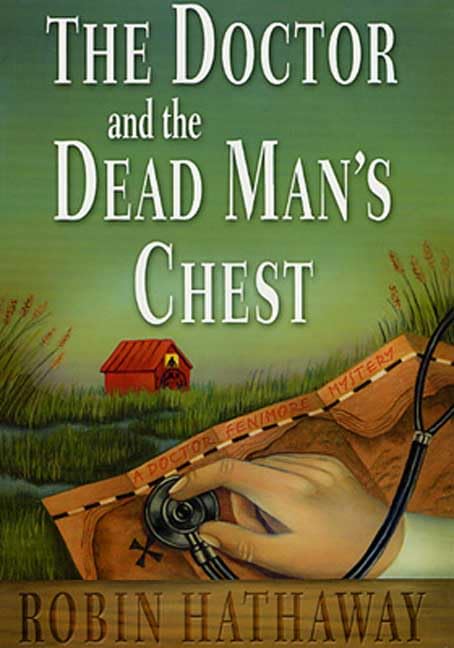



In Dr. Andrew Fenimores, third adventure, a patients call leads to more detective work than medical care. Lydia Ashley, owner of a large farm in southern New Jersey, is being systematically harassed by someone who wants her land. When Dr. Fenimore goes to stop the pranks, he learns that a hidden treasure is at the root of all the evil deeds. Like a contemporary version of TV's Dr. Marcus Welby, Philadelphia physician Andrew Fenimore still makes house calls for his patients, mostly elderly women. This third installment of the Fenimore series finds the doctor traveling to southern New Jersey to inspect some swampland left to him by a former patient. When Fenimore and his teenage helper, Horatio, are stymied by the impenetrable swamp, they instead visit another of the doctor's patients, Lydia Ashcroft. There they discover that, through a series of nasty pranks, someone is trying to scare Ashcroft into selling her lovely property. Worried about his patient's heart condition, Fenimore investigates the increasingly dangerous pranks, assisted by his no-nonsense nurse, Mrs. Doyle. When Doyle, who was staying with Ashcroft is kidnapped, the stakes are raised. Don't give this to anyone looking for a medical thriller (there is almost no medicine in the story), but it works just fine as a pleasant, lightweight cozy with some interesting historical tidbits about South Jersey. Jenny McLarin Copyright © American Library Association. All rights reserved PART ONEThe Doctor and the LawyerCHAPTER 1Dr. Fenimore had set this day aside to clean out his office files, and he was making good progress. Mrs. Doyle, his nurse-secretary-office manager, had been after him for years to clean out his father’s file drawers, but he had always come up with some excuse. Immediately after his father’s death, he had pleaded that it was too depressing. But as the years rolled on, he had to admit it was sheer laziness. Today, however, he was proud of himself. It was barely 10:00 A.M. and he had already reached the letter F.While perusing a folder labeled “Favorite Quotations” ( He would have filed it under Q, as “Quotations, Favorite”), he had come across a quote, carefully preserved by his father, that especially appealed to him. It appealed to him so much that he planned to ask Mrs. Doyle to type it up so he could frame it and hang it over his desk. The author was Thomas Jefferson, no less. And the part Fenimore liked best was: The physician is happy in the attachement of the families in which he practices. All think he has saved some one of them, and he finds himself everywhere a welcome guest, a home in every house. (A bit out of date in the age of “managed care,” he mourned.) But the next phrase still applied. If, to the consciousness of having saved some lives, he can add that of having at no time, from want of caution, destroyed the boon he was called on to save, he will enjoy, in age, the happy reflection of not having lived in vain. A bit awkward from the creator of the Declaration of Independence. Nevertheless, it summed up nicely Fenimore’s modest ambitions—to have done some good, little harm, and not have lived in vain. Fenimore slipped the quote out of the folder and laid it on his desk for Mrs. Doyle to type later.“Doctor …”Speak of the devil.“Yes?”“There’s a man to see you. A Mr. Detweiler.”“A patient?”“No. He said he was a lawyer.”Fenimore felt a small shock of alarm. In these days of excess litigation, even doctors with a clear conscience feared any unexpected visit from a lawyer. He hoped no one was suing him. If they were, it would be a first . “Well, send him in,” Fenimore said.Mrs. Doyle ushered in a tall, lean man in a rumpled suit. With his shock of black hair, scrawny neck, and prominent Adam’s apple (which was working overtime), he reminded Fenimore strongly of Abraham Lincoln. He wondered if the lawyer deliberately cultivated the likeness or just fell into it naturally. After the initial handshake and settling into chairs, Fenimore asked, “What can I do for you, Mr. Detweiler?”“This visit is more about what we can do for you,” the lawyer said, pleasantly. “I represent a former patient of yours. A Miss Smith.”Fenimore raised an eyebrow. Surely the man saw the humor in this. “I’ve had a number of patients named ‘Smith.’”“A Miss Reebesther Smith?”Fenimore relaxed. “I’ve had only one Reebesther Smith.” He remembered Reebesther Smith fondly. Her unfortunate name was the result of two well-meaning parents trying to please both sides of the family by naming their only child after both grandmothers—Rebecca and Esther. “Reebesther” was the sad result. But Reebesther had borne her name well, and had made no effort to change it, not even adopting a nickname.“Miss Smith …” The lawyer rummaged, at length, through a shabby portfolio and drew out a legal document. “Miss Smith,” he repeated, “has bequeathed to you a gift of real estate. But you may only claim it if you agree to certain conditions.”Fenimore was beginning to feel