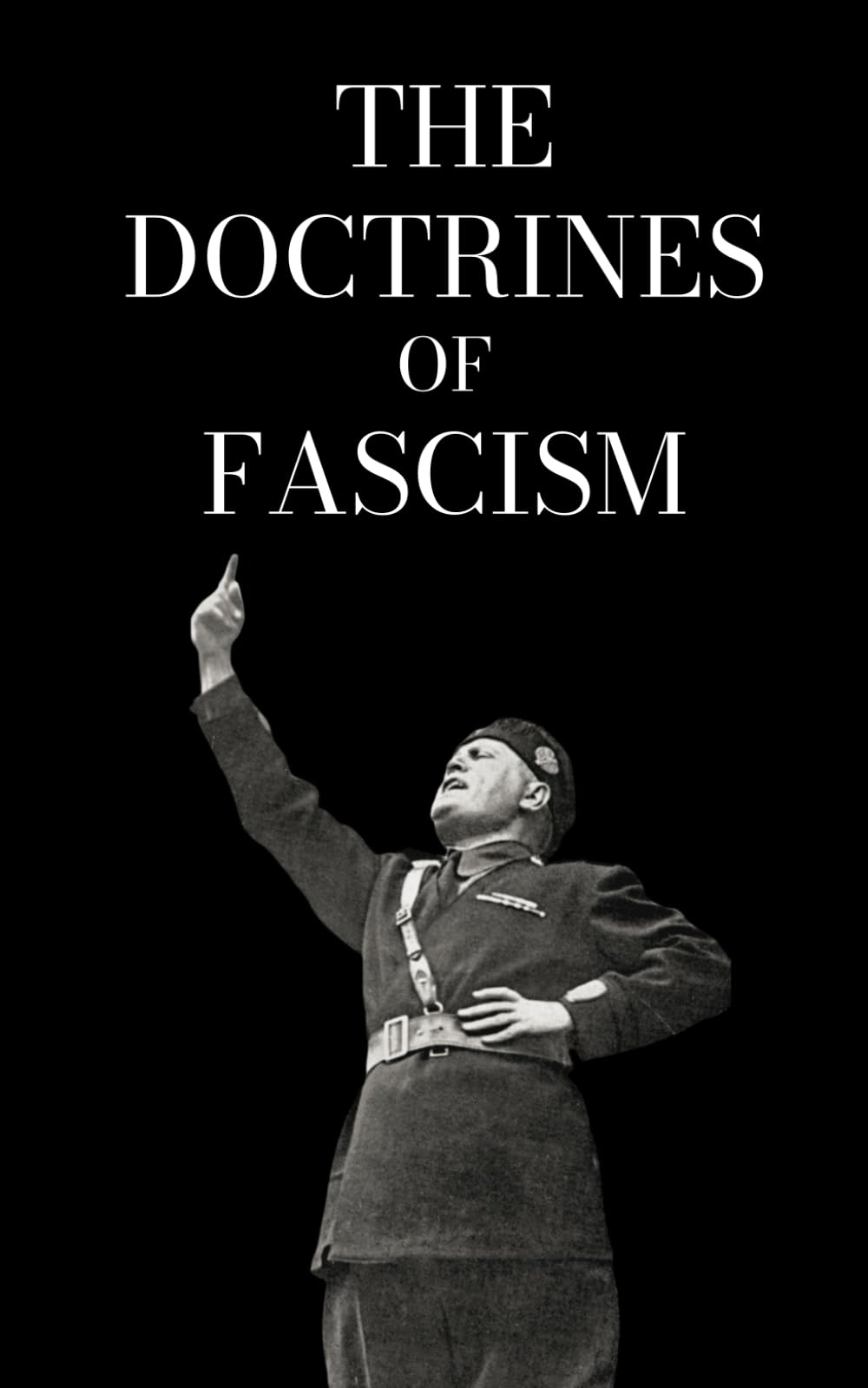



The Doctrine of Fascism (1932) is Benito Mussolini's official articulation of Fascist ideology, co-written with philosopher Giovanni Gentile. The book lays out the theoretical foundations of Fascism, emphasizing a rejection of liberalism, socialism, and individualism. At its core, Fascism asserts that the state is the highest and most meaningful expression of society, and that individuals only achieve true purpose and freedom through loyalty to the state. The work promotes authoritarian leadership, national unity, and the centralization of power, positioning Fascism as a bold, spiritual, and action-oriented response to the chaos of modern political systems. Mussolini also frames war and struggle as essential forces for national renewal, celebrating discipline, hierarchy, and sacrifice. He contrasts Fascism with what he sees as the moral decay of liberal democracies and the class conflict of Marxism, offering instead a vision of a unified, militarized nation under strong, centralized rule. The Doctrine of Fascism became a key text for understanding the ideological basis of Mussolini’s regime and a template for other fascist movements in 20th-century Europe.