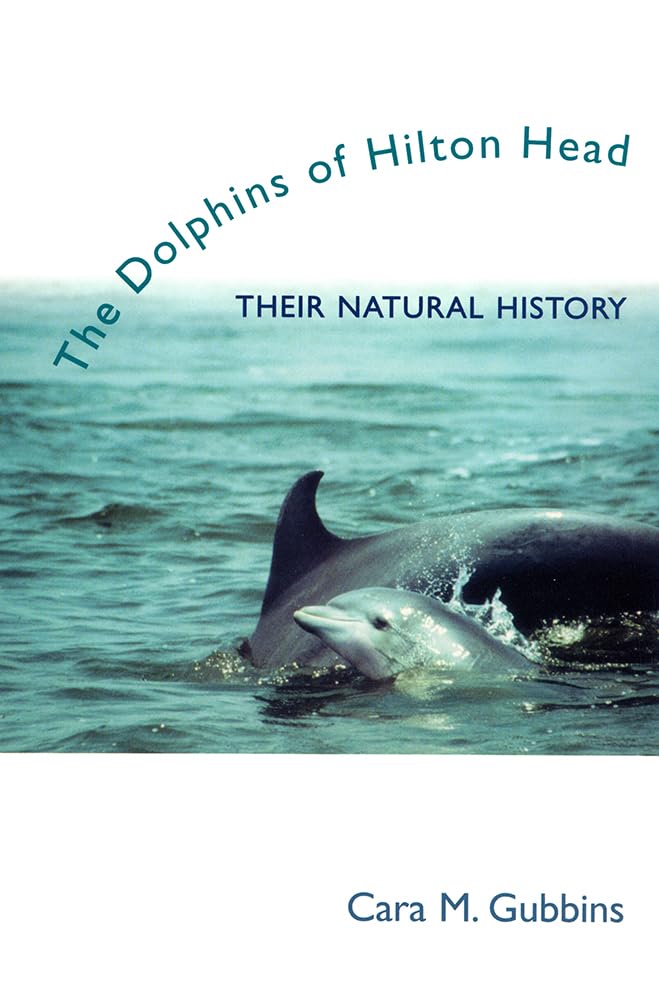



One population of a truly fascinating species The Dolphins of Hilton Head introduces readers to the unique population of bottlenose dolphins that inhabits the warm water and brackish salt marshes of South Carolina's inland coastal waterways. Drawing on years of research in Hilton Head and the latest discoveries of scientists throughout the world, Cara Gubbins describes this atypical habitat and explains how the distinctive behaviors of Hilton Head dolphins distinguish them from other populations. She identifies their particular behavior patterns, vocalizations, behavioral ecology, and local traditions. Gubbins also offers practical suggestions on how best to view and understand these animals while visiting the island. Framing her study with a general overview of dolphins and their habits, Gubbins explores the natural history, ecology, and evolution of free-ranging Atlantic bottlenose dolphins in South Carolina. She compares this population with others throughout the world to reveal the South Carolina dolphins' innovative foraging techniques, novel social system, and unconventional habitat use patterns. Gubbins debunks widely held myths about the animals, addresses conservation issues that will affect their future in South Carolina waters, and discusses environmental problems that threaten them worldwide. While Gubbins looks specifically at the dolphins of Hilton Head, her guide helps readers understand these animals throughout the world. She offers advice not only for spotting dolphins but also for interpreting such specific behaviors as feeding, socializing, resting, traveling, and communication. " The Dolphins of Hilton Head is written for the millions of us who watch with fascination as bottlenose dolphins cruise along our beaches from New Jersey to California. . . This book is for anyone that enjoys looking out to sea, or understanding nature, but it should be the beach book of 2003."― Whales Alive! "Black-and-white photographs enhance the adventurous and detailed 'reader friendly' text, making The Dolphins of Hilton Head a truly exciting account which is most especially recommended for marine wildlife students in general, and dolphin enthusiasts in particular."― Bookwatch "Fascinated by the form and behavior of bottlenose dolphins, we've come to know much about them, but our understanding is still far from complete. Cara Gubbins devoted years of careful study to broaden that understanding for all of us who are stewards of these and other marine animals."―David J. St. Aubin, Director of Research and Veterinary Services, Mystic Aquarium and Institute for Exploration Author of the popular biweekly column "Naturally Speaking" for the Hilton Head Island Packet, Cara Gubbins holds a Ph.D. in ecology, evolution, and conservation biology from the University of Nevada at Reno. Gubbins's research has been featured on CNN's "Science and Technology Week," the Discovery Channel, and National Geographic specials. Results of her work are regularly reported in the print media as well as in international scientific journals. Gubbins lives in Valrico, Florida. Preface One does not meet oneself until one catches the reflection in an eye other than human.--Loren Eisley, scientist and author Dolphins have always fascinated us. Centuries ago, someone must have looked into the eye of a dolphin and seen herself there, beginning the endless attraction between our two species. This glimpse of oneself in a dolphin s eye probably occurs daily somewhere in the world. Firmly rooted in our collective consciousness, appearing in our myths, art, and literature for millennia, dolphins seem to embody all the traits that we have and those to which we aspire. Their graceful form and joyful athleticism win our hearts, and the attraction remains. What is it that attracts humans to dolphins and other animals? E. O. Wilson, the Harvard University sociobiologist and author, believes that there is a genetic basis for our love of animals, something embedded in the very cells of our bodies that drive us to touch and interact with wild and domesticated animals. He calls this inherent tendency to focus on and affiliate with other life forms "biophilia." According to Wilson, our relationships with animals form a fundamental part of our existence. Modern people have a strong need to establish some kind of personal contact with wild animals, perhaps to end the "long loneliness" that the anthropologist and author Loren Eisley believes is the legacy of our evolution from our animal roots. Maybe we want to reach out and touch some primitive part of ourselves that we cannot access today. In a 1968 article, zoologist and author Desmond Morris recalls his first visit to a zoo: "That visit did more for my later interest in animals than a hundred films or a thousand books. The animals were real and near. If zoos disappear, I fear the vast urban population will become so physically remote from animal life that they will eventually cease to c