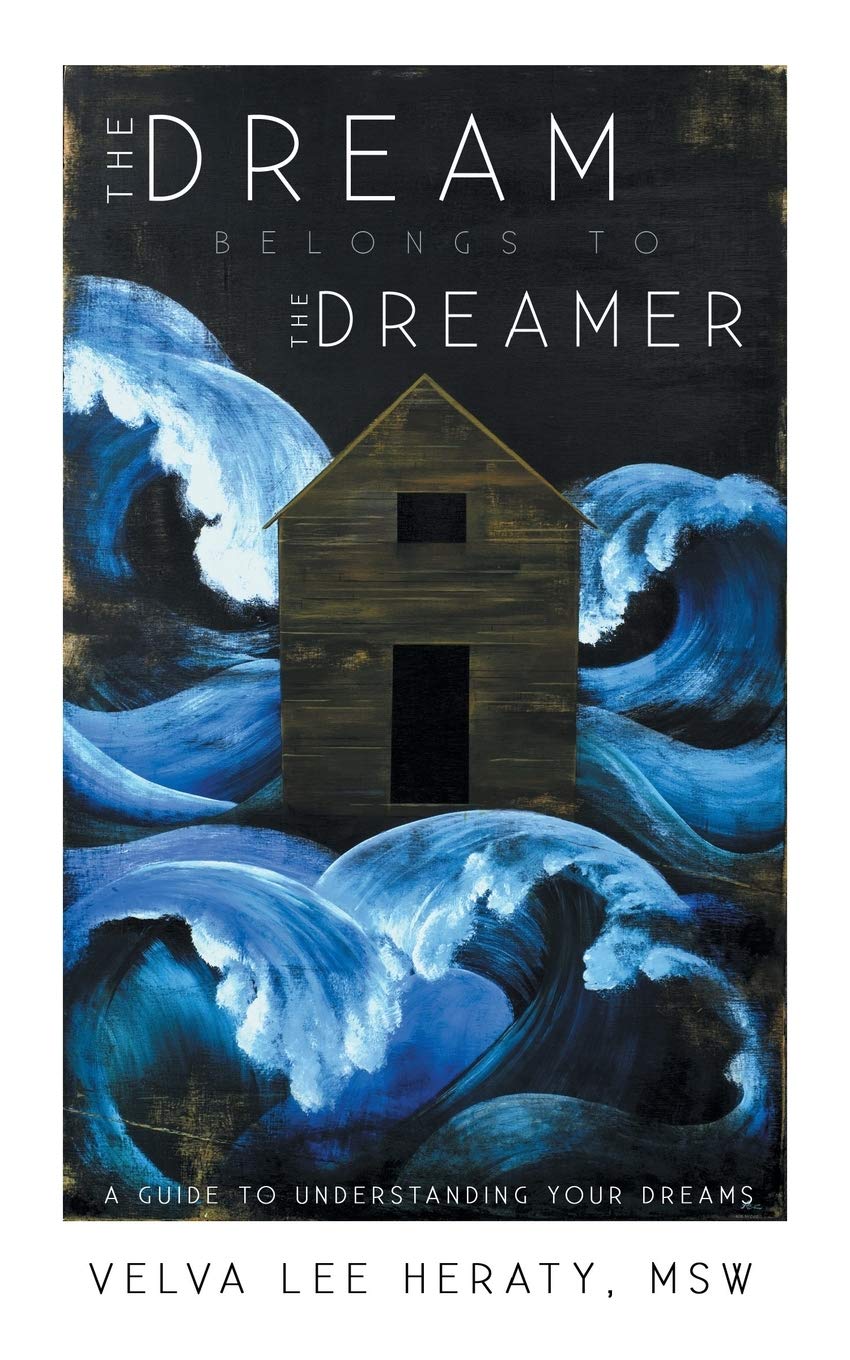
The Dream Belongs to the Dreamer: A Hands-On, How-To, Step-by-Step Guide To Understanding Your Dreams
$15.19
by Velva Lee Heraty



The Dream Belongs to the Dreamer is a compelling hands-on, how-to guide professionally designed to help you unravel the mysteries of your dreams. You will be expertly guided through chapter after chapter of steps, techniques, definitions, and examples to help you more fully understand your dreams on their deepest levels. Five fascinating true-life stories of insightful dream dialogues are included to show you just how rewarding and meaningful this new method, called Subjective Symbol Immersion©, truly is. Included are sections set aside for your personal notes and reflections so you can go at your own pace. In addition, to help make your dreamwork journey as meaningful as possible, there is a Dreamer's Toolkit of wonderful and fun exercises and a Glossary of Terms in the back of the book. Here is one reader's review: "From time to time I've been jolted by an extraordinary book that stops my world. It forces me to look at "reality" in a different way, a more expansive and meaningful way in which I can more easily connect to my true self. The Dream Belongs to the Dreamer is such a book. It will help anyone willing to apply its unique method to their dreams achieve a healthy and creative life in harmony and balance. I know it did for me" Stephen Danzig, President, The IDA Projects, London. The Dream Belongs to the Dreamer A Hands-On, How-To, Step-By-Step Guide To Understanding Your Dreams By Velva Lee Heraty Balboa Press Copyright © 2013 Velva Lee Heraty All rights reserved. ISBN: 978-1-4525-8712-7 Contents Preface, vii, Introduction, ix, About the Author, xi, Chapter I: Understanding the Challenge, 1, Chapter II: The Three Guiding Principles, 7, Chapter III: Finding the Primary Symbol Julia's Dream, 11, Chapter IV: Our Theoretical Guides A Brief Introduction, 19, Chapter V: To the Heart of Your Dreams, 23, Chapter VI: The Primary Symbol, 31, Chapter VII: Deeper Work with Symbols, 37, Chapter VIII: The Subjective Nature of Dreams Bill's Dream, 43, Chapter IX: Rest and Review, 51, Chapter X: Archetypes, 57, Chapter XI: The Primary Symbol as an Archetype Tom's Dream, 63, Chapter XII: Archetypes and Dream Themes, 73, Chapter XIII: The Shadow Transformed Amanda's Dream, 77, Chapter XIV: The Hero's Journey Peter's Dream, 89, Chapter XV: The Far Shore, 101, Reference I: What's Your Dream I.Q.?, 105, Reference II: Glossary of Terms, 113, Reference III: The Dreamer's Toolkit©, 121, Reference IV: Dream Momma's Art Gallery, 133, About the Cover Artist, 141, CHAPTER 1 Understanding the Challenge The first challenge to my traditional style of working with dreams led to the creation of the Subjective Symbol Immersion Method. It was a defining moment for me, one I thought about for months before my theory evolved. Here's what happened. One day a client, a young female flight attendant, said these wake-up words to me: "I don't think that's what it means, Velva." What? I thought. Of course that's what it means. I know what I'm doing. I continued to question her challenge, yet was committed to hearing her out. "Really? Well, OK, I'm open. Help me out here." "I think it means I need to find a new job. One that lets me stay home with my kids." Now, I don't remember the dream but I do remember realizing she was right. In her world that's exactly what the dream meant. I was thinking too much by the book, being too objective and theoretically focused. Too narrow and clearly working outside my client's frame of reference. I wasn't honoring her world, I was honoring the world of clinical theory and practice. After that session I remember thinking, "Well, it's her dream." From that day forward I began to look at dreams differently. It wasn't easy. At first, most of my clients didn't want to do the work. They didn't want to put the time and effort into something they felt so confused about. Something too mysterious. They would say to me words such as, "You're the expert," and, "You know better than I do." I realized I had an entrenched therapeutic model I had foolishly set in stone. Now that's not so bad as clients, like all of us, need predictability. However when it came to dream symbols I realized it was important for all my clients to put their own personal interpretations on the table first. I felt that this approach was like giving them seeds and a shovel, not a free meal. I believed that once they mastered this therapeutic task they would feel more confident and do the necessary digging into their own unconscious to find their own answers to the dream puzzle. Another change I made was to call myself a Dream Facilitator, not a Dream Analyst. That was helpful for new clients who didn't have any previous experience working with dreams. I also talked about the new, more personal and subjective model to my current clients. Looking back I realized about half of them were able to switch over. Most who did were in the two advanced therapy groups and were able to process the cha