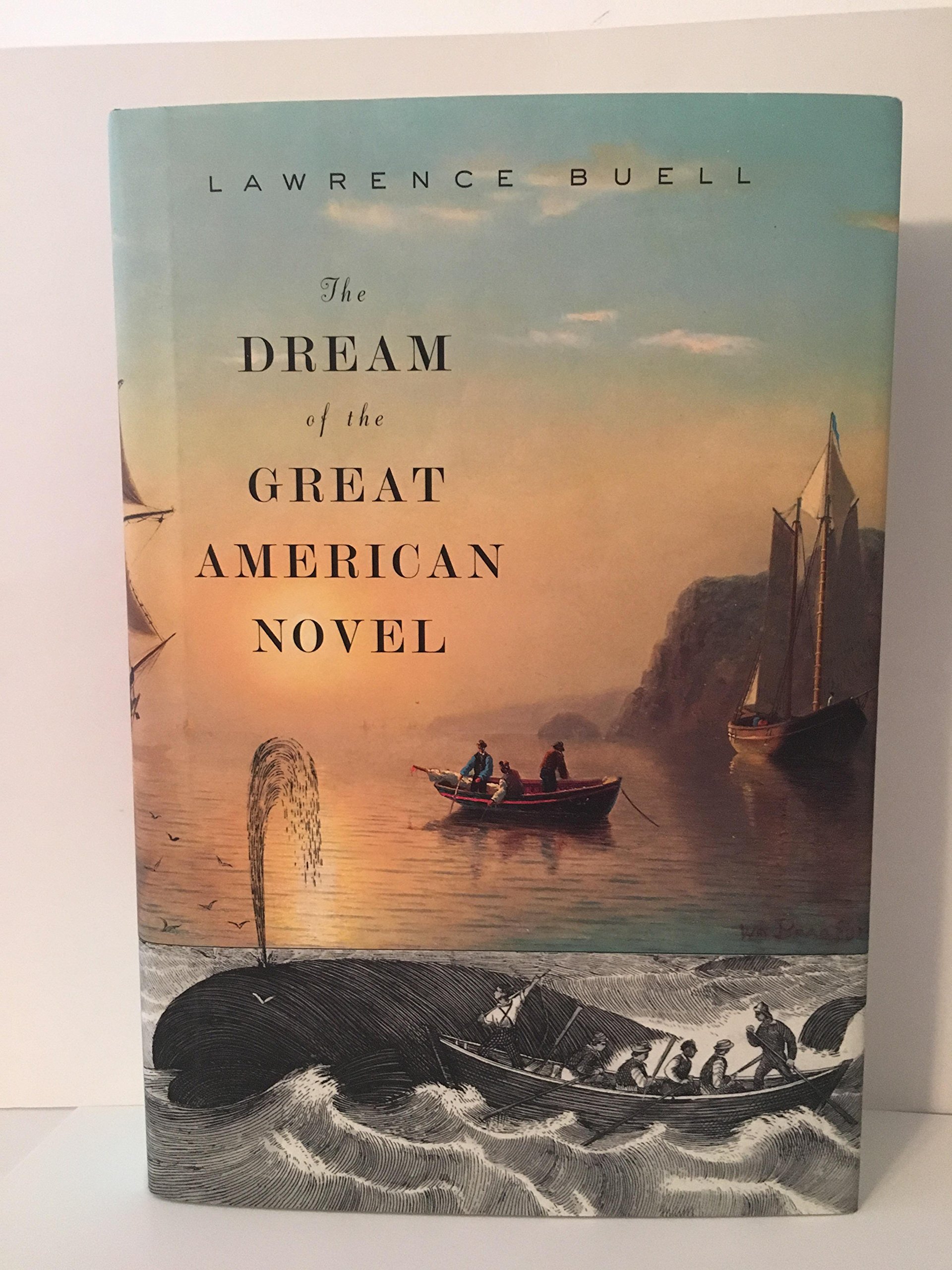



The idea of "the great American novel" continues to thrive almost as vigorously as in its nineteenth-century heyday, defying 150 years of attempts to dismiss it as amateurish or obsolete. In this landmark book, the first in many years to take in the whole sweep of national fiction, Lawrence Buell reanimates this supposedly antiquated idea, demonstrating that its history is a key to the dynamics of national literature and national identity itself. The dream of the G.A.N., as Henry James nicknamed it, crystallized soon after the Civil War. In fresh, in-depth readings of selected contenders from the 1850s onward in conversation with hundreds of other novels, Buell delineates four "scripts" for G.A.N. candidates. One, illustrated by The Scarlet Letter , is the adaptation of the novel's story-line by later writers, often in ways that are contrary to the original author's own design. Other aspirants, including The Great Gatsby and Invisible Man, engage the American Dream of remarkable transformation from humble origins. A third script, seen in Uncle Tom's Cabin and Beloved , is the family saga that grapples with racial and other social divisions. Finally,mega-novels from Moby-Dick to Gravity's Rainbow feature assemblages of characters who dramatize in microcosm the promise and pitfalls of democracy. The canvas of the great American novel is in constant motion, reflecting revolutions in fictional fashion, the changing face of authorship, and the inseparability of high culture from popular. As Buell reveals, the elusive G.A.N. showcases the myth of the United States as a nation perpetually under construction. *Starred Review* In 1868, novelist John De Forest plucked the phrase “Great American Novel” from advertising chaff and made it an artistic challenge. Almost 150 years later, Buell assesses the entire trajectory of American fiction against the GAN aspiration. Cutting through the quixotic pretensions it has incubated, Buell discerns four substantive GAN templates. Hawthorne’s singular masterpiece of individual passion repressed yet intensified by communal morality, The Scarlet Letter defines the first template, exploited by Howells, Updike, and Mukherjee. The second GAN template emerges in novels of social ascent and self-invention, including Fitzgerald’s Great Gatsby, Cather’s Song of the Lark, and James’ Portrait of a Lady. Typifying a third template, Stowe’s Uncle Tom’s Cabin, Twain’s Huckleberry Finn, and Faulkner’s Absalom, Absalom! probe fissures—regional, racial, economic, and sexual—in the American fabric. Buell’s fourth template finds illustrations in Melville’s Moby Dick, Dos Passos’ U.S.A., and Pynchon’s Gravity’s Rainbow, works reflecting the often-unstable collective that is American democracy. Rich in critical insight, Buell’s analysis locates scores of novels in its interpretive mosaic. And even in a conclusion suggesting that America’s global decline dims the prospects for its realization, Buell wonders if the GAN isn’t stirring again in surprising new developments in science fiction. An impressively ambitious literary survey. --Bryce Christensen Magisterial… Buell ’s magnum opus… Buell can summarize an argument or a plot with eye-opening precision―and make you suddenly see new things in familiar books… The grateful audience for this book will be other scholars and teachers of American literature, who will plunder its pages for decades to come. And plunder it they will because, all cavils aside, Buell proffers brilliant analyses of a dozen or so front-runners in the Great American Novel sweepstakes. (Michael Dirda Virginia Quarterly Review 2014-01-01) Anyone reading it will learn a great deal about the state and the study of our national literature. (Michael Gorra Wall Street Journal 2014-02-08) Lawrence Buell …deserves congratulations for taking on this broad and controversial subject… Whether it survives or has ever existed, the GAN is really just a critical peg on which Buell hangs some fine analyses of canonical American novels. (Elaine Showalter Prospect 2014-03-01) Rich in critical insight, Buell ’s analysis locates scores of novels in its interpretive mosaic. And even in a conclusion suggesting that America’s global decline dims the prospects for its realization, Buell wonders if the [Great American Novel] isn’t stirring again in surprising new developments in science fiction. An impressively ambitious literary survey. (Bryce Christensen Booklist (starred review) 2014-01-01) Although readers will encounter many usually canonized suspects, Buell ’s scope is wide enough to encompass the varieties of novelists’ imaginations and to consider the implications of multiculturalism and globalism in redefining the future of American fiction. ( Kirkus Reviews 2013-11-01) Impressive in scope, erudition, and detail… Buell sees well beyond the canonical Great White Males and perceives American studies as a properly ‘transnational’ and ‘transpacific’ profession. Buell’s eng