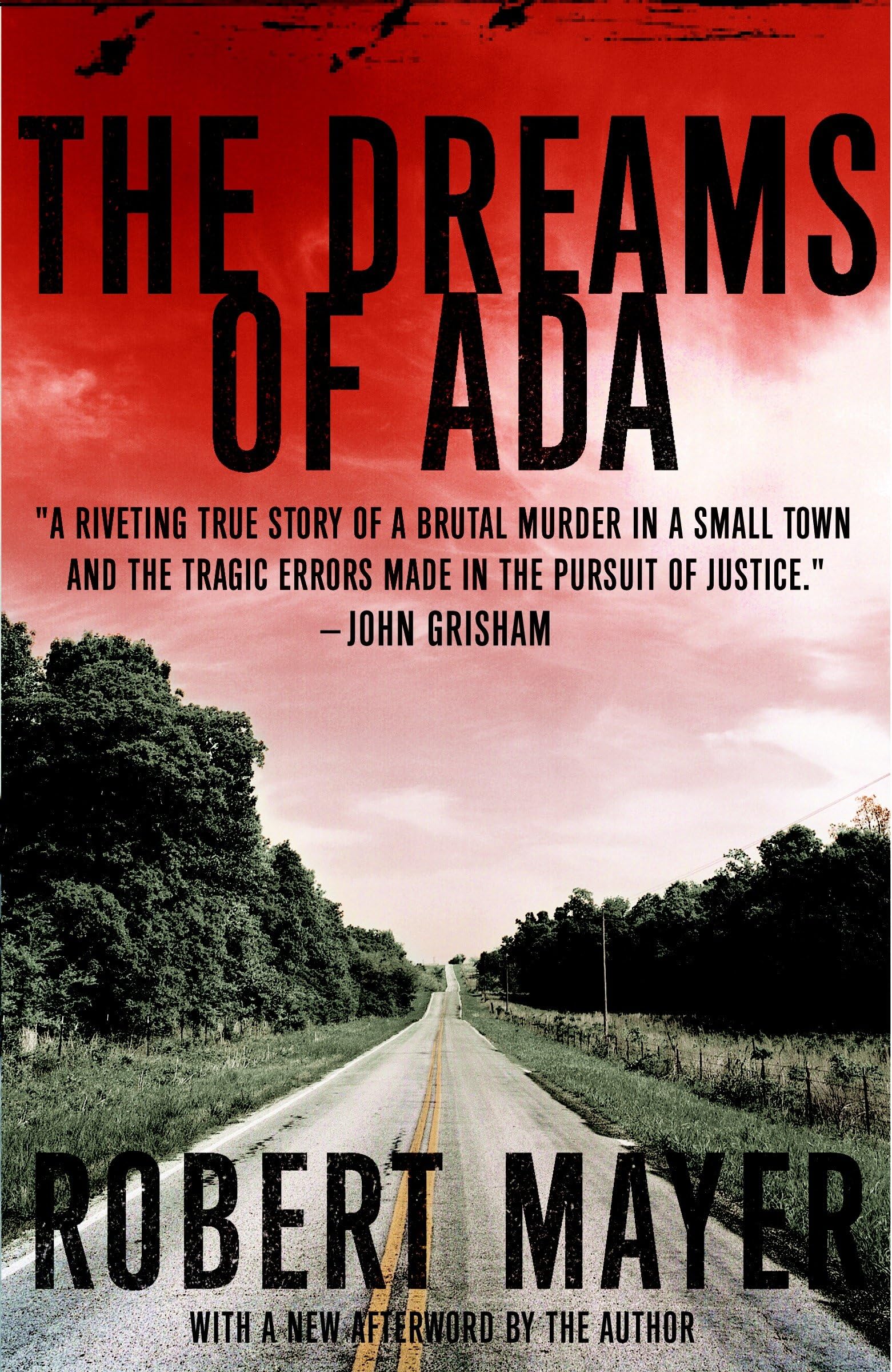



For fans of Serial and Making a Murderer , the true, bewildering story of a young woman’s disappearance, the nightmare of a small town obsessed with delivering justice, and the bizarre dream of a poor, uneducated man accused of murder . On April 28, 1984, Denice Haraway disappeared from her job at a convenience store on the outskirts of Ada, Oklahoma, and the sleepy town erupted. Tales spread of rape, mutilation, and murder, and the police set out on a relentless mission to bring someone to justice. Six months later, two local men—Tommy Ward and Karl Fontenot—were arrested and brought to trial, even though they repudiated their “confessions,” no body had been found, no weapon had been produced, and no eyewitnesses had come forward. The Dreams of Ada is a story of politics and morality, of fear and obsession. It is also a moving, compelling portrait of one small town living through a nightmare. “A riveting true story of a brutal murder in a small town and the tragic errors made in the pursuit of justice.”—John Grisham "A riveting true story of a brutal murder in a small town and the tragic errors made in the pursuit of justice." —John Grisham “A work of quiet brilliance . . . Like Capote and Mailer before him, Mayer compiles his details with a reporter’s skill and arranges them with a novelist’s arrogance.” — Atlanta Journal-Constitution “Ranks with the best . . . Clearly, thoroughly, and deftly written.” — Santa Fe Reporter “A compelling, marvelously detailed picture of justice in a small, scared town.” — Booklist Robert Mayer was born and raised in New York City. As a journalist and columnist for Newsday , he twice won the Mike Berger Award for the year’s best writing about New York City, as well as a National Headliner Award as best feature columnist in the country. Mayer has written seven novels and two works of nonfiction. He currently lives in New Mexico. 1 DISAPPEARANCE Half a block from Main Street in Ada, Oklahoma, less than fifty yards from the railroad tracks, stands a small white building that looks like a garage. Beside it on a metal pole is a black-and-white wooden sign, the letters faded, that says: PECAN CRACKER. Ada is, among other things, pecan country; on the outskirts are commercial pecan orchards; in the grassy yards of many houses are one or more pecan trees. In the fall, when the pecans are ripe, the adults knock them off the trees with long poles. The children gather the fallen ones from the ground. The nuts not intended for commercial use are taken to the pecan cracker. There, in the small white building, the pecans are dumped into the funnel-like tops of machines. One by one the hard pecans fall into moving gears. The top set of gears cracks open the largest pecans. Smaller pecans fall through, untouched, to another set of gears. These mesh closer and crack apart the smaller pecans. Still some escape and fall again: to another set of gears. These gears mesh tighter still; like steel claws they crack apart even the smallest pecans. Few pecans are too small, few shells too hard, to be cracked and broken, and to tumble in pieces into unmarked paper sacks. Ada (pronounced Aid-a ) is a city of about 17,000 people, the county seat of Pontotoc County, ninety miles southeast of Oklahoma City. Well-known to crossword-puzzle addicts (“city in Oklahoma, three letters”), it was named after a dark-haired girl, Ada Reed, daughter of the town's founder, back when Oklahoma was Indian Territory. In a rural area of farms, rolling hills, thick woodlands, it is a small industrial hub. This is quarter-horse country, where horses bred for quick bursts of speed are sold at periodic auctions. It is oil country, with scores of pumps grazing like metal horses in every direction. Oil money built most of the magnificent mansions on upper-crust Kings Road. It is also a factory town. The gray turrets of the Evergreen feed mill tower only a block from Main Street like the superstructure of a battleship. The Brockway factory, a few blocks away, forges 1.3 million bottles and jars a day for Coke, Pepsi, and Gerber Baby Foods, among others. Blue Bell jeans employs 175 local women to sew 45,000 pairs of Wranglers and Rustlers a week. Ideal cement is produced in the town, as are Solo plastic cups. The Burlington Northern Railroad track slices diagonally across Main Street, several freights a day shrieking to a halt in the innards of the feed mill. Main Street dead-ends into East Central University, which makes Ada the modest cultural hub of the area. But Ada is perhaps most of all a religious town, mainly Baptist, where you can’t buy a mixed drink without an annual “club” membership. There are fifty churches in the town (forty-nine Protestant, one Catholic) and four movie screens. On Saturday night, April 28, 1984, a few minutes after 8:30, just a few hours before the town would spring its clocks forward to daylight saving time, a car and a pickup truck pulled into the parking lot of M