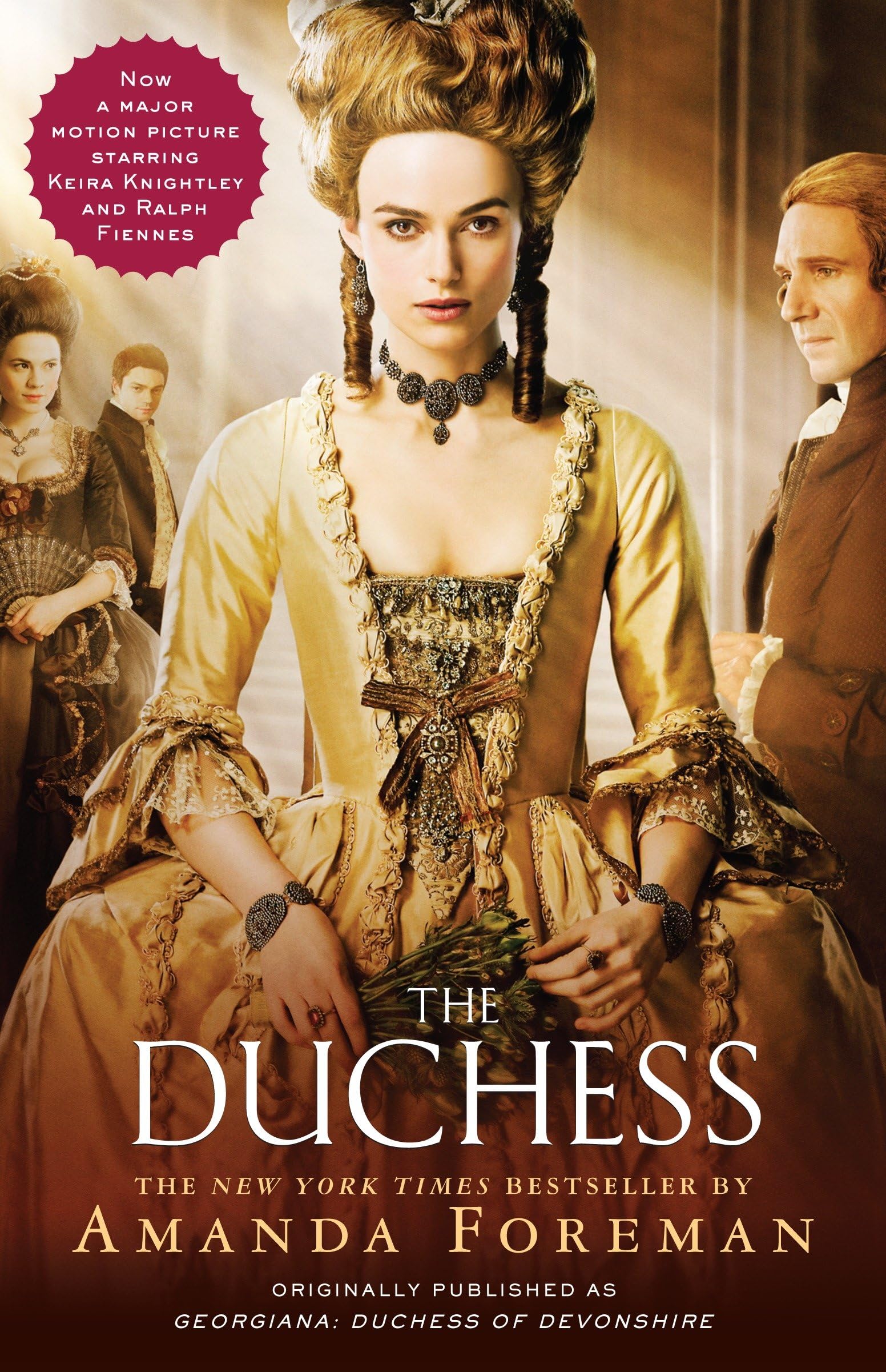



A NEW YORK TIMES NOTABLE BOOK • NOW A MAJOR MOTION PICTURE Lady Georgiana Spencer was the great-great-great-great-aunt of Diana, Princess of Wales, and was nearly as famous in her day. In 1774 Georgiana achieved immediate celebrity by marrying William Cavendish, fifth duke of Devonshire, one of England’s richest and most influential aristocrats. She became the queen of fashionable society and founder of the most important political salon of her time. But Georgiana’s public success concealed an unhappy marriage, a gambling addiction, drinking, drug-taking, and rampant love affairs with the leading politicians of the day. With penetrating insight, Amanda Foreman reveals a fascinating woman whose struggle against her own weaknesses, whose great beauty and flamboyance, and whose determination to play a part in the affairs of the world make her a vibrant, astonishingly contemporary figure. Praise for The Duchess “Georgiana bursts from the pages of Amanda Foreman’s dazzling biography like the force of nature she undoubtedly was–passionate, political, addicted to gambling, and drunk on life. This is a stunning book about an astonishing woman.” –Simon Schama “Biography at its best . . . seamlessly merges a life and its times, capturing not just an individual but an age.” –The New York Times Book Review “Riveting . . . marvelously diverting.” –The New Yorker “Georgiana bursts from the pages of Amanda Foreman’s dazzling biography like the force of nature she undoubtedly was–passionate, political, addicted to gambling, and drunk on life. This is a stunning book about an astonishing woman.” –Simon Schama “Biography at its best . . . seamlessly merges a life and its times, capturing not just an individual but an age.” –The New York Times Book Review “Riveting . . . marvelously diverting.” –The New Yorker Amanda Foreman is a Visiting Research Fellow at Queen Mary, University of London. She won the Whitbread Prize for Georgiana, Duchess of Devonshire. She is married with five children, and lives in both New York and London. C H A P T E R 1 DÉBUTANTE 1757—1774 "I know I was handsome . . . and have always been fashionable, but I do assure you,” Georgiana, Duchess of Devonshire, wrote to her daughter at the end of her life, “our negligence and ommissions have been forgiven and we have been loved, more from our being free from airs than from any other circumstance.”* Lacking airs was only part of her charm. She had always fascinated people. According to the retired French diplomat Louis Dutens, who wrote a memoir of English society in the 1780s and 1790s, “When she appeared, every eye was turned towards her; when absent, she was the subject of universal conversation.” Georgiana was not classically pretty, but she was tall, arresting, sexually attractive, and extremely stylish. Indeed, the newspapers dubbed her the Empress of Fashion. The famous Gainsborough portrait of Georgiana succeeds in capturing something of the enigmatic charm which her contemporaries found so compelling. However, it is not an accurate depiction of her features: her eyes were heavier, her mouth larger. Georgiana’s son Hart (short for Marquess of Hartington) insisted that no artist ever succeeded in painting a true representation of his mother. Her character was too full of contradictions, the spirit which animated her thoughts too quick to be caught in a single expression. Georgiana Spencer was the eldest child of the Earl and Countess Spencer.* She was born on June 7, 1757, at the family country seat, Althorp Park, situated some one hundred miles north of London in the sheep-farming county of Northamptonshire. She was a precocious and affectionate baby and the birth of her brother George, a year later, failed to diminish Lady Spencer’s infatuation with her daughter. Georgiana would always have first place in her heart, she confessed: “I will own I feel so partial to my Dear little Gee, that I think I never shall love another so well.” The arrival of a second daughter, Harriet, in 1761 did not alter Lady Spencer’s feelings. Writing soon after the birth, she dismissed Georgiana’s sister as a “little ugly girl” with “no beauty to brag of but an abundance of fine brown hair.” The special bond between Georgiana and her mother endured throughout her childhood and beyond. They loved each other with a rare intensity. “You are my best and dearest friend,” Georgiana told her when she was seventeen. “You have my heart and may do what you will with it.” By contrast, Georgiana–like her sister and brother–was always a little frightened of her father. He was not violent, but his explosive temper inspired awe and sometimes terror. “I believe he was a man of generous and amiable disposition,” wrote his grandson, who never knew him. But his character had been spoiled, partly by almost continual ill-health and partly by his “having been placed at too early a period of his life in the possession of what then appeared to him inexhaustible w