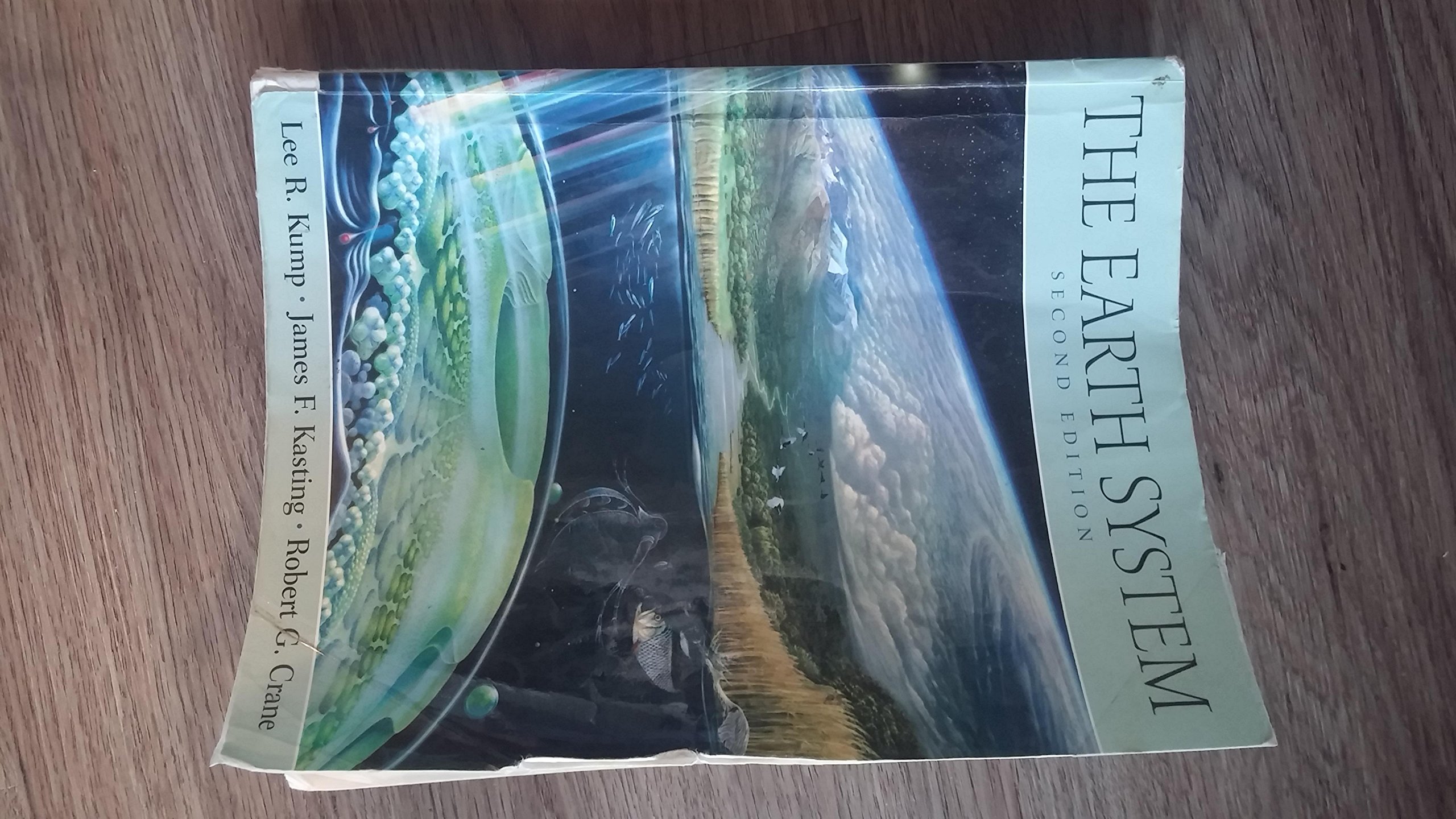



The first book of its kind that addresses the issues of global change from a perspective of Earth as a system, The Earth System offers a solid emphasis on lessons from Earth history that may guide decision-making in the future. This book teaches global change and how it affects our environment. Modern topics covered by this comprehensive book are the atmosphere and global warming, the circulation of the oceans, plate tectonics, ecosystems, the origin of Earth and life, the rise of oxygen and ozone depletion, biodiversity, and climate stability. Because of its incredibly detailed appendices, tables, and suggestions for further reading, this will make an excellent reference work for geologists, oceanographers, meteorologists, and geographers. The first book of its kind that addresses the issues of global change from a perspective of Earth as a system, The Earth System offers a solid emphasis on lessons from Earth history that may guide decision-making in the future. This book teaches global change and how it affects our environment. Modern topics covered by this comprehensive book are the atmosphere and global warming, the circulation of the oceans, plate tectonics, ecosystems, the origin of Earth and life, the rise of oxygen and ozone depletion, biodiversity, and climate stability. Because of its incredibly detailed appendices, tables, and suggestions for further reading, this will make an excellent reference work for geologists, oceanographers, meteorologists, and geographers. Robert G. Crane is Professor in the Department of Geography and an affiliate of the ESSC. This is not a traditional Earth science textbook. Such books treat individual components of the Earth systemthe solid Earth, atmosphere, and oceansseparately, with little consideration of the interplay among them or the important interactions with living organisms (the stuff of ecology texts). And, although they are the focus of this book, the modern environmental problems of global warming, ozone depletion, and loss of biodiversity are treated in a fundamentally different way here than in most texts. Here we recognize that these problems have analogues from Earth history: The geological past is the key to the present and to the future. Content Chapter 1, "Global Change," is an overview of these important issuesthe observational data that convince us that serious problems exist and the events in Earth's history that illuminate how the Earth system responds under stress. The rest of the book is organized into three major sections. Chapters 2 through 9 are devoted to an exploration of how Earth "works." They develop the notion that processes active on Earth's surface are functioning together to regulate climate, the circulation of the ocean and atmosphere, and the recycling of the elements. The biota play an important role in all of these processes. Chapters 10 through 15 take the reader through the history of Earth, highlighting those events that provide lessons for the future. The final four chapters focus on the future of the Earth system, addressing the modern problems of global change and the prospect of life on other planets in the context of what was presented in the first two sections. Revisions to the First Edition In the four years since the first edition of this book came out, a lot has changed. Atmospheric CO 2 has increased by about 7 parts per million, freon-11 concentrations have decreased by 6 parts per trillion, and global surface temperatures have continued their inexorable but ragged rise. For this reason alonejust to keep up with the new data on global changea book like this one needs to be regularly updated. However, it is not just the data that are changing. Ideas have been evolving as well during the past four years. New geologic evidence indicates that "Snowball Earth" episodes actually occurred not just once but several times during Earth's history. The case has been made that CH 4 , rather than (or in addition to) CO 2 , was the main greenhouse gas that helped to keep the early Earth warm despite reduced solar luminosity. The IPCC (Intergovernmental Panel on Climate Change) released a new report that for the first time states unambiguously that human activities are responsible for at least part of the observed surface temperature increase. And NASA's generous support for the new discipline of "astrobiology" has made us even more aware of the tight connections between the evolving Earth and its biota. We have tried to reflect these and other changes in the revised edition of our book. We have added two new chapters: Chapter 6 (on global climate models) and Chapter 9 (on the biota, ecosystems, and biodiversity). We've also expanded our discussion of early Earth, now devoting two chapters to the topic: Chapter 10, on the origin of Earth and of life, and Chapter 11, on the effect life has had on the development of the atmosphere. Some of this involved simply reorganizing material that had previously been include