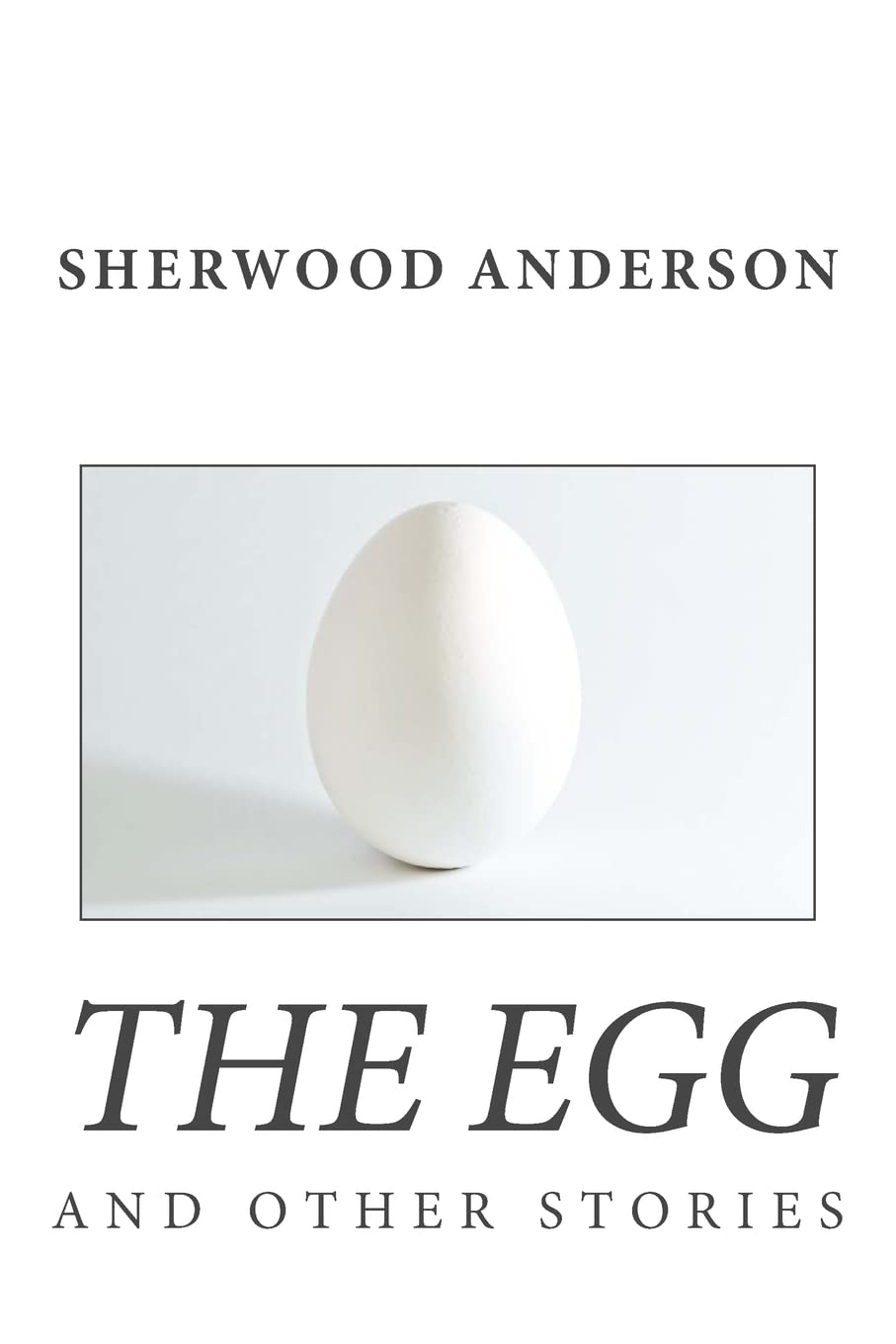



A Quiet Revolution in American Storytelling—Tales of Dreams, Failure, and Fragile Humanity In The Egg and Other Stories , acclaimed author Sherwood Anderson delivers a series of short stories that quietly and powerfully explore the complexities of small-town American life, human ambition, and the often-disappointing search for meaning. Best known for his influence on writers like Hemingway and Faulkner, Anderson strips away the sentimentality of early 20th-century fiction and offers a deeply human, sometimes melancholy, sometimes darkly humorous view of the American psyche. The title story, “The Egg,” is a poignant reflection on parental ambition, failure, and the absurdity of hope—a masterpiece of tone and restraint. These stories delve into themes of emotional isolation , missed opportunity , and the quiet tragedies that unfold behind ordinary lives. “Anderson’s stories are like whispered truths—simple on the surface, profound underneath.” Sherwood Anderson (1876 -1941) was an American novelist and short story writer. His most enduring work is the short story sequence Winesburg, Ohio. Writers he has influenced include Ernest Hemingway, William Faulkner, John Steinbeck, J. D. Salinger, and Amos Oz, among others. Anderson's first novel, Windy McPherson's Son, was published in 1916, followed, three years later, by his second major work, Marching Men. However, he is most famous for the collection of interrelated short stories, which were published in 1919, known as Winesburg, Ohio. He claimed that "Hands", the opening story, was the first "real" story he ever wrote. Although his short stories were very successful, Anderson felt the need to write novels. In 1920, he published Poor White, which was rather successful. In 1923, Anderson published Many Marriages, the themes of which he would carry over into much of his later writing. The novel had its detractors, but the reviews were, on the whole, positive. F. Scott Fitzgerald, for example, considered Many Marriages to be Anderson's finest novel. Beginning in 1924, Anderson lived in the historic Pontalba Apartments (540-B St. Peter Street) adjoining Jackson Square in New Orleans. There, he and his wife entertained William Faulkner, Carl Sandburg, Edmund Wilson and other literary luminaries. Of Faulkner, in fact, he wrote his ambiguous and moving short story "A Meeting South," and, in 1925, wrote Dark Laughter, a novel rooted in his New Orleans experience. Although the book is now out of print (and was satirized by Ernest Hemingway in his novel The Torrents of Spring), it was Anderson's only bestseller.