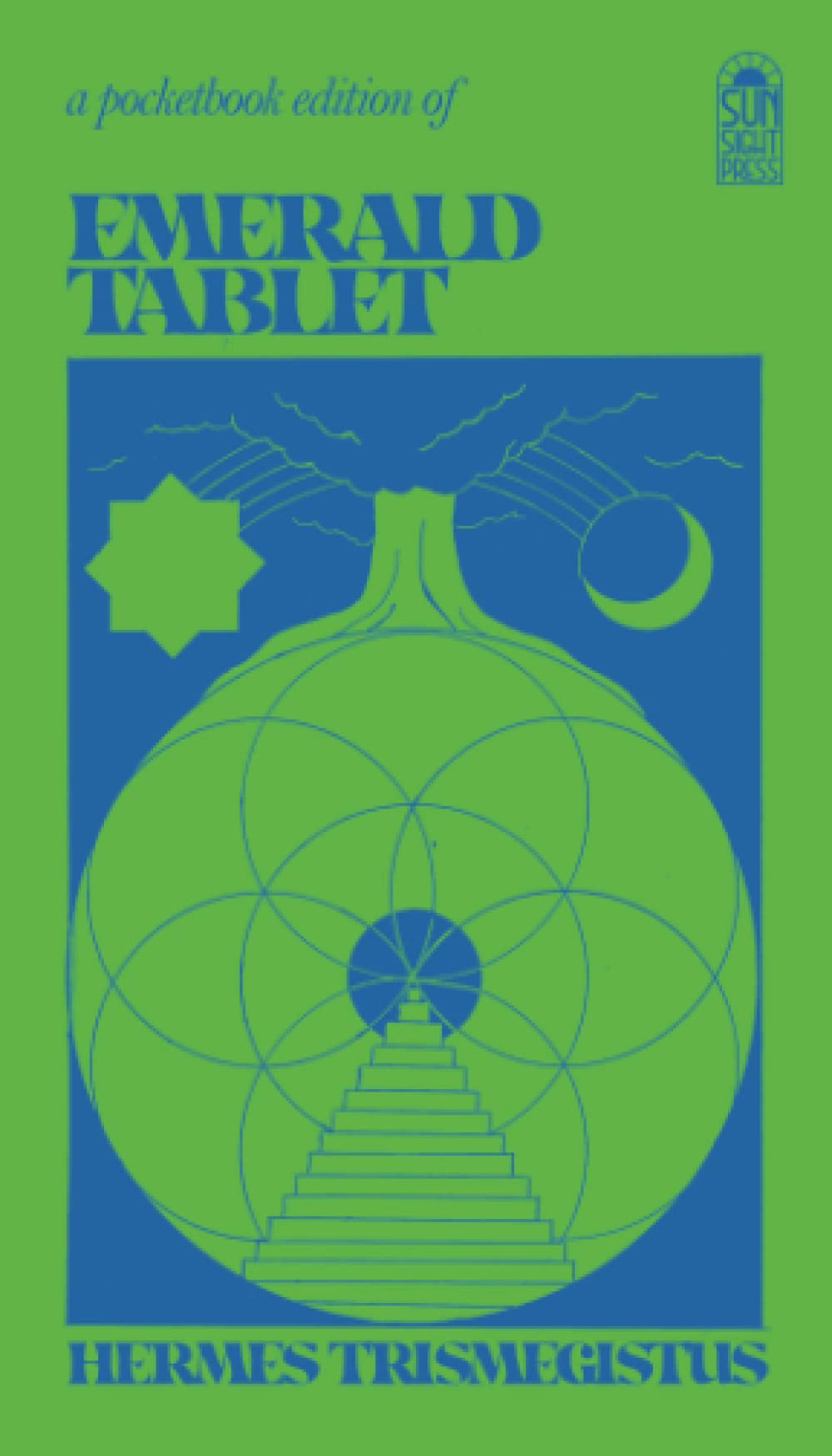
The Emerald Tablet: The Emerald Tablet of Hermes, the Smaragdine Tablet or the Tabula Smaragdina
$5.99
by Hermes Trismegistus



The Emerald Tablet of Hermes (not to be confused with The Emerald Tablets of Thoth The Atlantean ) otherwise known as the Smaragdine Tablet or the Tabula Smaragdina is the foundational text for Islamic and European alchemical arts attributed to legendary Hellenistic figure Hermes Trismegistus(Hermes the Thrice-Greatest), though the Emerald Tablet appears in early medieval Arabic sources. Translated in the twelfth and thirteen centuries, it has allowed for many interpretations and commentaries on the short text. The Emerald Tablet is a popular summary of alchemical principles, in which the secrets of the philosophers' stone are illuminated. While most interpretations agree on this fundamental reading, there are many ways these translations of the Emerald Tablet can be interpreted. For example, in the fifteenth century, many Europeans held the notion this text is a recipe for laboratory processes of alchemy using code words. By the sixteenth century, however, the Trithemius translation introduced a metaphysical approach, equating Hermes' conception of the one thing with the pythagorean monad and the anima mundi. The largest takeaway from the text which has caught on the paraphrasing of "as above, so below". The phrase, originating from the second line of the Tablet, has become the model of alchemical art.