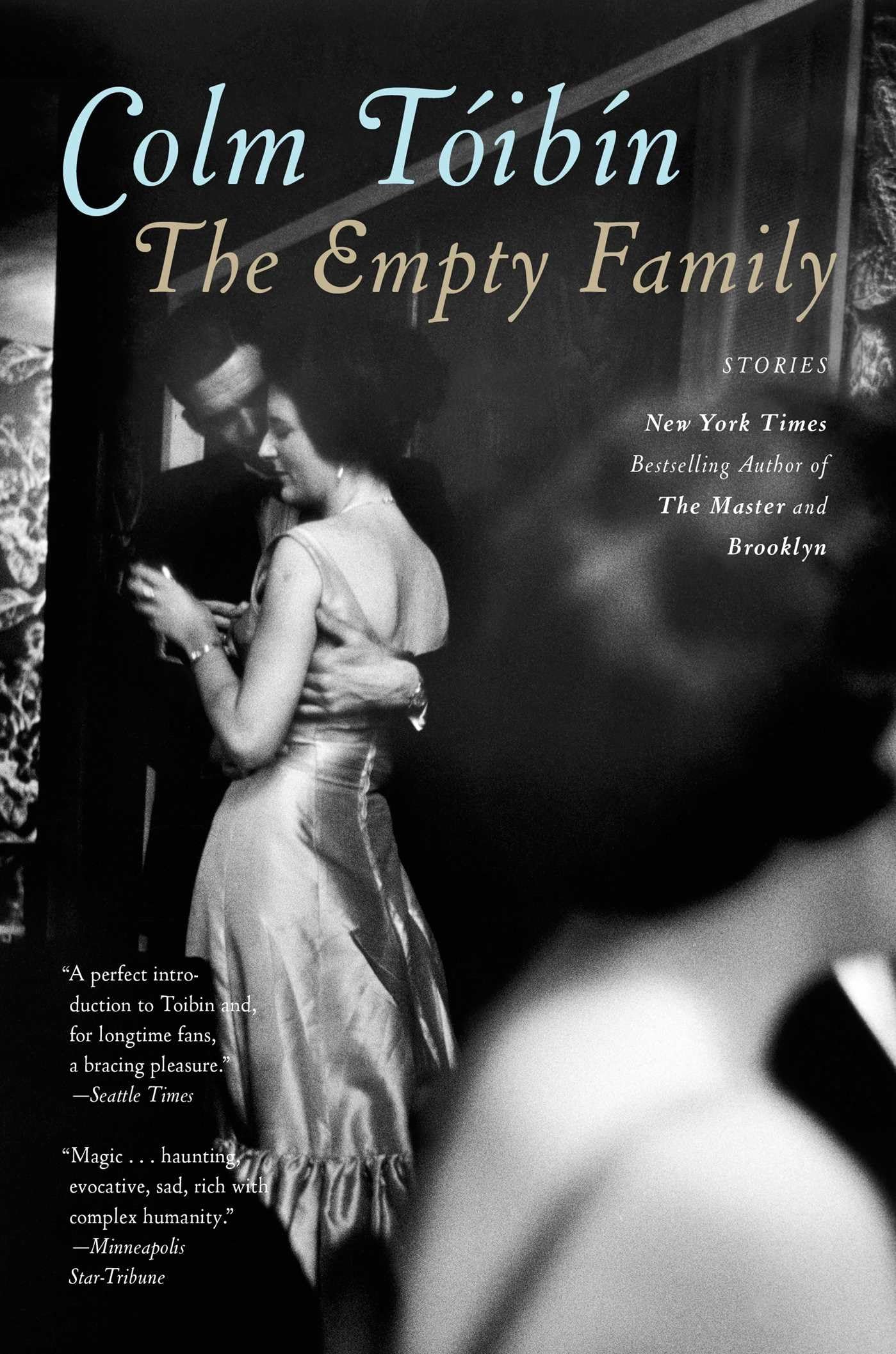



The bestselling and award-winning author of Brooklyn , Colm Tóibín, returns with a stunning collection of stories—“a book that’s both a perfect introduction to Tóibín and, for longtime fans, a bracing pleasure” ( The Seattle Times ). Critics praised Brooklyn as a “beautifully rendered portrait of Brooklyn and provincial Ireland in the 1950s.” In The Empty Family , Tóibín has extended his imagination further, offering an incredible range of periods and characters—people linked by love, loneliness, desire—“the unvarying dilemmas of the human heart” ( The Observer , London). In the breathtaking long story “The Street,” Tóibín imagines a relationship between Pakistani workers in Barcelona—a taboo affair in a community ruled by obedience and silence. In “Two Women,” an eminent and taciturn Irish set designer takes a job in her homeland and must confront emotions she has long repressed. “Silence” is a brilliant historical set piece about Lady Gregory, who tells the writer Henry James a confessional story at a dinner party. The Empty Family will further cement Tóibín’s status as “his generation’s most gifted writer of love’s complicated, contradictory power” ( Los Angeles Times ). "["The Empty Family"] reconfirms his mastery of the short story.... Toibin raised his profile with the exquisitely bittersweet "Brooklyn", and this collection is every bit as rich... Likely to rank with the best story collections of the year."--"Kirkus" (starred review) "A collection that will only further fuel Toibin's ascent through English fiction."--"The Independent" (UK) "The work of a supreme writer who only improves."--"The Times" (U.K.) "This is some of Toibin's most beautiful and heart-stopping writing. The story 'The Street' is one of the great love stories of our time, gay or straight."--Edmund White, author of "City Boy" Colm Tóibín is the author of eleven novels, including Long Island , an Oprah’s Book Club Pick; The Magician , winner of the Rathbones Folio Prize; The Master , winner of the Los Angeles Times Book Prize; Brooklyn , winner of the Costa Book Award; and Nora Webster, winner of the Hawthornden Prize, as well as three story collections and several books of criticism. He is the Irene and Sidney B. Silverman Professor of the Humanities at Columbia University and was named the 2022–2024 Laureate for Irish Fiction by the Arts Council of Ireland. In 2021, he was awarded the David Cohen Prize for Literature. Silence 34 DVG, January 23d, 1894 Another incident—“subject”—related to me by Lady G. was that of the eminent London clergyman who on the Dover-to-Calais steamer, starting on his wedding tour, picked up on the deck a letter addressed to his wife, while she was below, and finding it to be from an old lover, and very ardent (an engagement—a rupture, a relation, in short), of which he never had been told, took the line of sending her, from Paris, straight back to her parents—without having touched her—on the ground that he had been deceived. He ended, subsequently, by taking her back into his house to live, but never lived with her as his wife. There is a drama in the various things, for her, to which that situation—that night in Paris—might have led. Her immediate surrender to some one else, etc. etc. etc. —from The Notebooks of Henry James Sometimes when the evening had almost ended, Lady Gregory would catch someone’s eye for a moment and that would be enough to make her remember. At those tables in the great city she knew not ever to talk about herself, or complain about anything such as the heat, or the dullness of the season, or the antics of an actress; she knew not to babble about banalities, or laugh at things that were not very funny. She focused instead with as much force and care as she could on the gentleman beside her and asked him questions and then listened with attention to the answers. Listening took more work than talking; she made sure that her companion knew, from the sympathy and sharp light in her eyes, how intelligent she was, and how quietly powerful and deep. She would suffer only when she left the company. In the carriage on the way home she would stare into the dark, knowing that what had happened in those years would not come back, that memories were no use, that there was nothing ahead except darkness. And on the bad nights, after evenings when there had been too much gaiety and brightness, she often wondered if there was a difference between her life now and the years stretching to eternity that she would spend in the grave. She would write out a list and the writing itself would make her smile. Things to live for. Her son, Robert, would always come first, and then some of her sisters. She often thought of erasing one or two of them, and maybe one brother, but no more than one. And then Coole Park, the house in Ireland her husband had left her, or at least left their son, and to which she could return when she wished. She thought of the trees she had pl