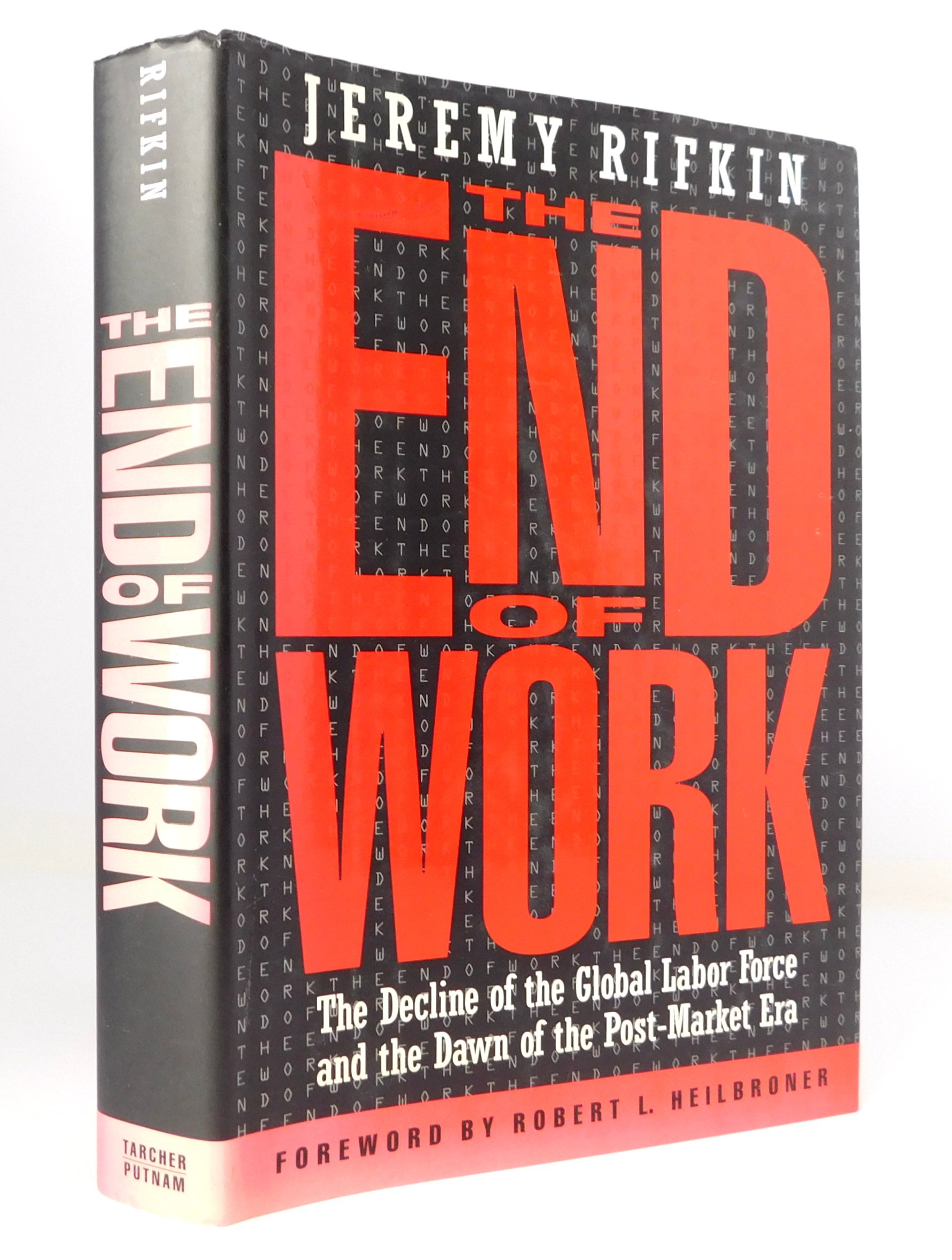



An analysis of the potentially catastrophic implications of the growing worldwide unemployment crisis explains how we can avoid economic collapse, create conditions for a new, more humane social order, and redefine the role of the individual in the new society. Global unemployment is now at its highest levels since the Great Depression. Rifkin (Biosphere Politics, LJ 5/15/91) argues that the Information Age is the third great Industrial Revolution. A consequence of these technological advances is the rapid decline in employment and purchasing power that could lead to a worldwide economic collapse. Rifkin foresees two possible outcomes: a near workerless world in which people are free, for the first time in history, to pursue a utopian life of leisure; or a world in which unemployment leads to an even further polarization of the economic classes and a decline in living conditions for millions of people. Rifkin presents a highly detailed analysis of the technological developments that have led to the current situation, as well as intriguing, yet alarming, theories of what is to come. Highly recommended for both general and business collections. Gary W. White, Pennsylvania State Univ., Harrisburg Copyright 1995 Reed Business Information, Inc. Rifkin is a social activist and environmentalist who has written a number of provocative books. He has most recently gained attention with his Beyond Beef: The Rise and Fall of the Cattle Culture (1992), an environmental argument against the cattle industry and eating beef. He now warns of global unemployment due to the technological and information revolutions but suggests that job retraining may be an ill-conceived panacea because the jobs being trained for no longer exist or will not exist in the near future. He describes a workerless "post-market" future and shows how the same technological revolution could be used to foster a new social order in which third sector and community-based organizations take up the tasks of providing basic services and meaningful activity. The alternative, he cautions, is a burgeoning criminal class made up of the marginalized idle. Look for Rifkin to attract attention again. David Rouse Jeremy Rifkin is president of the Foundation on Economic Trends in Washington, D.C.