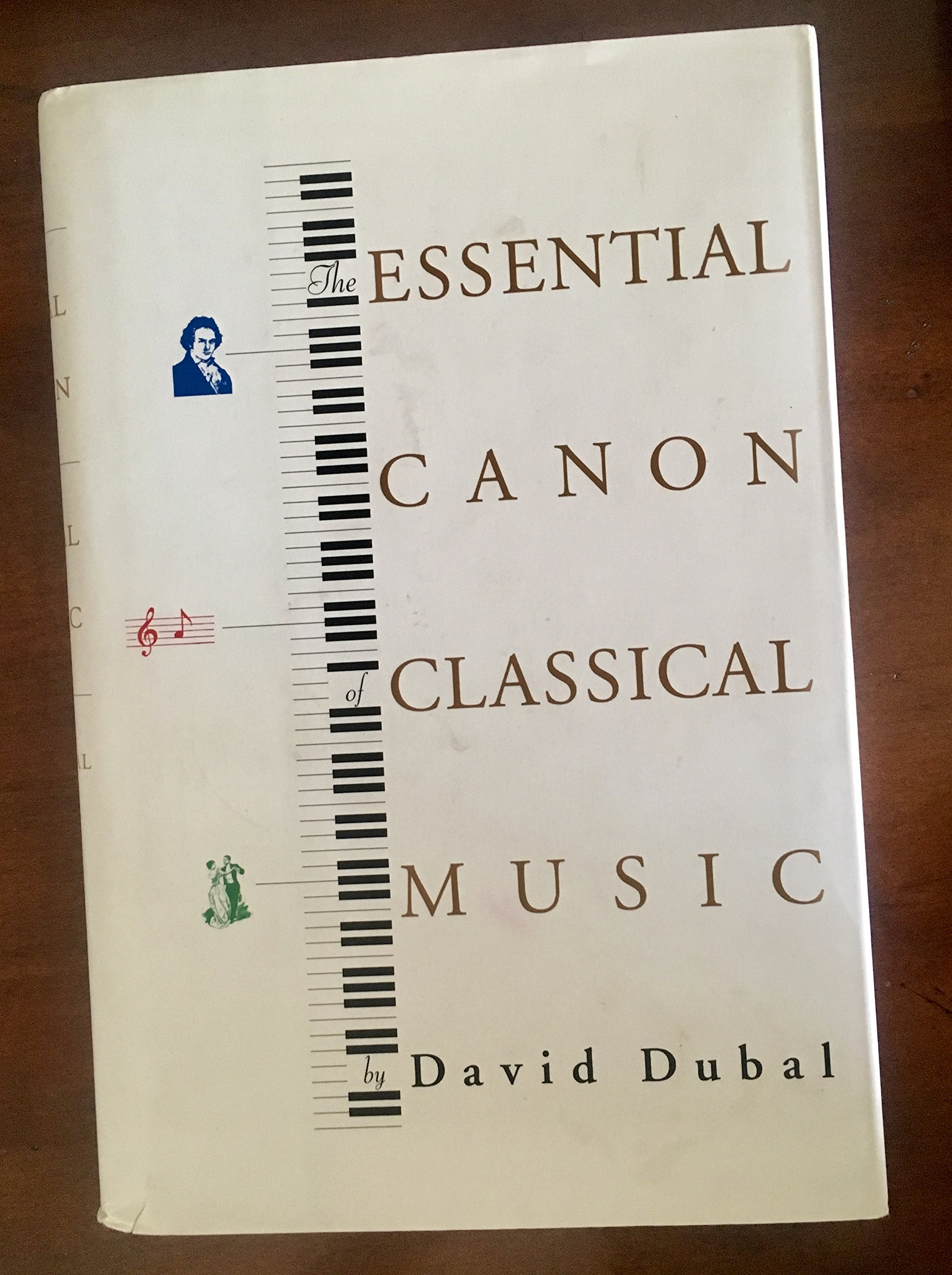



The ultimate guide to classical composers and their music-for both the novice and the experienced listener Music, according to Aaron Copland, can thrive only if there are "gifted listeners." But today's listeners must choose between classical and rock, opera and rap, and the choices can seem overwhelming at times. In The Essential Canon of Classical Music , David Dubal comes to the aid of the struggling listener and provides a cultural-literacy handbook for classical music. Dubal identifies the 240 composers whose works are most important to an understanding of classical music and offers a comprehensive, chronological guide to their lives and works. He has searched beyond the traditional canon to introduce readers to little-known works by some of the most revered names in classical music-Bach, Haydn, Mozart, Schubert-as well as to the major works of lesser-known composers. In a spirited and opinionated voice, Dubal seeks to rid us of the notion of "masterpieces" and instead to foster a new generation of master listeners. The result is an uncommon collection of the wonders classical music has to offer. In this entertaining and informative book, Dubal gives himself the difficult challenge of addressing two audiences simultaneously: listeners new to classical music and more experienced listeners who would like a guide to creating a "lifetime listening plan." A professor of piano literature at Juilliard and a former, longtime classical music programmer for WNCN in New York, he brings strong credentials to the taskAand, for the most part, he succeeds. The scope and attention to detail are very impressive, and the engaging writing style makes for pleasurable browsing. Dubal includes 240 composers in five chronological sections and categorizes them by date of birth within each grouping. He considers 60 to be major and, therefore, worthy of lengthy biographical entries and substantial listening lists. The remaining 180 receive about a page or less of prose, with only a handful of recordings listed. While he is relatively generous to the 20th century (more composers are included in this section than in any other), he ends his survey with William Bolcom (born in 1938), thus ignoring the many significant composers younger than 62. On the other end of the chronological spectrum, Dubal's pre-Baroque listings include only 13 composers, represented by a mere 14 recordingsAa woefully inadequate representation, given the explosion of early music recordings in the last quarter century. Despite these flaws, the book is a valuable resource for those interested in expanding their collections of classical music recordings. Recommended for all public libraries.ALarry Lipkis, Moravian Coll., Bethlehem, PA Copyright 2001 Reed Business Information, Inc. " The Essential Canon of Classical Music is a terrific book. David Dubal's spirited essays are wonderful introductions to the composers, and his vivid descriptions of the music and recommendations of recordings are invaluable. This book has something for everyone, from the beginner to the sophisticated listener. It has a permanent resting place on my CD player."--Tony Randall "No one writes more cogently on music than David Dubal. I learned a lot. Dubal instructs even as he entertains. And he cares deeply." --Ned Rorem David Dubal is an acclaimed pianist and a professor at the Julliard School. He has won several awards, including the Peabody Award and an Emmy for the documentary The Golden Age of the Piano . The former classical music program director at WNCN, Dubal is currently a broadcaster on WQXR. He is also the author of many books. Excerpt from The Essential Canon of Classical Music We can only speculate about the origins of music, but its seemingly magical qualities must have been apparent early in human prehistory. Primitive music of some sort probably preceded speech by thousands of years. Those with unusual vocal abilities may have used their power in rituals or to convey messages over a distance. These ancient singers, like their brothers the cave painters, may even have been privileged members of the clan. But it was a long time before people started making vocal utterances in intervals, thus creating melodies that could be repeated again and again. The first musical instrument, if you can call it that, was the pursed lips of a whistler (no doubt first used in an attempt to imitate bird calls). Early peoples thereafter developed banging, twanging, and scraping instruments, most of which were used, with the dance, to practice magical and sexual rites and to worship the sun and the moon. Charles Darwin was convinced "that musical notes and rhythm were first acquired by the male or female progenitors of mankind for the sake of charming the opposite sex." As the concept of pitch developed, those with good musical ears could start to imitate sounds. The pitches they heard, however, were not those that we have come to know. Each area of the world developed a