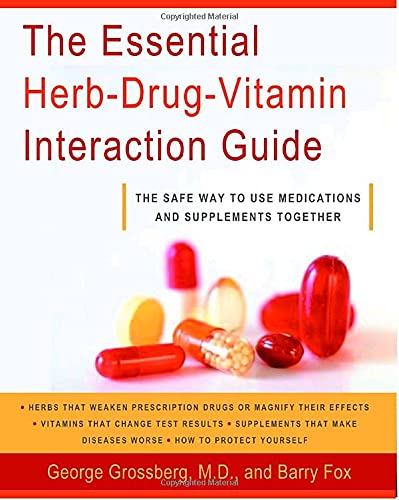
The Essential Herb-Drug-Vitamin Interaction Guide: The Safe Way to Use Medications and Supplements Together
$34.80
by George T. Grossberg M.D



IF YOU DON’T KNOW THE POSSIBLE SIDE EFFECTS OF MIXING HERBS, DRUGS, AND VITAMINS, YOU’RE PUTTING YOURSELF AT RISK. Did you know that . . . Using echinacea to ward off a cold while you’re taking Tylenol can severely damage your liver? Mixing kava kava and alcohol can be toxic? If you’re diabetic and you take Panax ginseng, you can dangerously lower your blood sugar levels? Drinking green tea can lead to false-positive results for some forms of cancer? Taking St. John’s wort while you’re on birth control, prescription antidepressants, or certain heart medications can be deadly? These are just a few of the warnings you need to know. If you’re one of the 60 million herb, vitamin, and supplement users in America, you need to know how to use herbs and supplements safely and effectively. The Essential Herb-Drug-Vitamin Interaction Guide profiles 300 supplements and gives vital information regarding potentially dangerous interactions, possible side effects, and typical dosages. Written by a leading authority in the field and a veteran health writer, The Essential Herb-Drug-Vitamin Interaction Guide is organized alphabetically by herb, with an index of medications at the end of the book so you can instantly locate the information you need, Comprehensive, thoroughly researched, and easy to use, this is one health guide you can’t afford to be without. George T. Grossberg, M.D., is a professor of geriatric psychiatry at St. Louis University School of Medicine. He has been cited by his peers in Best Doctors in America and America’s Top Docs since their inception. Barry Fox, Ph.D., is the bestselling author and coauthor of numerous health books, including the New York Times number-one bestseller The Arthritis Cure, as well as The Side Effects Bible and Alternative Cures That Really Work . Chapter One The Warning You Haven’t Heard Herbs have been used since ancient times to relieve numerous ailments. In the past, people didn’t understand how herbs worked; they only knew that they did. Today we know a lot more about herbs, their contents and chemistry, their mechanisms and uses. We know that when used properly, numerous herbs can be useful health aids. We also know that they cannot be indiscriminately mixed with medications, for herbs and drugs do interact, and the interactions can be harmful. For example, let’s say that, like many other people, you take St. John’s wort to relieve depression. Then you go to your doctor, who prescribes a medication to deal with a different health issue. No problem, right? • Not if a birth control pill has been prescribed. Taking birth control pills when you’re already taking St. John’s wort can cause breakthrough bleeding and unplanned pregnancy. • Not if an antidepressant, such as Zoloft, has been prescribed. St. John’s wort plus Zoloft can trigger serotonin syndrome, which can cause confusion, fever, hallucinations, nausea, shaking, sweating, vomiting—possibly even coma. • Not if Lanoxin, a medication used to treat heart failure, has been prescribed. St. John’s wort can weaken the drug’s effectiveness and allow your heart to “fade away.” Suppose you’re one of the many people who take echinacea on a regular basis to prevent colds and other upper respiratory tract infections. It’s a safe and natural way to ward off a stuffy nose, scratchy throat, and endless bouts of coughing, right? • Not if you’re taking Tylenol for pain, or statin drugs, such as Zocor and Lipitor, for elevated cholesterol. Combining any of these medicines with echinacea can severely damage your liver. • Not if you ever want to use aspirin, ibuprofen, Celebrex, or other widely used painkillers. Mixing echinacea with these popular pills can increase the likelihood of dangerous uncontrolled bleeding. • Not if your doctor prescribes Lodine for your arthritis. Lodine plus echinacea can lead to severe gastrointestinal problems, including nausea, vomiting, and gastritis. Eager to keep your mind sharp and ward off Alzheimer’s disease, you diligently take ginkgo biloba every day. A wise precaution, right? • Not if you ever need to use Glucotrol, DiaBeta, or certain other drugs to treat diabetes. Ginkgo biloba can interfere with the action of these medicines and send your blood sugar out of control. • Not if you ever need to take antidepressants like Elavil or Norpramin, or antibiotics such as Cipro. Mixing any of these drugs with ginkgo biloba makes you more likely to have a seizure. Herbs can be wonderful health aids. But dire results may ensue when certain herbs and standard medications are mixed. Odds are you’re not aware of the thousands of herb–drug combinations that can be harmful. And, unfortunately, your doctor may not be aware of the risks either. It's Not a Trivial Problem It’s estimated that 60 million Americans are taking herbs for their headaches, back pain, arthritis, menstrual difficulties, insomnia, depression, anxiety, menopausal symptoms, sexual difficulties,