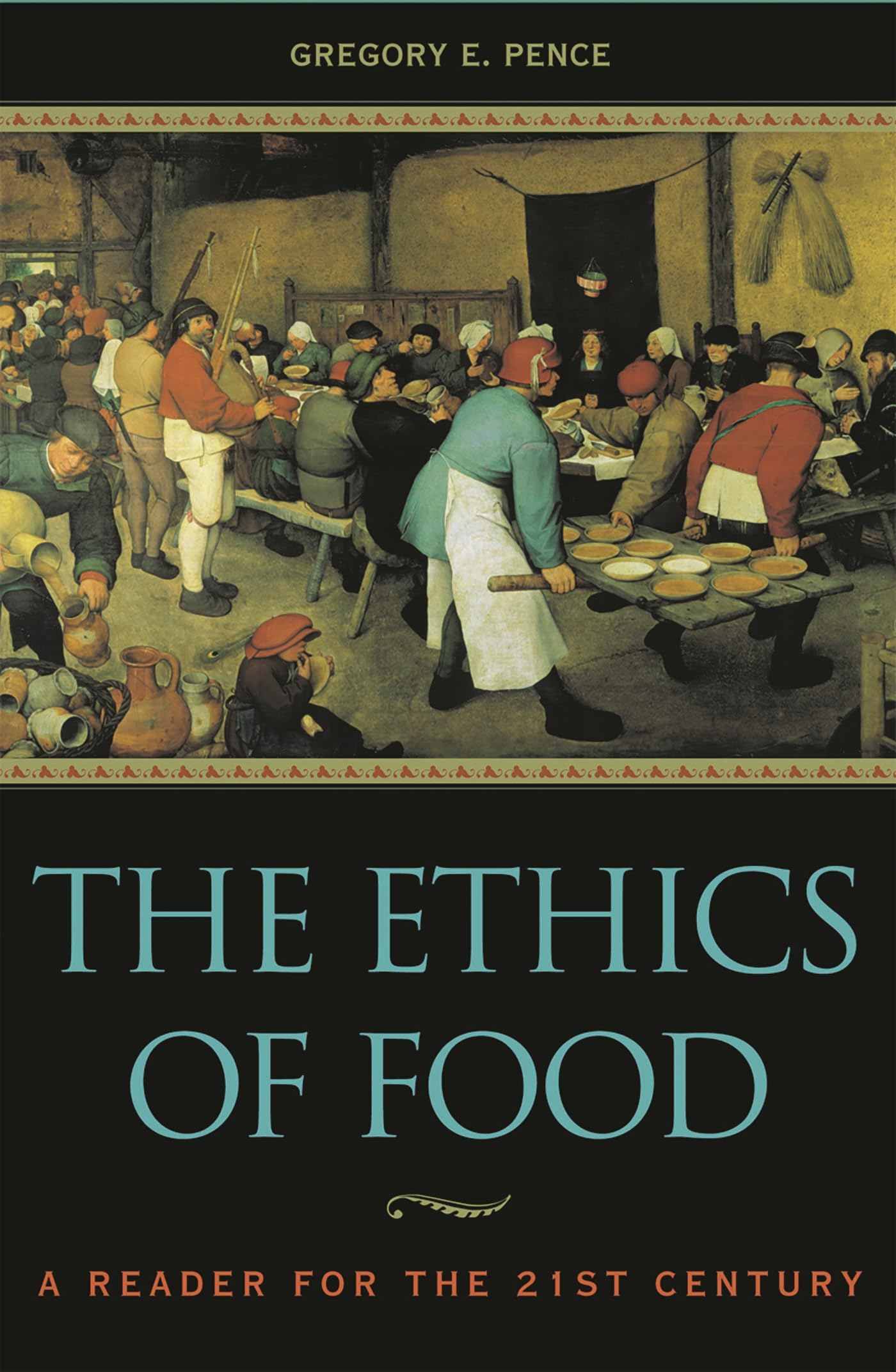



Food makes philosophers of us all. Death does the same . . . but death comes only once . . . and choices about food come many times each day. In The Ethics of Food, Gregory E. Pence brings together a collection of voices who share the view that the ethics of genetically modified food is among the most pressing societal questions of our time. This comprehensive collection addresses a broad range of subjects, including the meaning of food, moral analyses of vegetarianism and starvation, the safety and environmental risks of genetically modified food, issues of global food politics and the food industry, and the relationships among food, evolution, and human history. Will genetically modified food feed the poor or destroy the environment? Is it a threat to our health? Is the assumed healthfulness of organic food a myth or a reality? The answers to these and other questions are engagingly pursued in this substantive collection, the first of its kind to address the broad range of philosophical, sociological, political, scientific, and technological issues surrounding the ethics of food. “An excellent introduction for undergraduates. A broad range of problems is treated in an engaging and lucid manner. Nice bibliographies.” ―Dr. S. N. Fratantaro, Providence College “Nicely produced.” ― Food Science and Technology “Both the publishers and the editor are to be commended for bringing together such diverse viewpoints in one, easy-to-read volume.” ― Experimental Agriculture “The reader is led to compellingly consider the pressing issues of starvation, the consumption of meat and the benefits and dangers of genetically modified food.” ― Science and Theology News “Finally, we have a book that speaks to one of the most pressing, though under-examined, issues in our biotech age. Greg Pence has produced, again, a stimulating and timely text. Crisp and comprehensive in its approach, The Ethics of Food takes stock of the morally imperative questions surrounding food production, modification, and consumption, particularly their global impact upon ecosystems. The text offers a judicious menu of readings that articulate differing perspectives from various fields. Combining scholarship and access, this pioneering work insightfully underscores the ongoing tension between food biotechnologies and biodiversity, compelling us to move toward reasonable resolutions.” ―Michael Brannigan, executive director, Center for the Study of Ethics, La Roche College RONALD BAILEY is the author of Ecoscam and an award-winning science correspondent for Reason magazine and Reason.com where he writes a weekly science and technology column. He has also worked as a staff writer at Forbes and his writing has appeared in The New York Times , The Wall Street Journal , The Washington Post, Smithsonian , Reader's Digest and many other publications. Marc Lappe is a graduate of Wesleyan University and holds a Ph.D. in experimental pathology from the University of Pennsylvania. He was a founding associate of the Hastings Center, the nation's first bioethics institute. He is the author of five books, including Chemical Deception and Evolutionary Medicine. Currently, he researches and writes on toxic substances and public policy and directs the nonprofit Center for Ethics and Toxic Substances in Gualala, California, a small town on the Redwood Coast. Peter Singer, the renowned philosopher and bioethicist, is the author of Animal Liberation, the classic work that helped launch the modern Animal Rights movement. He teaches at Monash University in Melbourne, Australia.