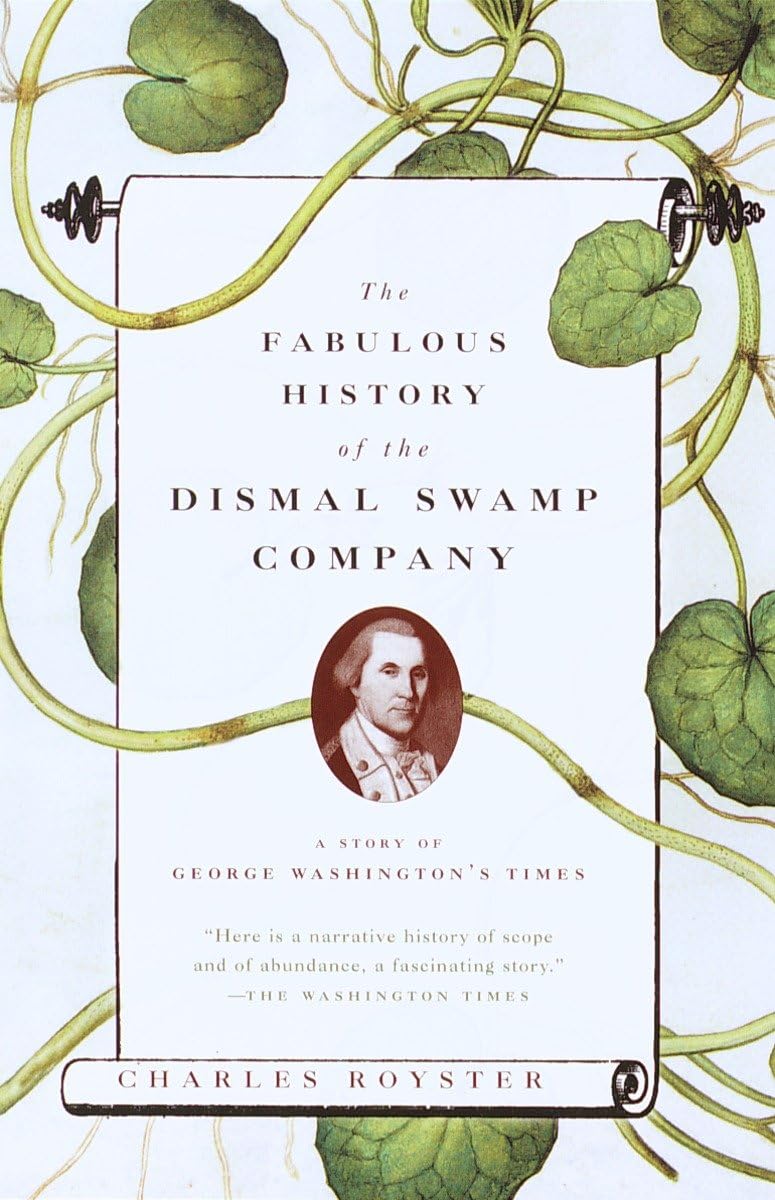
The Fabulous History of the Dismal Swamp Company: A Story of George Washington's Times
$29.00
by Charles Royster



From historian Charles Royster--winner of the Francis Parkman, Bancroft, and Lincoln prizes--comes the history of one of eighteenth-century America's most fantastic land speculation deals: William Byrd's scheme to develop 900 square miles of swamp on the Virginia-North Carolina border and create fabulous wealth for himself and other shareholders, including George Washington. Royster scrupulously follows the paper trail through the byways of transatlantic deal-cutting, providing a rare view of early American economic culture. Elegantly written and impressively researched, The Fabulous History of the Dismal Swamp Company is an eye-opening account of greed, folly, and venture capitalism in the revolutionary era. "Here is a narrative history of scope and of abundance, a fascinating story." -- The Washington Times "Vivid. . . . plunges readers into the rough world of colonial capitalism--a world swarming with adventurers, aristocrats, fools, rogues and visionaries all wearing masks of gentility." -- The News & Observer (Raleigh) "A veritable encyclopedia of early American get-rich-quick schemes." -- Men's Journal "[Royster] is a seasoned stylist, and tells this colorful story in rich detail." -- The Washington Post "Imagine Barbarians at the Gate with lace cuffs." --Wilton Barnhardt an Charles Royster--winner of the Francis Parkman, Bancroft, and Lincoln prizes--comes the history of one of eighteenth-century America's most fantastic land speculation deals: William Byrd's scheme to develop 900 square miles of swamp on the Virginia-North Carolina border and create fabulous wealth for himself and other shareholders, including George Washington. Royster scrupulously follows the paper trail through the byways of transatlantic deal-cutting, providing a rare view of early American economic culture. Elegantly written and impressively researched, The Fabulous History of the Dismal Swamp Company is an eye-opening account of greed, folly, and venture capitalism in the revolutionary era. an Charles Royster--winner of the Francis Parkman, Bancroft, and Lincoln prizes--comes the history of one of eighteenth-century America's most fantastic land speculation deals: William Byrd's scheme to develop 900 square miles of swamp on the Virginia-North Carolina border and create fabulous wealth for himself and other shareholders, including George Washington. Royster scrupulously follows the paper trail through the byways of transatlantic deal-cutting, providing a rare view of early American economic culture. Elegantly written and impressively researched, The Fabulous History of the Dismal Swamp Company is an eye-opening account of greed, folly, and venture capitalism in the revolutionary era. CHARLES ROYSTER is Boyd Professor of History at Louisiana State University. His previous books include A Revolutionary People at War: The Continental Army and American Character, 1775-1783, which won the Francis Parkman Prize, and The Destructive War: William Tecumseh Sherman, Stonewall Jackson, and the Americans, which won a Bancroft Prize and the Lincoln Prize. Elizabeth Wirt was pregnant in the summer of 1803. Her husband feared for her life. Too many women died in childbirth; he had lost his first wife. To distract his mind, he began a series of lighthearted, faintly satirical sketches describing Virginia and Virginians. Though he came from Maryland, William Wirt tried to make himself an eminent Virginian in law, in politics, and in letters. He had joined an informal college of wit-crackers whose dean was St. George Tucker in Williamsburg. His friends wrote verse and essays. So would he. Wirt called his pieces The Letters of the British Spy, pretending they had been found in a boardinghouse. Readers knew Wirt was the author. Still, a catchy title and a pose of British condescension toward provincials helped attract notice as these sketches appeared first in newspapers, then, before the end of the year, in a small book. It was published after Elizabeth Wirt gave birth to a girl. The spy's first letter, written in Richmond, included a short account of how that city at the falls of the James River, capital of the state, had been planned long ago by the man who then owned the site. William Byrd served the spy's purpose as a striking example of unequal ownership of property in Virginia. Dead for sixty years, he was a figure of romance from past days of heroic adventure. The spy described Byrd's service in 1728 with commissioners and surveyors running a boundary line between Virginia and North Carolina. Not far west of the sea their course lay through the Great Dismal Swamp, "an immense morass" of "black, deep mire, covered with a stupendous forest." Wirt crammed his paragraph with lurid color: beasts of prey, endless labor, perpetual terror, and, wildest of all, nighttime filled with "the deafening, soul chilling yell" of unnamed hungry animals. On such a night, William Byrd received a visit from "Hope, that never fail