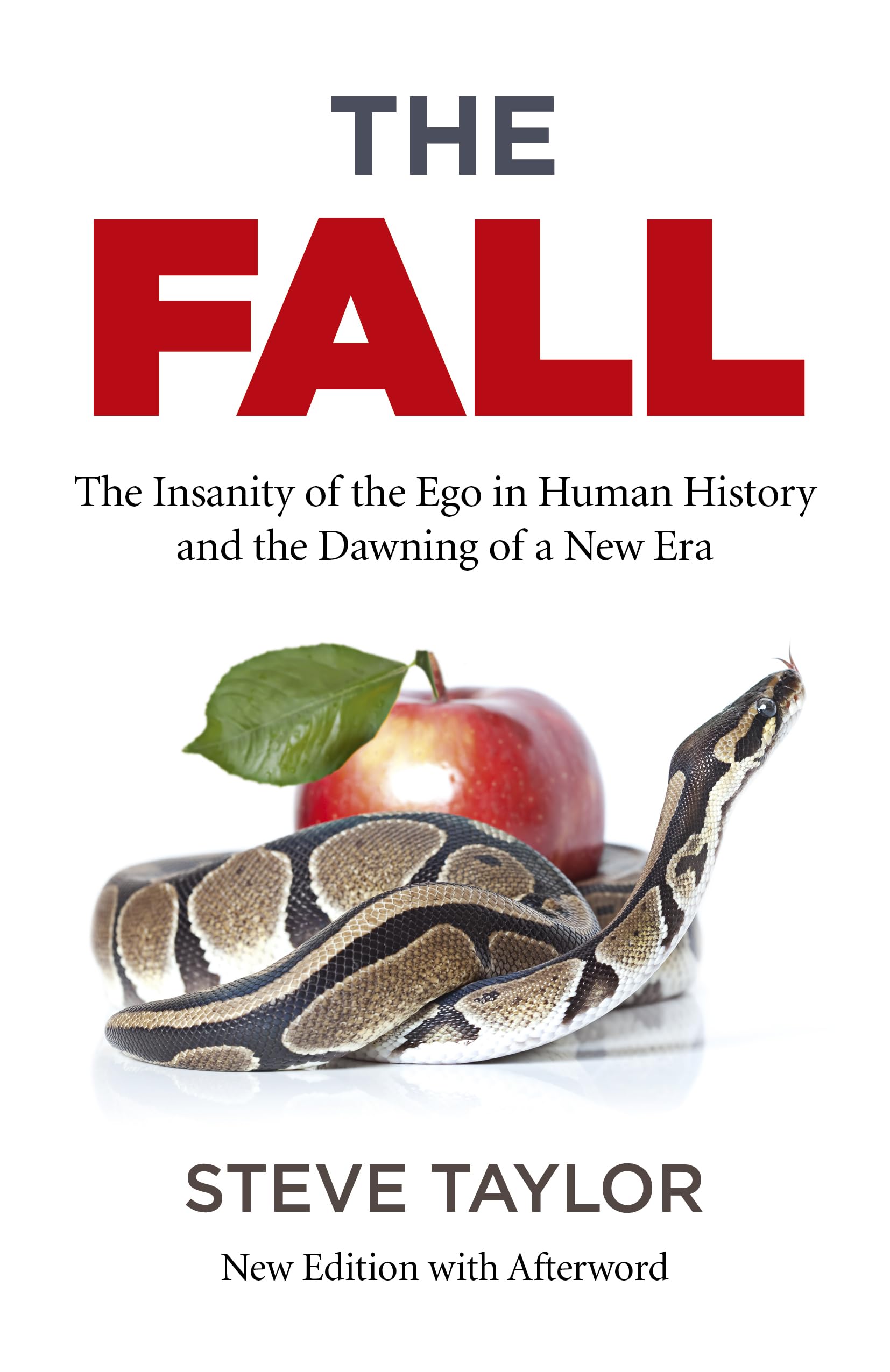



A new edition of Steve Taylor's bestselling classic, in which the author provides an Afterword, including research developments that have occurred since the book was first published in 2005. "An important and fascinating book about the origin, history and impending demise of the ego - humanity's collective dysfunction. The Fall is highly readable and enlightening, as the author's acute mind is at all times imbued with the higher faculty of spiritual awareness."Eckhart Tolle Steve Taylor PhD is a senior lecturer in psychology at Leeds Metropolitan University. He is the author of several best-selling books including The Fall, Waking From Sleep and Back to Sanity, and a book of spiritual poems The Meaning. www.stevenmtaylor.co.uk No. 72 on the Watkins Mind Body Spirit magazine 2018 Spiritual 100 List The Fall The Insanity of the Ego in Human History and the Dawning of a New Era By Steve Taylor John Hunt Publishing Ltd. Copyright © 2005 Steve Taylor All rights reserved. ISBN: 978-1-78535-804-3 Contents Foreword by Stanley Krippner, Introduction, PART ONE: THE HISTORY OF THE FALL, 1. What's Wrong with Human Beings?, 2. The Pre-Fall Era, 3. The Fall, 4. Unfallen Peoples, 5. The Ego Explosion, PART TWO: THE PSYCHOLOGY OF THE FALL, 6. The New Psyche, 7. Escaping from Psychological Discord, 8. The Origins of Social Chaos 1 – War, 9. The Origins of Social Chaos 2 – Patriarchy, 10. The Origins of Social Chaos 3 – Inequality and Child Oppression, 11. The Origins of God, 12. Separation from the Body, 13. The Origins of Time, 14. The End of Nature, PART THREE: THE TRANS-FALL ERA, 15. The First Wave, 16. The Second Wave, 17. A Question of Time, Notes, Bibliography, Index, Afterword: The Fall Revisited (2018), CHAPTER 1 What's Wrong With Human Beings? IF ALIEN BEINGS have been observing the course of human history over the last few thousand years they might well have reached the conclusion that human beings are the product of a scientific experiment which went horribly wrong. Perhaps, they might hypothesise, other aliens chose the earth as the site for an experiment to try to create a perfect being with amazing powers of intelligence and ingenuity. And create this being they did – but perhaps they didn't get the balance of chemicals exactly right, or maybe some of their laboratory equipment broke down half way through because, although the creature did possess amazing intelligence and ingenuity, it also turned out to be a kind of monster, with defects which were just as great as – or even greater than – its abilities. Imagine if you had to draw up a balance sheet for the human race, listing our positive achievements on one side and our failures and problems on the other. On the plus side there would be the amazing scientific and technological feats which have made us the most successful species in the history of the earth – the advances of modern medicine, for example, which have doubled our life span, massively reduced infant mortality rates, controlled ailments which made life a misery for our ancestors (such as toothache, deafness or short-sightedness), and controlled diseases which killed them, such as smallpox or tuberculosis. Then there are our feats of engineering and building – 100-storey buildings, aeroplanes, space travel, tunnels underneath the sea. And then the incredible advances of modern science, which have enabled us to understand the physical laws of the universe, how life has evolved, to uncover the chemical structure of living beings and the physical structure of matter. The plus side would also include the magnificent achievements of human creativity. The symphonies of Mahler or Beethoven, the songs of the Beatles or Bob Dylan, the novels of Dostoyevsky or D.H. Lawrence, the poems of Wordsworth or Keats, the paintings of van Gogh – in their own way, all of these are just as impressive as any great building or scientific discovery, if not more so. There, too, would be the wisdom and insight of great philosophers and psychologists, which has helped us to understand our own psyche, and our predicament as conscious living beings. And if, as some scientists believe, the only real purpose of life – for all living beings – is to survive and reproduce, then the human race has been massively successful in this regard too. Analysis of DNA suggests that all human beings alive today are descended from a group of a few hundred to a thousand people who left Africa 125,000 years ago. In just 125,000 years, therefore, this group of human beings has increased in number to a staggering 5 billion. However, it seems to be a law of nature that great development in one area is offset by a lack of development in another. Great talent always seems to go hand in hand with great deficiency. Think of the great creative artists, like van Gogh or Beethoven, who paid for their genius with mental instability, depression and a lack of social skills. Or think of the archety