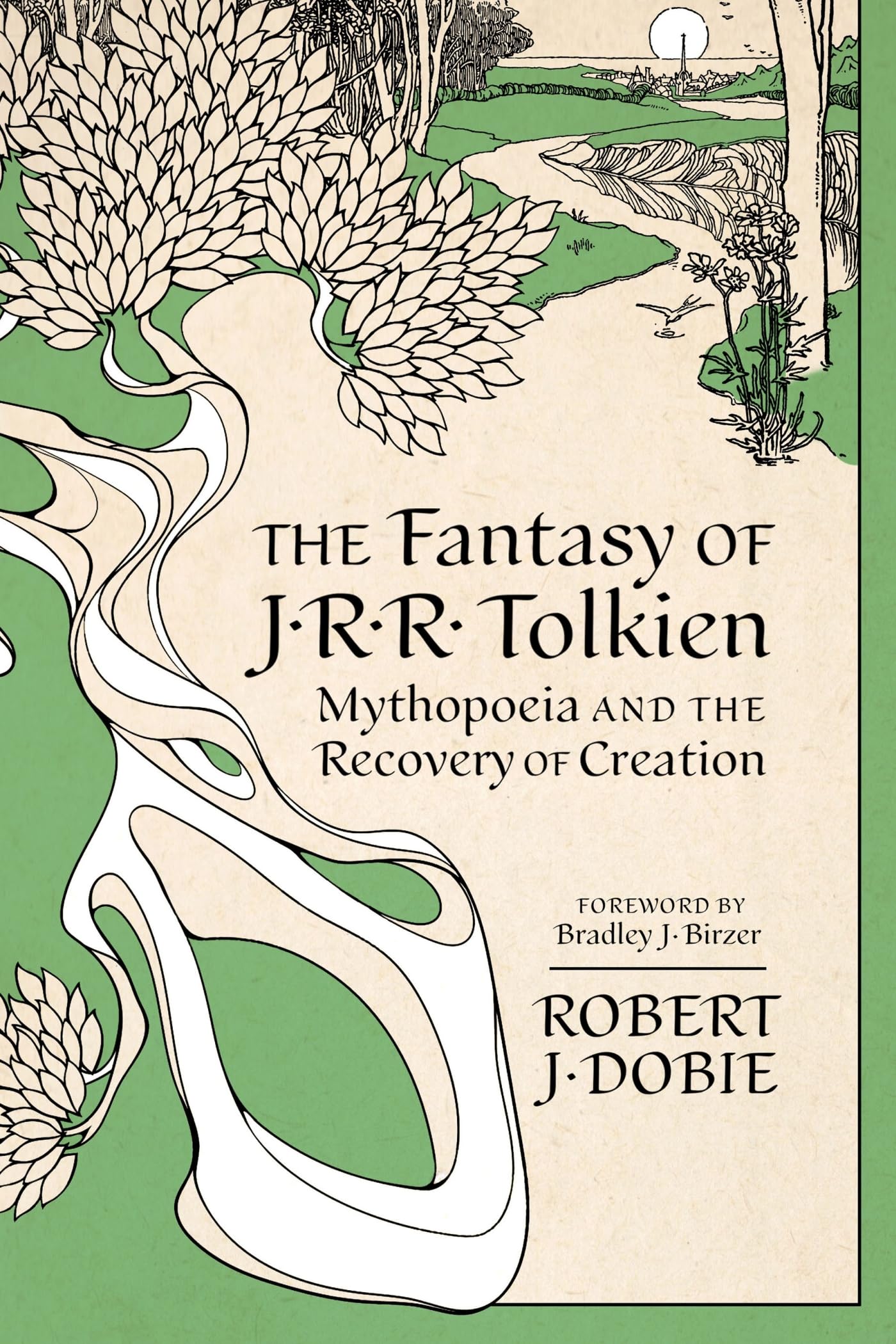
The Fantasy of J.R.R. Tolkien: Mythopoeia and the Recovery of Creation
$29.95
by Robert J. Dobie



At the heart of Tolkienian fantasy is “recovery,” a “cleaning of the windows” of our perception that we may learn to see the world again in all its strange and bewildering beauty. And, for Tolkien, to recover the world anew is to recover a sense of the world as a meaningful act of creation by a living and loving Creator. How does Tolkien accomplish this? Through “sub-creation” or mythopoeia , the “fashioning of myth.” For it is in creating an imaginary world ourselves through poetry, fairy-story and myth that we come to “see” our “primary world” as itself an act of creation. In short, mythopoetic creation, far from being “lies breathed through silver,” uncovers for us the truth of our world as a story of creation. This book is the first sustained attempt to show not only the centrality of recovery to Tolkien’s fantasy but the way in which his fantasy affects that primal recovery in every reader. In doing so, this book not only reveals the marvelous philosophical and theological riches that underlie Tolkien’s fantasy but shows how his mythopoetic fiction allows the recovery and enactment of these riches in our own lives. In these pages we learn how Tolkien’s fantasy addresses fundamental problems such as the relation of language to reality, the nature of evil, the distinction between time and eternity and its relation to death and immortality, the paradox of necessity and free will in human action and the grounds for providential hope in a “happy ending.” Indeed, The Fantasy of J.R.R. Tolkien shows how for Tolkien fantasy has within itself a healing power through which intellectual, moral and existential paradoxes are resolved and our intellectual and perceptual faculties are made whole again so that they may participate with renewed vigor in the life-giving work of creation of every sort. "Dobie's extensive philosophical discussion of recovery in several areas―language, nature, hope, etc.―is, I believe, an original contribution to studies of Tolkien. The principal audience is Christian readers of Tolkien. A secondary audience may be academic theologians and philosophers of Tolkien who are open to exploring Tolkien’s philosophy of myth and recovery. I can see it being assigned by these faculty to their undergraduate students, or at least recommended."―Christopher A. Snyder , author of Hobbit Virtues: Rediscovering Virtue Ethics through Tolkien "Robert Dobie's philosophical focus offers a fresh perspective on Tolkien's writing. By identifying Tolkien as a phenomenologist inflected by myth and bringing his work into productive dialog with Thomism, Dobie illuminates topics ranging from Tolkien's pioneering ideas of language to the meaning of characters like Tom Bombadil. This enriching study opens new lines of inquiry for Tolkien scholars and philosophers alike."―Adam Schwartz, author of The Third Spring: G.K. Chesterton, Graham Greene, Christopher Dawson and David Jones "Of the making of so many books on Tolkien, why yet another? Because Robert Dobie has written one like no other. With deep learning and high wisdom, he has uncovered the timeless, time-saturated truths incarnated in the master-fantastist's life and work."―Ralph C. Wood, author of The Gospel According to Tolkien and Tolkien among the Moderns "The central line of the book is a solid reading of the primary texts. Dobie uses Tolkien to construct a philosophical argument that he himself never directly made, but would likely recognise and affirm. This book is therefore a good introduction to the major themes that drove Tolkien's project."― Journal of Inklings Studies Robert J. Dobie is Professor and Chair of Philosophy at LaSalle University, and author of Thinking through Revelation: Islamic, Jewish, and Christian Philosophy in the Middle Ages and Logos and Revelation: Ibn 'Arabi, Meister Eckhart, and Mystical Hermeneutics. Bradley J. Birzer is the Russell Amos Kirk Chair in American Studies at Hillsdale College.