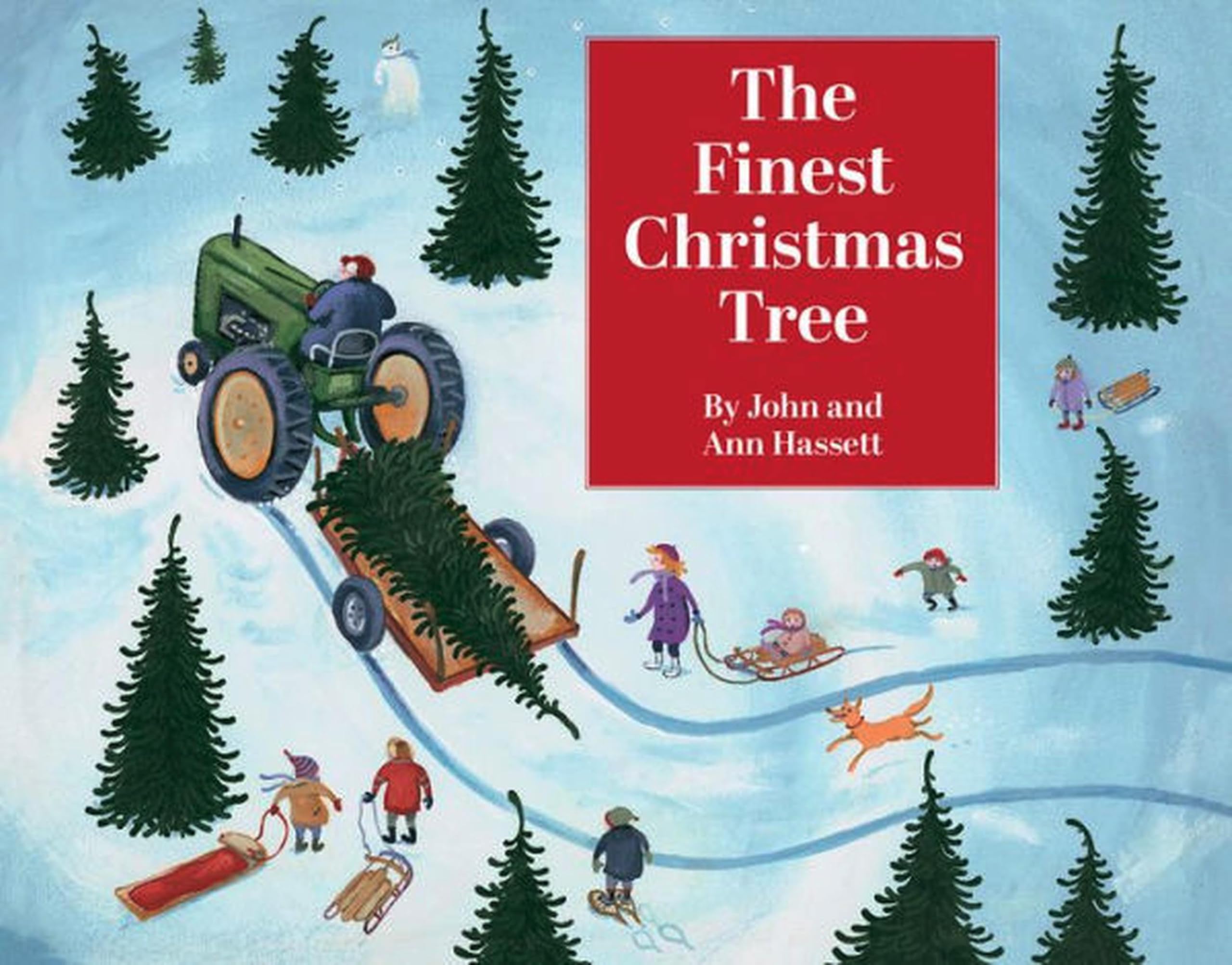



Every year Farmer Tuttle loads his truck with Christmas trees fresh from his farm and drives down to the city to sell them. Then he picks out a special Christmas hat to bring home to Mrs. Tuttle. But one year, people stopped buying real Christmas trees. Fake ones were more convenient, they said. So Farmer Tuttle had to return home without a hat to give his wife. The Tuttles worried; if they couldn't sell their trees anymore, what would they do? Just when they're about to sell all their trees to a man from the sawmill, a mysterious letter arrives requesting Farmer Tuttle's finest tree. When plastic trees become all the rage, things look bleak for Farmer Tuttle, who raises Christmas trees. He can't sell his harvest wares―or buy Mrs. Tuttle a special holiday hat. But a letter from an anonymous customer seeking "the finest tree in the forest" (and who clandestinely appears with his own team of tiny tree cutters and flying sleigh transport) changes all that. Kids will love seeing the surprise turn of play in the art, which features an evergreen forest so lush and crisp one would swear it emits a pine scent. --Publisher's Weekly Farmer Tuttle runs a Christmas tree farm in the New England mountains of the late 1950s, at the time when fake trees come into style. Suddenly no one wants his real trees any more, and he has no money to buy his wife her usual new Christmas hat. On the day before Christmas, the farmer receives a mysterious letter stating that a crew will be coming to cut the “finest tree in the forest.” That night Farmer Tuttle watches as “tiny figures” cut and load a huge tree into a sleigh, with partial views of reindeer and a man in a red plaid suit. They leave a woman’s Christmas hat behind in the snow as payment, and this tradition is repeated each year thereafter. The story is told in a taciturn, understated way in keeping with its New England setting, and the true identity of the tiny helpers and the man in the red suit are left unspoken for young readers to point out. The illustrations in wintry, cool tones have a naïve flavor with flattened perspective recalling the winter scenes of Grandma Moses. --Kirkus Reviews The beautiful color illustrations provide quirky, whimsical details like the kids in the car, the candy canes and the owl in the tree. --Bill Bushnell, centralmaine.com John and Ann Hassett have been collaborating on picture books for more than twenty-five years and are known for their quirky humor and lively illustrations. With over a dozen books published they have been recognized with a Parents’ Choice Foundation Picture Book Recommendation, a Bulletin Blue Ribbon, a Booklist Editors’ Choice, a Maine Literary Award and features in The New York Times Sunday Book Review. For many years John and Ann Hassett have lived in an old yellow farmhouse in Waldoboro, Maine. There are squirrels in the attic and mice in the walls. It is a quiet place of trees and fields and saltwater coves.John and Ann Hassett have been collaborating on picture books for more than twenty-five years and are known for their quirky humor and lively illustrations. With over a dozen books published they have been recognized with a Parents’ Choice Foundation Picture Book Recommendation, a Bulletin Blue Ribbon, a Booklist Editors’ Choice, a Maine Literary Award and features in The New York Times Sunday Book Review. For many years John and Ann Hassett have lived in an old yellow farmhouse in Waldoboro, Maine. There are squirrels in the attic and mice in the walls. It is a quiet place of trees and fields and saltwater coves.