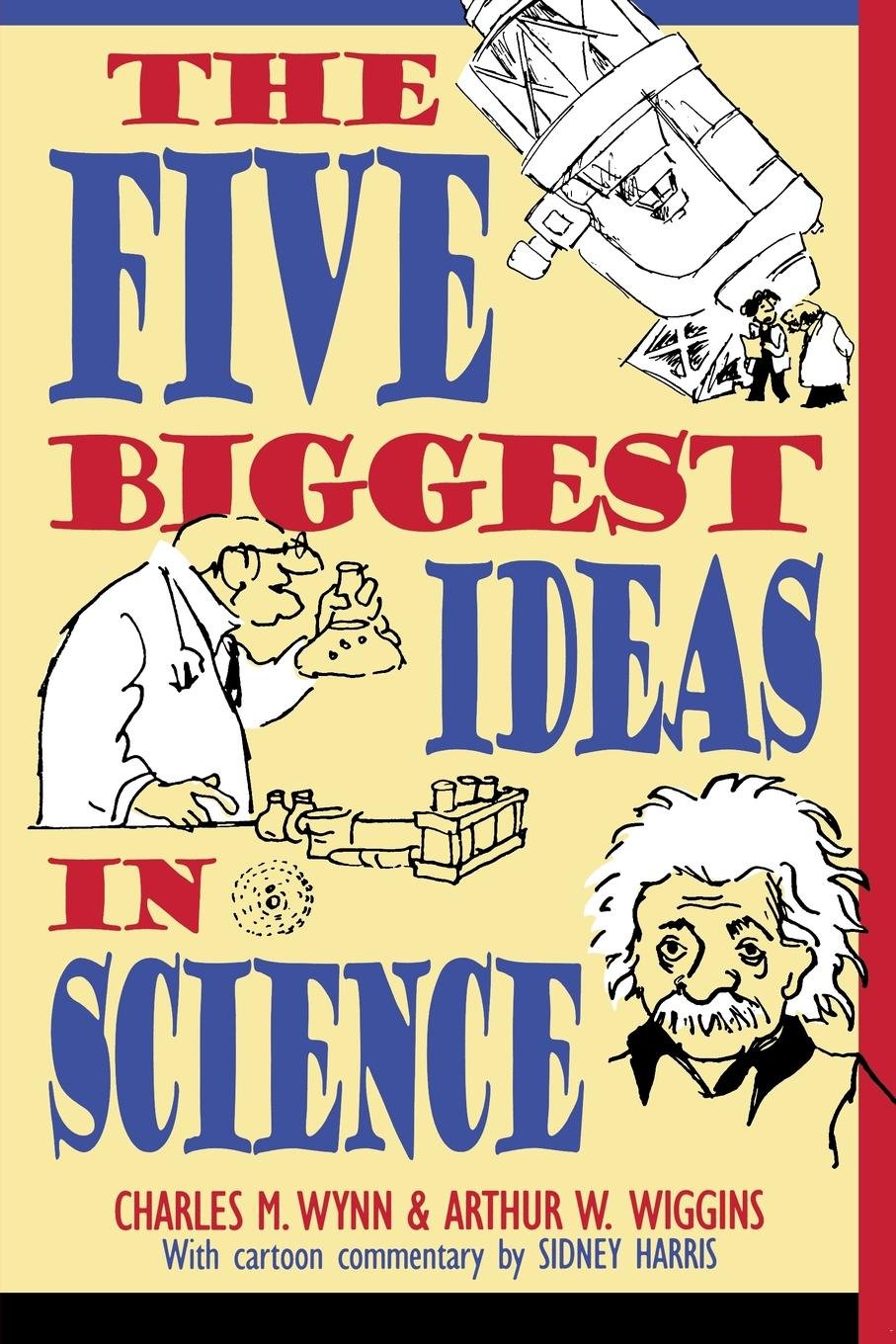



In a thought-provoking and entertaining exploration of The Five Biggest Ideas in Science, authors Charles Wynn and Arthur Wiggins provide a panoramic view of the questions scientists seek to answer about the natural world: * Do basic building blocks of matter exist, and if so, what do they look like? * BIG IDEA #1: Physics' Model of the Atom * What relationships, if any, exist among different kinds of atoms? * BIG IDEA #2: Chemistry's Periodic Law * Where did the atoms of the universe come from,and what is their destiny? * BIG IDEA #3: Astronomy's Big Bang Theory * How is the matter of the universe arranged in planet Earth? * BIG IDEA #4: Geology's Plate Tectonics Model * How did life on planet Earth originate and develop? * BIG IDEA #5: Biology's Theory of Evolution Get set for a lively and informative discussion, as you also learn how to evaluate potential applications of these and other scientific ideas. Wynn (chemistry, Eastern Connecticut State Coll.) and Wiggins (physics, Oakland Community Coll.) here aim to use five fundamental ideas?physics' model of the atom, chemistry's periodic law, astronomy's Big Bang theory, geology's plate tectonics model, and biology's theory of evolution?to help lay readers "comprehend, appreciate, and evaluate the world of science." Each "Big Idea" is thoroughly described, with many simple illustrations and cartoons by Sydney Harris, whose works appear regularly in many scientific journals as well as The New Yorker. In explaining the thinking that led to each "Big Idea," the authors clearly outline the scientific method and demystify the process. It soon becomes evident that the "Big Ideas" are subject to constant rethinking, one of the most important lessons of this book. This slim volume should be required reading and belongs in every library above the primary level.?Wilfred Drew, SUNY at Morrisville Coll. Lib. Copyright 1997 Reed Business Information, Inc. This book offers an engaging antidote to any case of scientific illiteracy. In easy-to-understand terms, it introduces novices to the basics of current theory by exploring the five major scientific disciplines and the fundamental theory behind each. For physics, it's the model of the atom. For chemistry, the periodic law. For astronomy, the big bang. For earth science, plate tectonics. And for biology, evolution. After explaining the basics, the authors give a simple overview of how these theories relate to each other to convey a complete picture of today's world. Includes a chapter on risk/benefit analysis with examples of how scientific ideas and methods are use in real life. The basics of the five major scientific disciplines In a thought-provoking and entertaining exploration of The Five Biggest Ideas in Science, authors Charles Wynn and Arthur Wiggins provide a panoramic view of the questions scientists seek to answer about the natural world: Do basic building blocks of matter exist, and if so, what do they look like? BIG IDEA #1: Physics' Model of the Atom What relationships, if any, exist among different kinds of atoms? BIG IDEA #2: Chemistry's Periodic Law Where did the atoms of the universe come from, and what is their destiny? BIG IDEA #3: Astronomy's Big Bang Theory How is the matter of the universe arranged in planet Earth? BIG IDEA #4: Geology's Plate Tectonics Model How did life on planet Earth originate and develop? BIG IDEA #5: Biology's Theory of Evolution Get set for a lively and informative discussion, as you also learn how to evaluate potential applications of these and other scientific ideas. CHARLES M. WYNN, Professor of Chemistry at Eastern Connecticut State University ARTHUR W. WIGGINS, Professor of Physics at Oakland Community College in Michigan, are the authors of science textbooks and numerous journal articles. Each has been the recipient of "Best Teacher" awards. SIDNEY HARRIS is "America's premier science cartoonist" (Isaac Asimov).