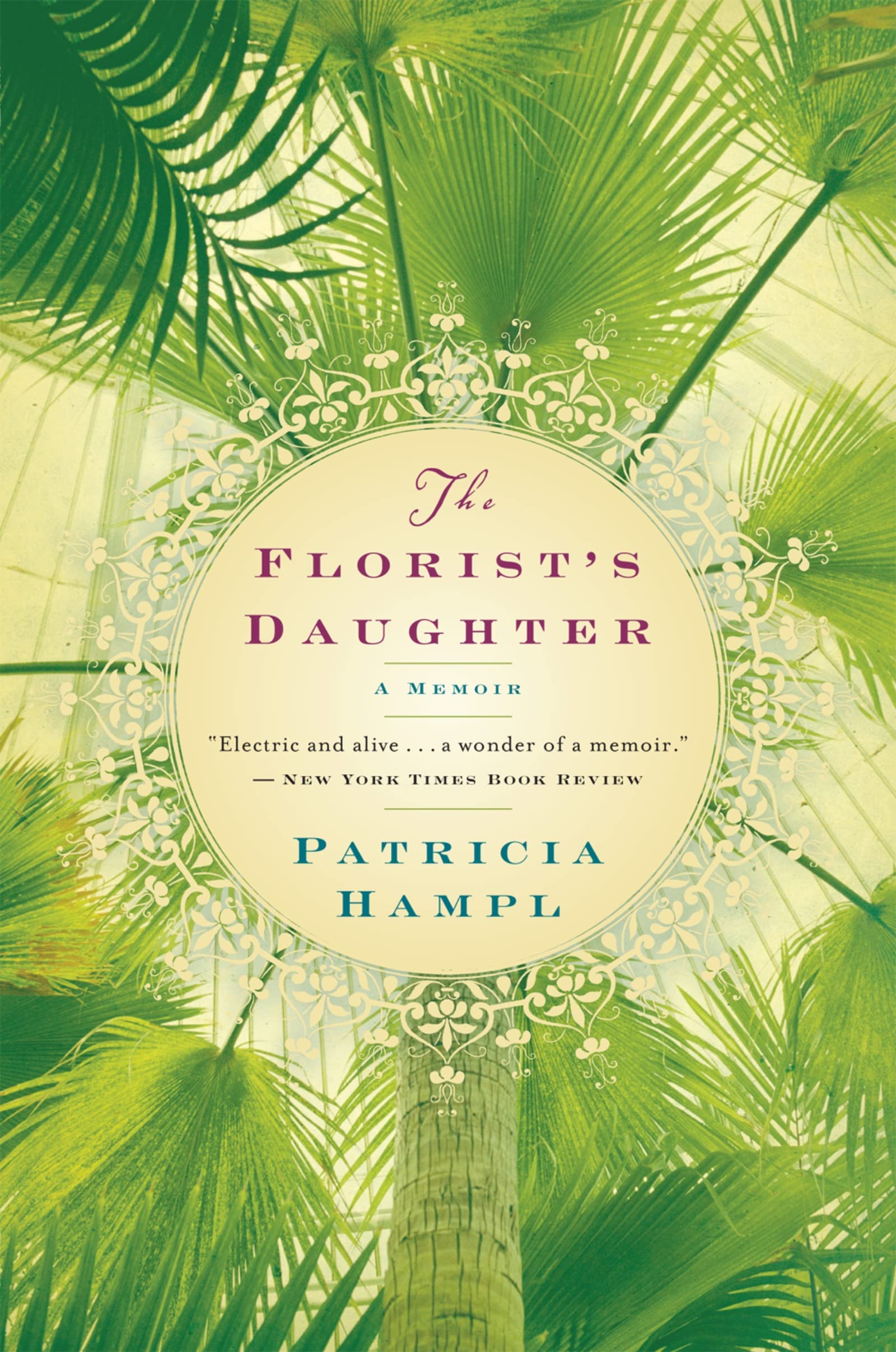
The Florist's Daughter: An Intimate Memoir of a Mother-Daughter Bond in Postwar Midwestern America
$11.88
by Patricia Hampl



During the long farewell of her mother’s dying, Patricia Hampl revisits her midwestern girlhood.Daughter of a debonair Czech father, whose floral work gave him entrée to St. Paul society, and a distrustful Irishwoman with an uncanny ability to tell a tale,Hampl remained, primarily and passionately, a daughter well into adulthood. She traces the arc of faithfulness and struggle that comes with that role—from the postwar years past the turbulent sixties. At the heart of The Florist’s Daughter is the humble passion of people who struggled out of the Depression into a better chance, not only for themselves but for the common good.Widely recognized as one of our most masterly memoirists, Patricia Hampl has written an extraordinary memoir that is her most intimate, yet most universal, work to date.This transporting work will resonate with readers of Francine du Plessix Gray’s Them: A Memoir of Parents and JeannetteWall’s The Glass Castle. PRAISE FOR THE FLORIST'S DAUGHTER A Chicago Tribune Best Book of the Year A New York Times Notable Book " The Florist’s Daughter is Hampl’s finest, most powerful book yet." —The New York Times Book Review “Addictive . . . quietly stunning.” — People “If anyone can restore the memoir to glory, it’s Patricia Hampl . . . Read Hampl and you will forget about Frey.” — Chicago Tribune “[A] beautiful bouquet of a book.” — Entertainment Weekly “Tender, thoughtful.” — Christian Science Monitor PATRICIA HAMPL is the author of four memoirs—A Romantic Education, Virgin Time, I Could Tell You Stories, and Blue Arabesque—and two collections of poetry. She has received a MacArthur Fellowship, among many other awards. She lives in St. Paul, Minnesota. The Florist's Daughter A Memoir By Patricia Hampl Houghton Mifflin Harcourt Publishing Company Copyright © 2007 Patricia Hampl All rights reserved. ISBN: 978-0-15-603403-6 CHAPTER 1 For once, no flowers. Past midnight and very quiet along this corridor. The clock on the opposite wall is round, a cartoon clock. Funny, the idea of keeping time — here of all places. Beneath the clock, a square calendar announces in bold what is now the wrong date, April 3. I could walk over, just a few steps, tear the page away from the calendar, and make it today, April 4. But that would cause a ripping sound, and I'd have to let go of her hand. So, leave it. In this room it's yesterday. We won't reach today until this is over, the time warp we entered three days ago. She'd appreciate that, irony being her last grasp on reality. "This time," the doctor said in the hallway last night — it might have been two nights ago — "you understand this time, this is it?" Five years ago I had faced him wild-eyed in the ER after her first stroke. "What do you want us to do?" he had asked then. What do I want you to do? I have a graduate degree in lyric poetry, what do I know? But I heard myself say, "Treat her like a sixteen-year-old who's just crashed on her boyfriend's motorcycle." And he did. They did. The whole high-tech array of surgical, medical, therapeutic systems revved into high gear. But this time I don't try to save her. I look at the doctor, by now my accomplice, and I say Oh yes when he says You understand ... this is it, eager to prove myself no trouble, a maker of no fuss. Not something she could be accused of. "I get the feeling your mother doesn't ... like me," he confided a year ago, this mild man of goodwill and even better bedside manner. "I walk in the room and she scowls. As if she hates me." You got that right. I experience a surge of perverse pride at her capacity to alienate those with power over her, the self-immolating integrity of her fury. Her essential unfairness, throwing guilt like a girl, underhand. For her, no such thing as an innocent bystander. Cross her path and the poisoned dart springs from the quiver of her heart. The look. Narrowed eyes, pinched disdainful mouth, brilliant mime of venomous dislike. I know it well, doctor. "You Goody Two-shoes," she spit out once when I was cleaning her apartment, mopping up cigarette ash around her chair. She didn't bother to disguise her contempt for me as a nonsmoker — obviously, I didn't know how to enjoy life. But that sour face of her elderly fury keeps disappearing just as she is disappearing. Even this latest face, the one propped on the hospital pillow, the hieratic visage that seems polished and will soon be an object, even this one is hard to keep in focus. I'm sitting here, holding her hand, but it's the ardent face from 1936 that keeps appearing, the face in the photograph placed on the shelf above the piano all the years of my girlhood and beyond. Heart-shaped with high cheekbones and eyes set wonderfully wide, it is the face of a romantic lead. Not because she was beautiful — she wasn't beautiful. She was seriously pretty, the way Scott Fitzgerald described the real heartbreakers. The slightly dazzled eyes (she refused to wear her glasses) looked out