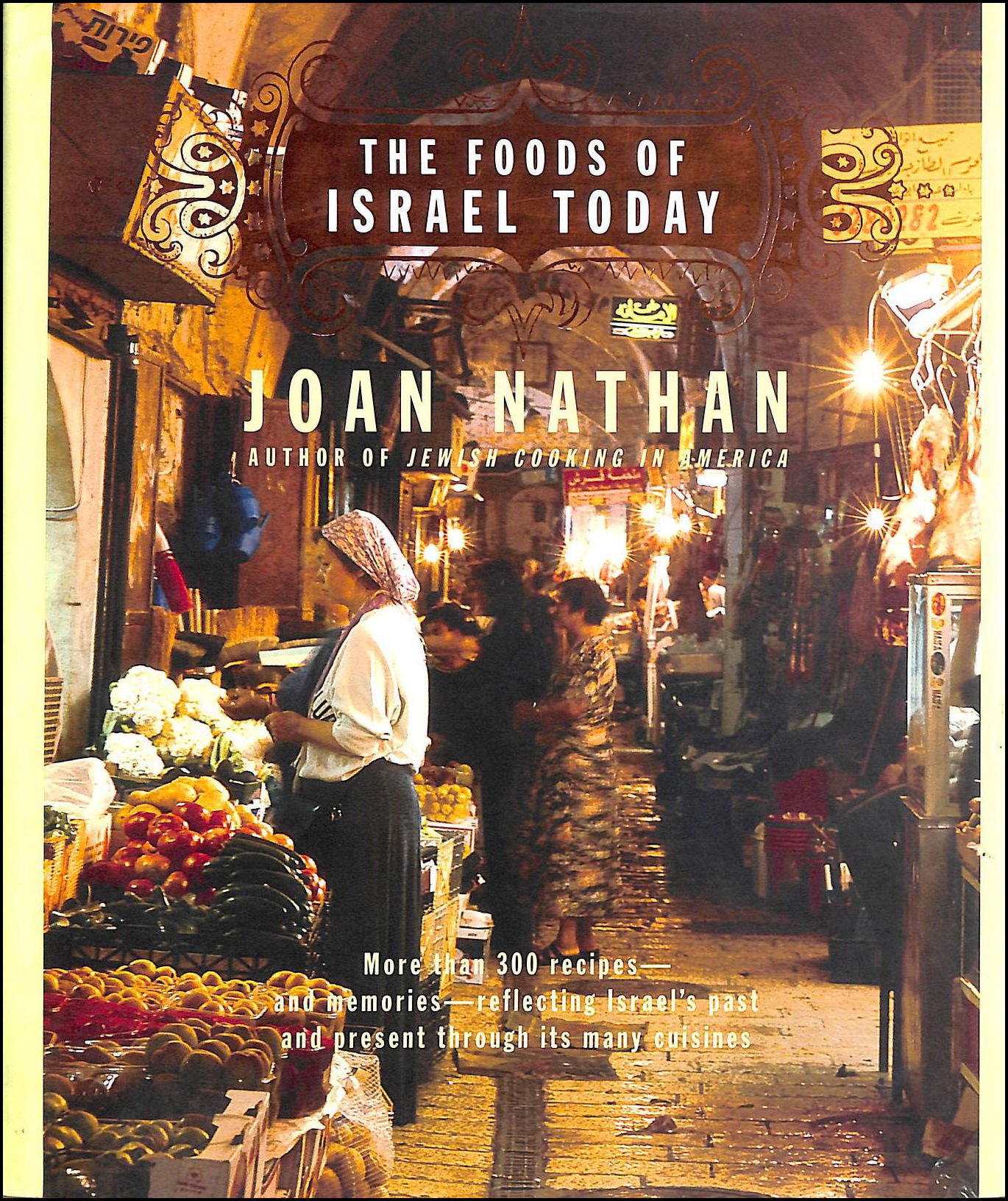
The Foods of Israel Today: More than 300 Recipes--and Memories--Reflecting Israel's Past and Present Through Its Many Cuisines
$16.76
by Joan Nathan



"Joan Nathan has created a masterful blend of food and culture. She takes her reader on an extraordinary journey through the history of the land of Israel and the development of modern Israeli food. I was delighted to visit all the different ethnic communities that have contributed to Israeli cuisine, and my mouth watered just imagining the feast that Joan Nathan describes." --Teddy Kollek, former mayor of Jerusalem In this richly evocative book, Joan Nathan captures the spirit of Israel today by exploring its multifaceted cuisine. She delves into the histories of the people already settled in this nearly barren land, as well as those who immigrated and helped to quickly transform it into a country bursting with new produce. It is a dramatic and moving saga, interlarded with more than two hundred wonderful recipes that represent all the varied ethnic backgrounds. Every recipe has a story, and through these tales the story of Israel emerges. Nathan shows how a typical Israeli menu today might include Middle Eastern hummus, a European schnitzel (made with native-raised turkey) accompanied by a Turkish eggplant salad and a Persian rice dish, with, perhaps, Jaffa Orange Delight for dessert. On Friday nights she visits with home cooks who may be preparing a traditional Libyan, Moroccan, Italian, or German meal for their families, the Sabbath being the focal point of the week throughout Israel (all her recipes are accordingly kosher). And she takes us to markets overflowing with vegetables, fruits, herbs, and spices. To gather the recipes and the stories, Nathan has been traveling the length and breadth of Israel for many years--to a Syrian Alawite village on the northern border for a vegetarian kubbeh and to Bet She'an for potato burekas; to the Red Sea for farmed sea bream and to the Sea of Galilee for St. Peter's fish; to Jerusalem's Bukharan Quarter for Iraqi pita bread baked in a wood-fired clay oven, to the Nahlaot neighborhood for Yemenite fried pancake-like bread, and to a Druse village for paper-thin lavash; to a tiny restaurant in Haifa for Turkish coconut cake and to a wedding at Kibbutz May'ayan Baruch in the upper Galilee for Moroccan sweet couscous; and to many, many other places. All the while, she seeks out biblical connections between ancient herbs and vegetables and their modern counterparts, between Esau's mess of pottage and today's popular taboulleh, and she delights us with tales of all she encounters. Throughout, Joan Nathan shows us how food in this politically turbulent land can be a way of breaking down barriers between Jews, Moslems, and Christians. Generously illustrated with colorful photographs, this enormously engaging book is one to treasure, not only as a splendid cookbook but also as a unique record of life in Israel. Nathan is the author of Jewish Cooking in America and an authority on the subject. In her ambitious new work, she explores the food and culinary traditions of modern Israel, which she describes as not a melting pot but rather a multicultural "mosaic." Most of the more than 300 recipes she collected come from home cooks, and their stories make this title almost as much a cultural history as cookbook. The bread chapter, for example, includes Pita Spinach Turnovers from a Bedouin family, Yemenite Pancakes, Sesame Bread from the Armenian community in Jerusalem, Ethiopian Shabbat Bread, and Pan de Casa from a Moroccan grandmother. The extensively researched text provides background on the many immigrant groups that make up Israel's population; there are also photographs of many of the people she encountered, literary and biblical quotations, and even a brief Guide to Good Eating in Israel. Although Israeli recipes appear in other Middle Eastern and Jewish cookbooks, Nathan's impressive work is unique. Highly recommended. Copyright 2001 Reed Business Information, Inc. For those who find themselves distressed that Tel Aviv's delis aren't just like New York's, Joan Nathan comes to the defense of contemporary Israeli cooking with The Foods of Israel Today . She shows how the immigrant boom of recent years has transformed Israeli food from its simple Middle Eastern origins to embrace the new arrivals' varying backgrounds and cultures. Nathan records a much wider cuisine than the expected Ashkenazic kosher cooking. Middle Eastern dishes still predominate: hummus, baba ghanouj, and the like. But Israeli cooking now also comprises dairy-free moussaka, Moroccan tagine, Transylvanian pepper salad, and Armenian stuffed eggplant. Recipes entice with their clarity and accessibility. Mark Knoblauch Copyright © American Library Association. All rights reserved "Joan Nathan has created a masterful blend of food and culture. She takes her reader on an extraordinary journey through the history of the land of Israel and the development of modern Israeli food. I was delighted to visit all the different ethnic communities that have contributed to Israeli cuisine, and my mouth watere