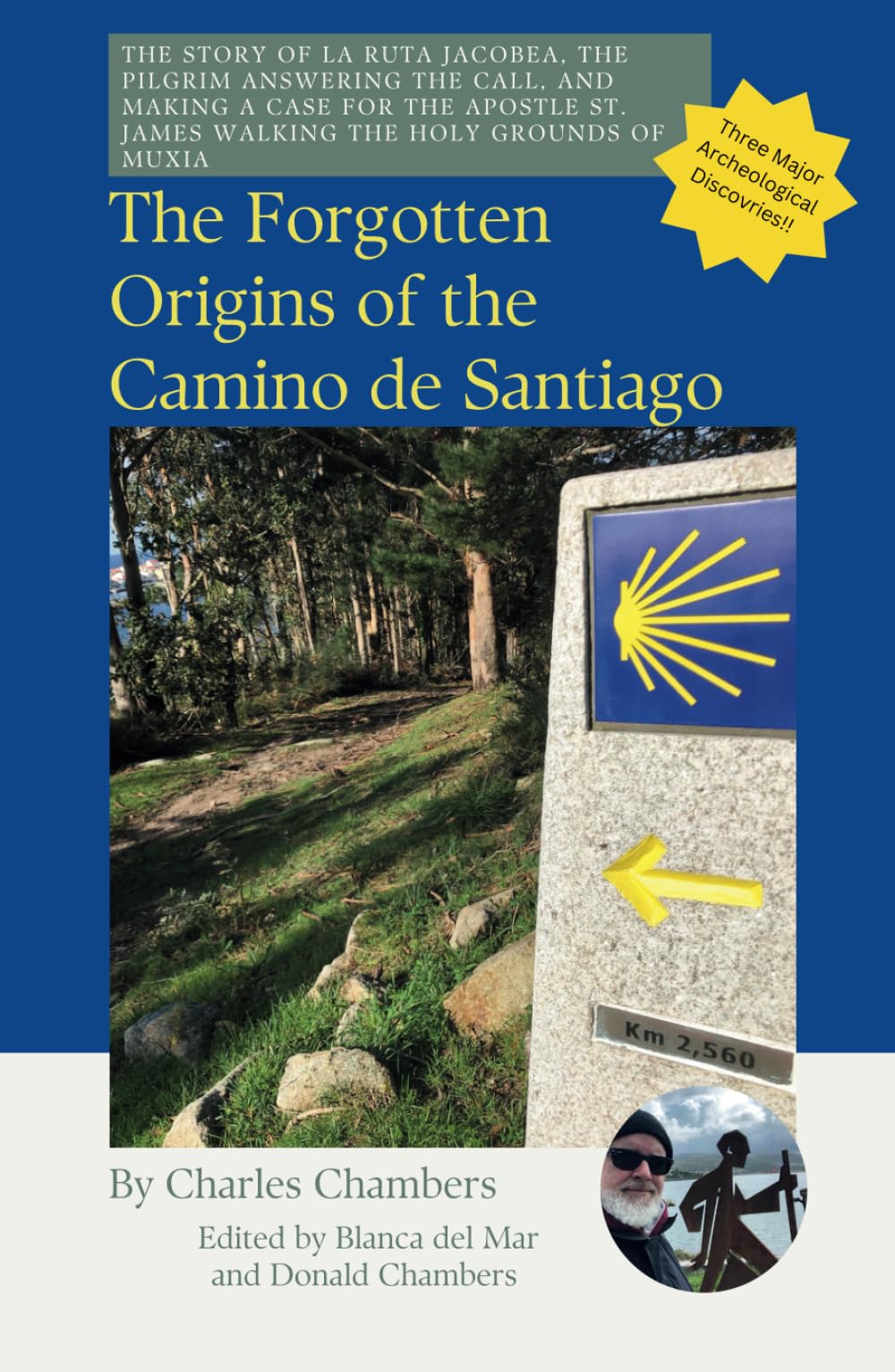
The Forgotten Origins of the Camino de Santiago: The Lost Story of La Ruta Jacobeo, Ancient Muxia, and the Call to Pilgrimage.
$30.00
by Charles Chamber



The Forgotten Origins of the Camino de Santiago by Charles A. Chambers is a groundbreaking exploration of the true history behind one of the world’s most revered pilgrimage routes. Delving into archaeological discoveries, ancient legends, and forgotten historical records, the book uncovers the deep spiritual significance of Muxia, a small coastal town in Galicia, Spain. Chambers presents compelling evidence that the Apostle Saint James may have walked these sacred grounds, offering a new perspective on the Camino de Santiago's origins and its connection to pre-Christian traditions, Roman influences, and early Christian pilgrimage practices. Through vivid storytelling and meticulous research, Chambers reconstructs the spiritual journey of pilgrims who have traveled this path for millennia. He brings to life the significance of Muxia’s Monte Corpiño, its ancient ritual stones, and the enduring presence of Jacob’s Shell as a symbol of the sacred route. The book offers a rich historical and cultural analysis, illustrating how Muxia’s religious and mythological past has shaped the pilgrimage experience, from the Celtic era to modern-day walkers seeking personal transformation. More than just a historical account, The Forgotten Origins of the Camino de Santiago is an invitation to rediscover the spiritual essence of pilgrimage. It challenges conventional narratives and inspires readers to embrace the Camino not just as a journey to Santiago de Compostela but as a profound experience of self-discovery, faith, and connection to the past. Whether you are a seasoned pilgrim or a history enthusiast, this book offers an eye-opening perspective on one of the world’s most iconic pilgrimage routes.