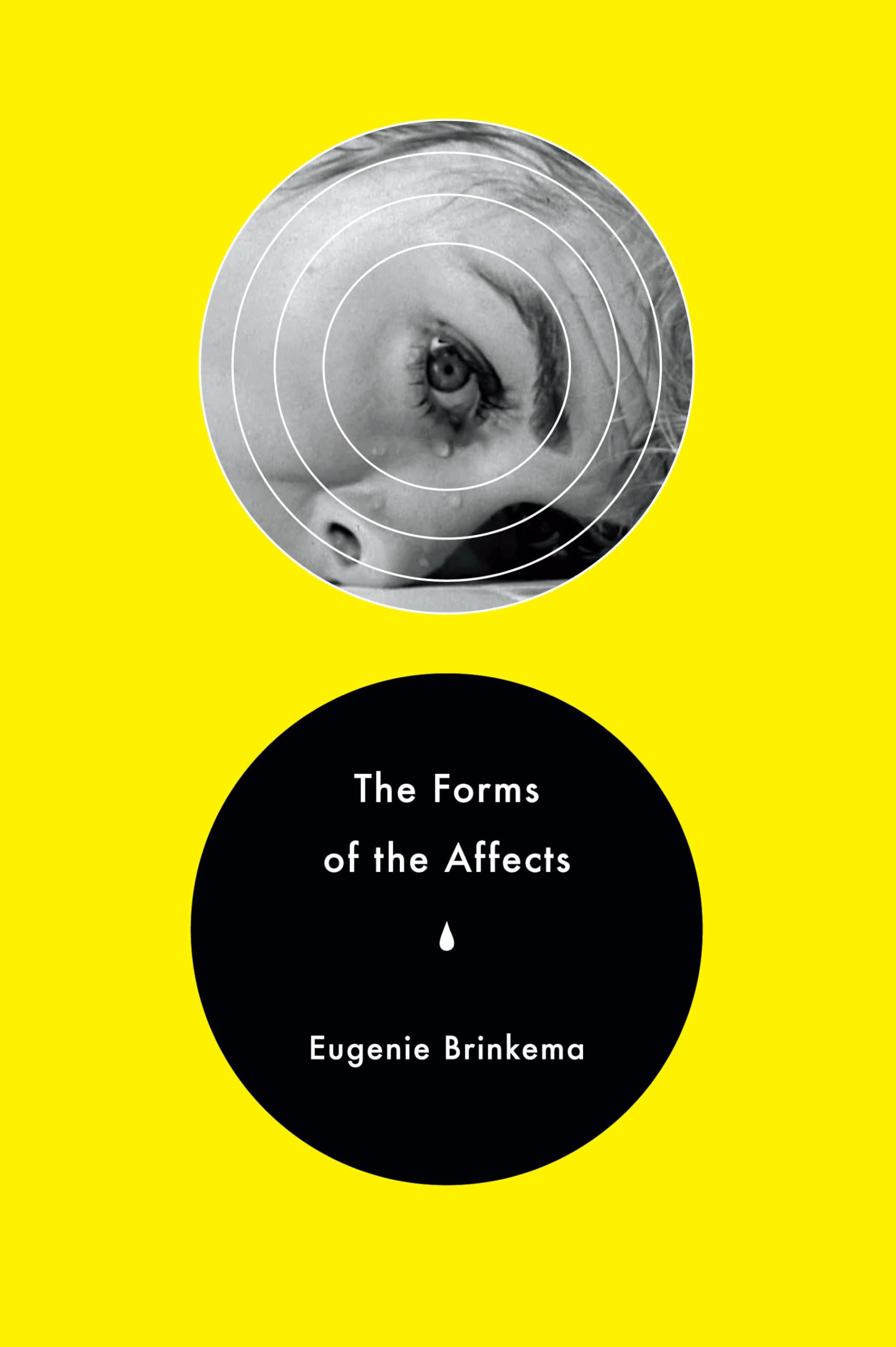



What is the relationship between a cinematic grid of color and that most visceral of negative affects, disgust? How might anxiety be a matter of an interrupted horizontal line, or grief a figure of blazing light? Offering a bold corrective to the emphasis on embodiment and experience in recent affect theory, Eugenie Brinkema develops a novel mode of criticism that locates the forms of particular affects within the specific details of cinematic and textual construction. Through close readings of works by Roland Barthes, Hollis Frampton, Sigmund Freud, Peter Greenaway, Michael Haneke, Alfred Hitchcock, Søren Kierkegaard, and David Lynch, Brinkema shows that deep attention to form, structure, and aesthetics enables a fundamental rethinking of the study of sensation. In the process, she delves into concepts as diverse as putrescence in French gastronomy, the role of the tear in philosophies of emotion, Nietzschean joy as a wild aesthetic of repetition, and the psychoanalytic theory of embarrassment. Above all, this provocative work is a call to harness the vitality of the affective turn for a renewed exploration of the possibilities of cinematic form. "Eugenie Brinkema’s The Forms of the Affects is overflowing with words that splice subjects together in numerous, thrilling combinations. . . .Brinkema’s use of language... brilliantly materialises the book’s central thesis." -- Tom Hastings ― Review 31 “[Brinkema’s] first book restores affect as a theoretical site of limitless possibility rather than the term of interpretive foreclosure it has largely become. The Forms of the Affects is a tantalizingly ambitious contribution to affect theory that may even prove sui generis as affective film studies turns over a new leaf of close reading.” -- Stephanie Amon ― Afterimage “Highly recommended. Graduate students, faculty, researchers.” -- R. B. Wise ― Choice "[A] bold corrective to affect scholarship in film studies . . . as challenging theoretically as it is delightful and useful formally. It models freedom and ingenuity in its extraction of form out of intellectual history on emotions, etymology, and even culinary knowledge, and in its patient and playful reading of film." -- Alina Haliliuc ― Film Criticism "Eugenie Brinkema’s The Forms of the Affects is an innovative book that will surely be of great interest to scholars of affect and film studies in particular, but the possibilities for her method will also be useful to those in visual studies, literary, feminist, and queer theory, philosophy, and cultural studies more broadly." -- Rachel Alpha Johnston Hurst ― Reviews in Cultural Theory "To anyone interested in questions of form and affect, this important book is sure to generate discussion for some time to come.... Reading this book is, dare I say it, an exhilaratingly affective experience." -- Jennifer Peterson ― Film Quarterly " The Forms of the Affects is a beautifully written, complex text that weaves together visual and temporal forms drawn from film and literature with the affects grief, disgust, anxiety and joy." -- Dylann M. McLean ― Emotion, Space and Society " The Forms of the Affects makes an important intervention into what has been described as the 'affective turn,' asking what 'formal affect' involves, or, put another way, what remains of affect if it is not thought through the lens of the subject. As she traces, with humor and verve, the ways philosophers have thought about sympathy, pathos, moral sentiment, crying, disgust, grief, loss, anxiety, and failure, Eugenie Brinkema repeatedly considers what it means to consider these experiences as visual problems. Through close readings of an impressive range of texts drawn from film, poetry, and experimental music, and spanning ancient to modern periods, the book explores the aesthetic forms that affect produces, and how reading affect for form pushes us to rethink the nature of formalism itself." -- Karen Beckman, author of ― Animating Film Theory Eugenie Brinkema is Assistant Professor of Contemporary Literature and Media at the Massachusetts Institute of Technology. The Forms of the Affects By Eugenie Brinkema Duke University Press Copyright © 2014 DUKE UNIVERSITY PRESS All rights reserved. ISBN: 978-0-8223-5656-1 Contents PREFACE TEN POINTS TO BEGIN, xi, CHAPTER ONE A TEAR THAT DOES NOT DROP, BUT FOLDS, 1, CHAPTER TWO FILM THEORY'S ABSENT CENTER, 26, CHAPTER THREE THE ILLUMINATION OF LIGHT, 53, CHAPTER FOUR GRIEF AND THE UNDIALECTICAL IMAGE, 76, CHAPTER FIVE AESTHETIC EXCLUSIONS AND THE WORSE THAN THE WORST, 115, CHAPTER SIX DISGUST AND THE CINEMA OF HAUT GOÛT, 152, CHAPTER SEVEN INTERMITTENCY, EMBARRASSMENT, DISMAY, 183, CHAPTER EIGHT NOTHING/WILL HAVE TAKEN PLACE/BUT THE PLACE: OPEN WATER ANXIETY, 210, CHAPTER NINE TO BEGIN AGAIN: THE INGRESSION OF JOYFUL FORMS, 242, ACKNOWLEDGMENTS, 263, NOTES, 267, BIBLIOGRAPHY, 315, INDEX, 333, CHAPTER 1 A Tear That D