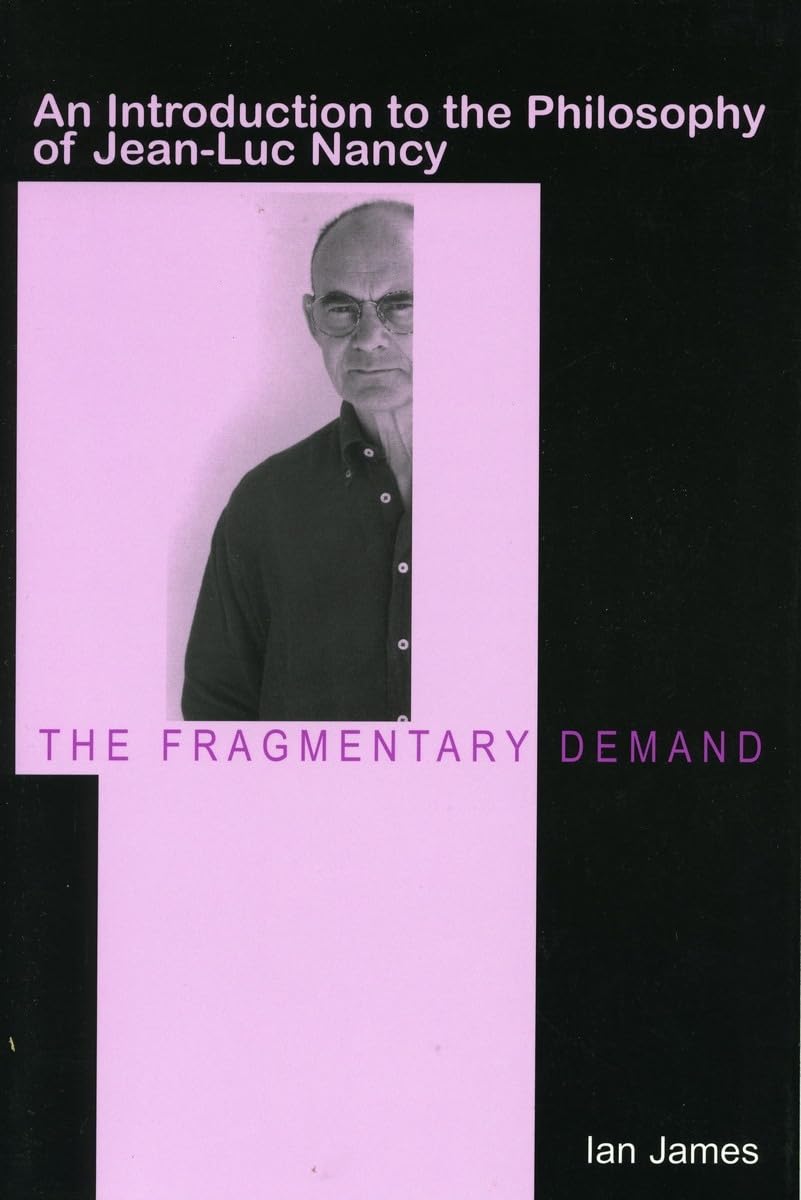



This introduction to the philosophy of Jean-Luc Nancy gives an overview of his philosophical thought to date and situates it within the broader context of contemporary French and European thinking. The book examines Nancy’s philosophy in relation to five specific areas: his account of subjectivity; his understanding of space and spatiality; his thinking about the body and embodiment; his political thought; and his contribution to contemporary aesthetics. In each case it shows the way in which Nancy develops or moves beyond some of the key concerns associated with phenomenology, post-structuralism, and what could broadly be termed the “post-modern.” "As an introductory overview to a major contemporary thinker, James's book is exemplary: the exposition is economical and clear, and combines useful contextual background with sustained sequences of detailed exegesis. James has a real knack for the concise presentation of complex ideas, and draws to good effect on Nancy's own tendency to work closely with and through other thinkers' work." -- Radical Philosophy "James shows himself to be an insightful and sophisticated expositor, carefully situating Nancy's work within the Continental tradition and detailing the central concepts and developments that constitute Nancy's own unique philosophical project." -- Continental Philosophy Review "This is a disciplined exposition of both the origins of Jean-Luc Nancy's work and its most recent shifts of emphasis...James makes an invaluable contribution to the reception of comtemporary European Philosophy in the English-speaking world. His synthetic skill, in particular his choice of topics and illustrating quotations, is impeccable." -- Philosophy in Review/Comptes Rendus Philosophiques This introduction to the philosophy of Jean-Luc Nancy gives an overview of his philosophical thought to date and situates it within the broader context of contemporary French and European thinking. The book examines Nancy’s philosophy in relation to five specific areas: his account of subjectivity; his understanding of space and spatiality; his thinking about the body and embodiment; his political thought; and his contribution to contemporary aesthetics. In each case it shows the way in which Nancy develops or moves beyond some of the key concerns associated with phenomenology, post-structuralism, and what could broadly be termed the “post-modern.” This introduction to the philosophy of Jean-Luc Nancy gives an overview of his philosophical thought to date and situates it within the broader context of contemporary French and European thinking. The book examines Nancy’s philosophy in relation to five specific areas: his account of subjectivity; his understanding of space and spatiality; his thinking about the body and embodiment; his political thought; and his contribution to contemporary aesthetics. In each case it shows the way in which Nancy develops or moves beyond some of the key concerns associated with phenomenology, post-structuralism, and what could broadly be termed the “post-modern.” Ian James is a Fellow in French and Director of Studies in Modern and Medieval Languages at Downing College, University of Cambridge. He is the author of Pierre Klossowski: The Persistence of a Name (2000). THE FRAGMENTARY DEMAND An Introduction to the Philosophy of Jean-Luc Nancy By Ian James STANFORD UNIVERSITY PRESS Copyright © 2006 Board of Trustees of the Leland Stanford Junior University All right reserved. ISBN: 978-0-8047-5270-1 Contents Acknowledgments................................................................................ixAbbreviations..................................................................................xIntroduction: The Fragmentary Demand...........................................................1Chapter 1: Subjectivity........................................................................11Introduction...................................................................................11Kant and the Foundations of Philosophy.........................................................26The Persistence of the Subject: On Descartes and the Cogito....................................49Chapter 2: Space...............................................................................65Introduction...................................................................................65Space: Classical and Phenomenological..........................................................67Heidegger and Existential Spatiality...........................................................80The Sense of Space: Nancy's Thinking of Spatiality.............................................89Chapter 3: Body................................................................................114Introduction...................................................................................114Merleau-Ponty and the Phenomenological Body....................................................121N