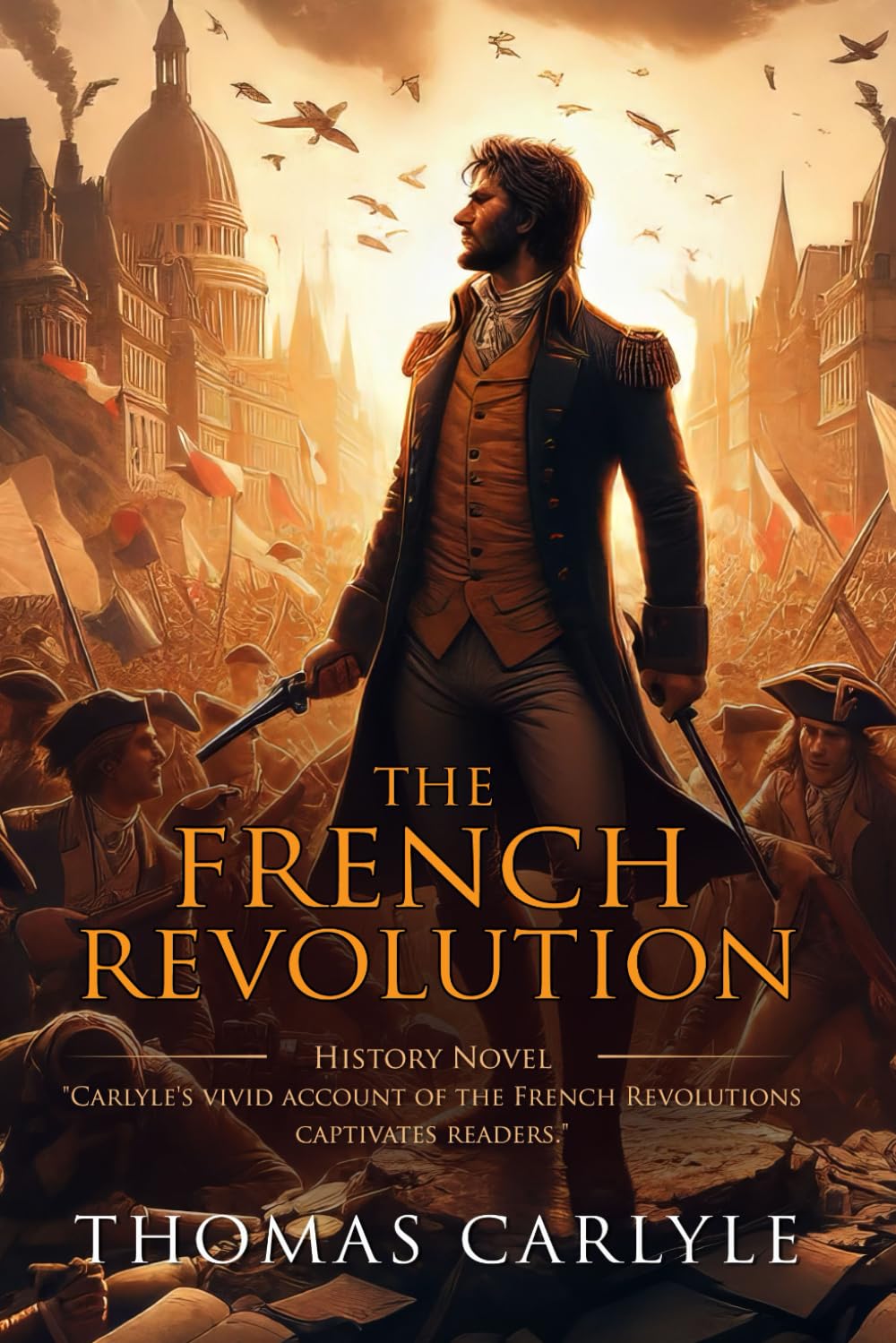
The French Revolution: Complete with Classic illustrations and Annotation
$20.99
by Thomas Carlyle



"The French Revolution" by Thomas Carlyle is a seminal work in the historiography of one of the most pivotal events in modern history. Published in 1837, Carlyle's account offers a vivid and dramatic portrayal of the revolution that shook France and reverberated across the globe. Through his passionate prose and meticulous research, Carlyle presents a narrative that captures the tumultuous spirit of the times while delving into the complex social, political, and economic forces that drove the revolution forward. One of the key strengths of Carlyle's work lies in his ability to breathe life into the historical figures who shaped the course of the revolution. From the idealistic fervor of the revolutionaries to the ruthless machinations of the ruling elite, Carlyle paints a multifaceted portrait of the individuals caught up in the maelstrom of change. Characters like Robespierre, Danton, and Marat emerge as larger-than-life figures, their actions and motivations laid bare for the reader to scrutinize. Carlyle's narrative style is marked by its intensity and lyricism, drawing the reader into the heart of the revolution with its vivid descriptions and impassioned rhetoric. His use of imagery and metaphor serves to evoke the chaos and violence of the period, immersing the reader in the sights, sounds, and emotions of revolutionary France. Through his evocative prose, Carlyle captures the sense of urgency and upheaval that characterized the era, offering a visceral portrayal of a society in flux. However, Carlyle's interpretation of the revolution has not been without controversy. Critics have accused him of romanticizing violence and glorifying authoritarianism, pointing to his sympathetic portrayal of figures like Robespierre as evidence of his ideological bias. Moreover, Carlyle's tendency to prioritize narrative drama over historical accuracy has led some scholars to question the reliability of his account, highlighting inaccuracies and omissions in his depiction of events. Despite these criticisms, "The French Revolution" remains a landmark work in the field of historical literature, its influence enduring long after its initial publication. Carlyle's passionate engagement with his subject matter and his skill as a storyteller have ensured that his interpretation of the revolution continues to resonate with readers and scholars alike. Whether viewed as a stirring epic or a flawed masterpiece, Carlyle's work remains essential reading for anyone seeking to understand the complexities of one of history's most momentous periods.