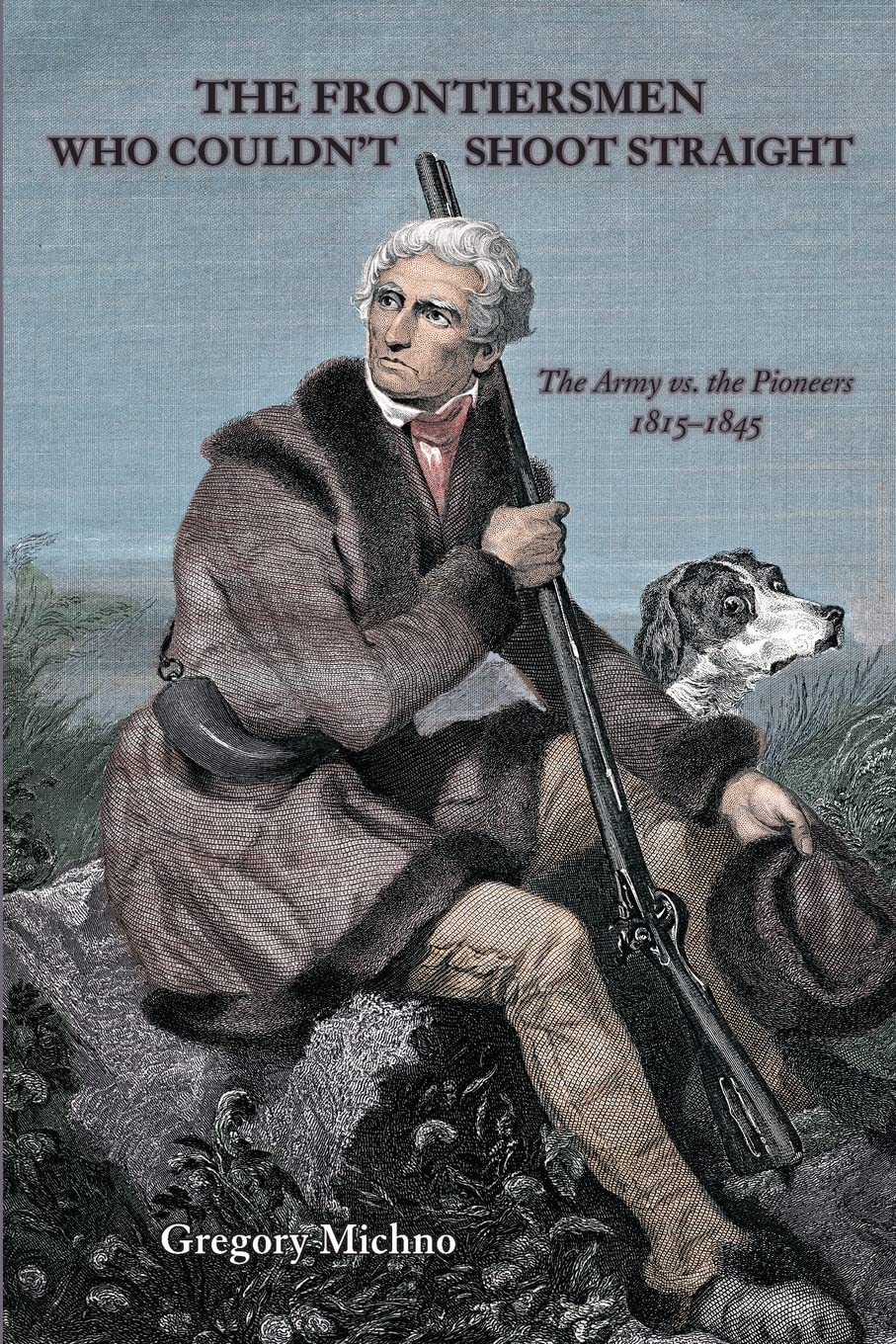
The Frontiersmen Who Couldn't Shoot Straight: The Army vs. the Pioneers 1815-1845
$18.95
by Gregory Michno



The years between 1815 and 1845 were marked by a comparative dearth of Indian Wars. It was a time when the Army became professional, and when it learned that the frontiersmen, not the Indians, were the greater enemy. It was a time when the Government expanded its role as regulator and welfare provider; when some frontier people became terrorists; when our gun culture blossomed; when our racism, bigotry, and xenophobia exploded; when our anti-intellectualism soared; when the populist common man seized the political scene; and when our conception of American exceptionalism took root, based on the creation of the heroic frontiersman icon. In this intriguing interpretation of western history, Michno deconstructs several American foundation myths while linking the past with the present in many thought-provoking vignettes. He reminds us that times do not shape people people shape the times. We also learn THE explanation of American History. That alone is worth the price of admission THE CHRONICLES OF OKLAHOMA THE FRONTIERSMEN WHO COULDN’T SHOOT STRAIGHT: THE ARMY VS. THE PIONEERS, 1815–1845. By Gregory Michno (Caldwell, ID: Caxton Press, 2020. Pp. xix, 239. Illustrations. Maps. Bibliography. Index. $18.95 paper). Gregory Michno tells the story of how tribes such as the Shawnee, Choctaw, Seminole, and Cherokee were impacted by the westward movement of white settlers onto tribal lands during the first half of the nineteenth century. Michno explains how pioneers, which he describes as settlers, farmers, and frontiersmen, committed fraud and harmed Native peoples as they moved westward into newly acquired territory. He maintains that white settlers moving onto Native land was more about settlers being the aggressors in most situations rather than the other way around. The role of the army in this book is to help move Native Americans to new land that had been set aside for them, in the hopes of diffusing tension between Indigenous people and white Americans. He discusses several instances in which whites would steal cattle or other animals and blame it on the Native Americans to por tray them as violent thieves. Michno describes how whites would make fraudulent claims against the Native Americans to the federal government. They did this to gain funds from the government as it tried to help those who were being displaced or fell victim to natural disasters. He describes how the dif ferent Indian Wars, such as the Second Seminole War from 1835–42, played a role in how the Native peoples were being treated as well. In another example, one chapter mentions how the various frauds were discovered, like overcharging for food while some military staff and vendors gave the Native Americans dependent on the rations less than survivable amounts. White Americans could not wait to move onto Na tive territory to claim it as their own. American exceptionalism is a common theme that Michno questions throughout the book, and he makes connections to xenophobia and racism in the United States today. The book made me reconsider how I teach this part of US history. Michno has offered a broader, more complicated view of how pioneers treated Indigenous peoples and how the federal government and the army forcibly removed and relocated tribal nations. This book offers a new perspective of the history of the American West, as well as Native American history. Angela Kolander University of Central Oklahoma Edmond, Oklahoma --MIdwest Book Review - James Cox Award-winning author Gregory F. Michno is a Michigan native and the author of three dozen articles and ten books dealing with World War II and the American West, including Lakota Noon; Battle at Sand Creek; The Encyclopedia of Indian Wars; The Deadliest Indian War in the West; The Settlers War; A Fate Worse Than Death; and Circle the Wagons . Greg helped edit and appeared in the DVD history The Great Indian Wars: 1540-1890. He lives in Colorado, with his wife Susan.