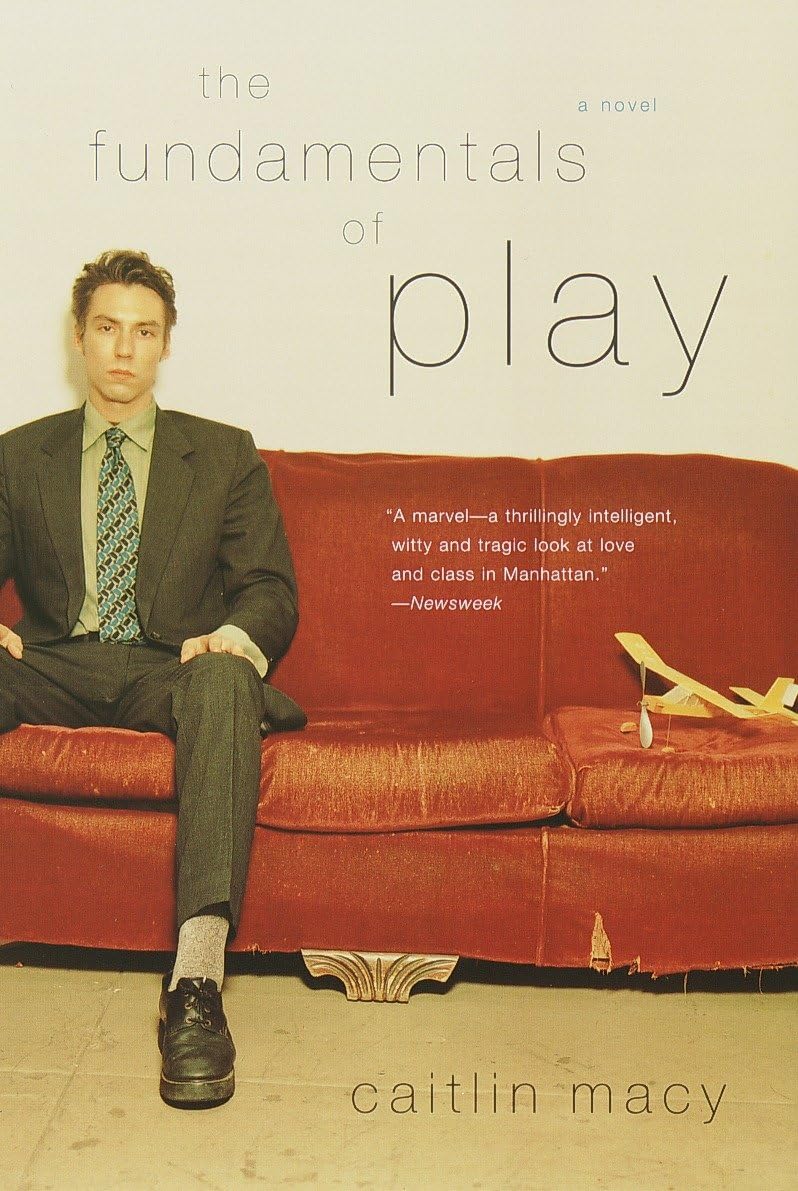



Caitlin Macy's remarkable first novel is an evocation of a time and a place in which those things that were always so dependable--money, class, family--are threatened on all sides. Narrated by George Lenhart, scion of a family who lost their fortune but not their good name, The Fundamentals of Play follows five friends from prep school as they enter adult life in New York City in the aimless, early nineties, before the internet explosion. They work entry-level jobs at investment banks, spend weekends in the Hamptons. At their center is the fickle, elusive Kate Goodenow. Everyone is in love with Kate and only George understands her heart was captured long ago, and for good. Hailed as a Great Gatsby for the end of the twentieth century-- The Fundamentals of Play introduces a brilliant new Lost Generation longing to live careless lives, while the situations around them are increasingly fraught with importance--and the world threatens to leave them behind. “A marvel-a thrillingly intelligent, witty and tragic look at love and class in Manhattan.”– Newsweek “Brilliantly portrays the onset of a new age and its ideals.... Realistic both in its vibrancy and loneliness.”– Chicago Tribune “Macy [is] an ambitious and graceful writer...her eye for the sparks that fly when her honed and not so honed sensibilities rub together is nearly unerring.”– The New Yorker 's remarkable first novel is an evocation of a time and a place in which those things that were always so dependable--money, class, family--are threatened on all sides. Narrated by George Lenhart, scion of a family who lost their fortune but not their good name, The Fundamentals of Play follows five friends from prep school as they enter adult life in New York City in the aimless, early nineties, before the internet explosion. They work entry-level jobs at investment banks, spend weekends in the Hamptons. At their center is the fickle, elusive Kate Goodenow. Everyone is in love with Kate and only George understands her heart was captured long ago, and for good. Hailed as a Great Gatsby for the end of the twentieth century-- The Fundamentals of Play introduces a brilliant new Lost Generation longing to live careless lives, while the situations around them are increasingly fraught with importance--and the world threatens to leave them beh Caitlin Macy's remarkable first novel is an evocation of a time and a place in which those things that were always so dependable--money, class, family--are threatened on all sides. Narrated by George Lenhart, scion of a family who lost their fortune but not their good name, The Fundamentals of Play follows five friends from prep school as they enter adult life in New York City in the aimless, early nineties, before the internet explosion. They work entry-level jobs at investment banks, spend weekends in the Hamptons. At their center is the fickle, elusive Kate Goodenow. Everyone is in love with Kate and only George understands her heart was captured long ago, and for good. Hailed as a Great Gatsby for the end of the twentieth century--The Fundamentals of Play introduces a brilliant new Lost Generation longing to live careless lives, while the situations around them are increasingly fraught with importance--and the world threatens to leave them behind. Caitlin Macy graduated from Yale and received her MFA in creative writing from Columbia. She has been published in The New York Times Magazine and Slate . She lives in New York City. The Fundamentals of Play By Caitlin Macy Anchor Books Copyright ©2001 Caitlin Macy All right reserved. ISBN: 9780385721127 Chapter One It was the year they changed the name on the building that ruins the view downPark Avenue. My firm was midtown-Fordyce, Farley-and I was that lowest form ofpost-undergraduate life: the first-year analyst. We worked hundred-hour weeks infabric-upholstered cubicles of four feet by six. The guy in the one next to minedidn't so much as acknowledge me till one morning when he came in late and wascompelled to share the latest outrage. "They changed the name!" I wasindignantly informed. "They went and changed the name!" I remember I told Robbins not to worry, that everyone would go on calling it thePanAm Building. I was wrong. Everyone started calling it the MetLife Building.This isn't really important-I certainly never heard anyone try to make ametaphor of it (the change in the city's most visible corporation from airplanesto insurance)-but it stuck in my mind, and it is from that point which I alwaysdate my arrival in the city. I was like any other foolishly young face in pinstripes. I lived on the barrentop of the Upper East Side in one of those high-rise dormitories called theSomething Arms. My roommate was Geoff Toff-Will Toff's brother, whom I'd knownat Dartmouth. Geoff was paralegaling as a means of getting into law school. Wedidn't live together so much as run into one another in the apartment everycouple of weeks. When w