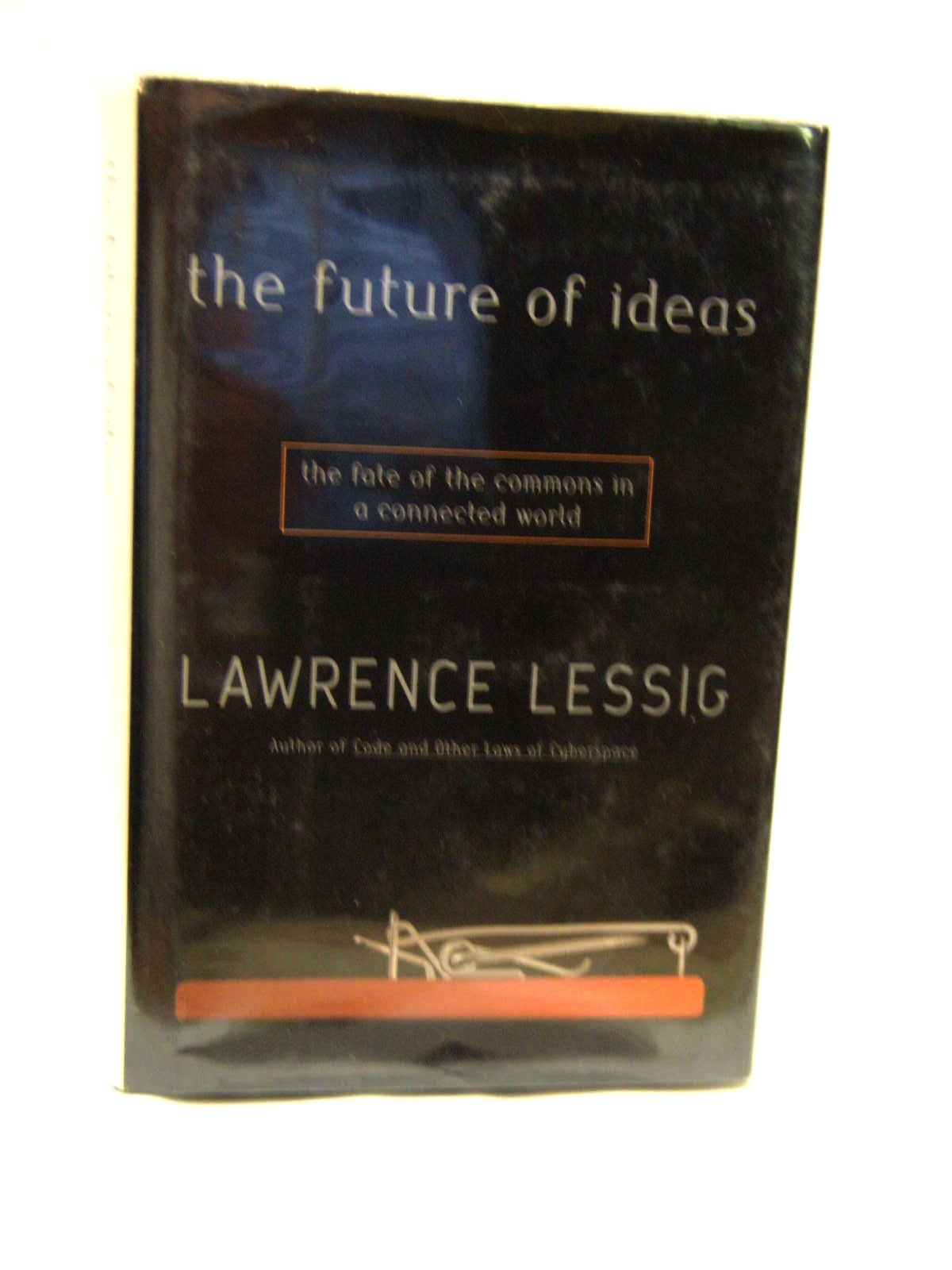
The Future of Ideas: The Fate of the Commons in a Connected World
$14.28
by Lawrence Lessig



The Internet revolution has come. Some say it has gone. What was responsible for its birth? Who is responsible for its demise? In The Future of Ideas , Lawrence Lessig explains how the Internet revolution has produced a counterrevolution of devastating power and effect. The explosion of innovation we have seen in the environment of the Internet was not conjured from some new, previously unimagined technological magic; instead, it came from an ideal as old as the nation. Creativity flourished there because the Internet protected an innovation commons. The Internet’s very design built a neutral platform upon which the widest range of creators could experiment. The legal architecture surrounding it protected this free space so that culture and information–the ideas of our era–could flow freely and inspire an unprecedented breadth of expression. But this structural design is changing–both legally and technically. This shift will destroy the opportunities for creativity and innovation that the Internet originally engendered. The cultural dinosaurs of our recent past are moving to quickly remake cyberspace so that they can better protect their interests against the future. Powerful conglomerates are swiftly using both law and technology to "tame" the Internet, transforming it from an open forum for ideas into nothing more than cable television on speed. Innovation, once again, will be directed from the top down, increasingly controlled by owners of the networks, holders of the largest patent portfolios, and, most invidiously, hoarders of copyrights. The choice Lawrence Lessig presents is not between progress and the status quo. It is between progress and a new Dark Ages, in which our capacity to create is confined by an architecture of control and a society more perfectly monitored and filtered than any before in history. Important avenues of thought and free expression will increasingly be closed off. The door to a future of ideas is being shut just as technology makes an extraordinary future possible. With an uncanny blend of knowledge, insight, and eloquence, Lawrence Lessig has written a profoundly important guide to the care and feeding of innovation in a connected world. Whether it proves to be a road map or an elegy is up to us. If The Future of Ideas is bleak, we have nobody to blame but ourselves. Author Lawrence Lessig, a Stanford law professor and keen observer of emerging technologies, makes a strong case that large corporations are staging an innovation-stifling power grab while we watch idly. The changes in copyright and other forms of intellectual property protection demanded by the media and software industries have the potential to choke off publicly held material, which Lessig sees as a kind of intellectual commons. He eloquently and persuasively decries this lopsided control of ideas and suggests practical solutions that consider the rights of both creators and consumers, while acknowledging the serious impact of new technologies on old ways of doing business. His proposals would let existing companies make money without using the tremendous advantages of incumbency to eliminate new killer apps before they can threaten the status quo. Readers who want a fair intellectual marketplace would do well to absorb the lessons in The Future of Ideas . --Rob Lightner Is the Internet evolving into a controlled environment? Should it be completely free from intellectual property rights? Lessig (Stanford Law Sch.; Code: And Other Laws of Cyberspace) argues that as the Internet faces the challenges of intellectual property laws, it should not become so controlled that it discourages innovation and creativity in the digital world. He explains the historical context of the Internet and its relationship to the "commons" (items that are made available for free) and argues that, for the Internet to evolve and be an open environment, there must be a balance between intellectual property and the public domain. His book is filled with current case and social histories, as well as extensive source notes. His examples are thorough but can be excessively detailed. Though it is written for the lay reader, it will be better understood by those with some technological background. Recommended for all types of libraries, especially those maintaining materials on intellectual property. Rob Martindale, Dallas P.L. Copyright 2001 Reed Business Information, Inc. "This book is the Silent Spring of ideas. Lawrence Lessig is telling a prophetic story of how the media-corporate complex is fencing off American culture in the name of intellectual property. His indictment is clear and shocking: our cultural patrimony is being stolen. Lessig is sounding the alarm." –Michael Wolff "The very best books give you new tools to think with and, as a result, change the way you see things you'd previously taken for granted. Like Larry Lessig's last book, Code and Other Laws of Cyberspace, The Future of Ideas addresses the ways