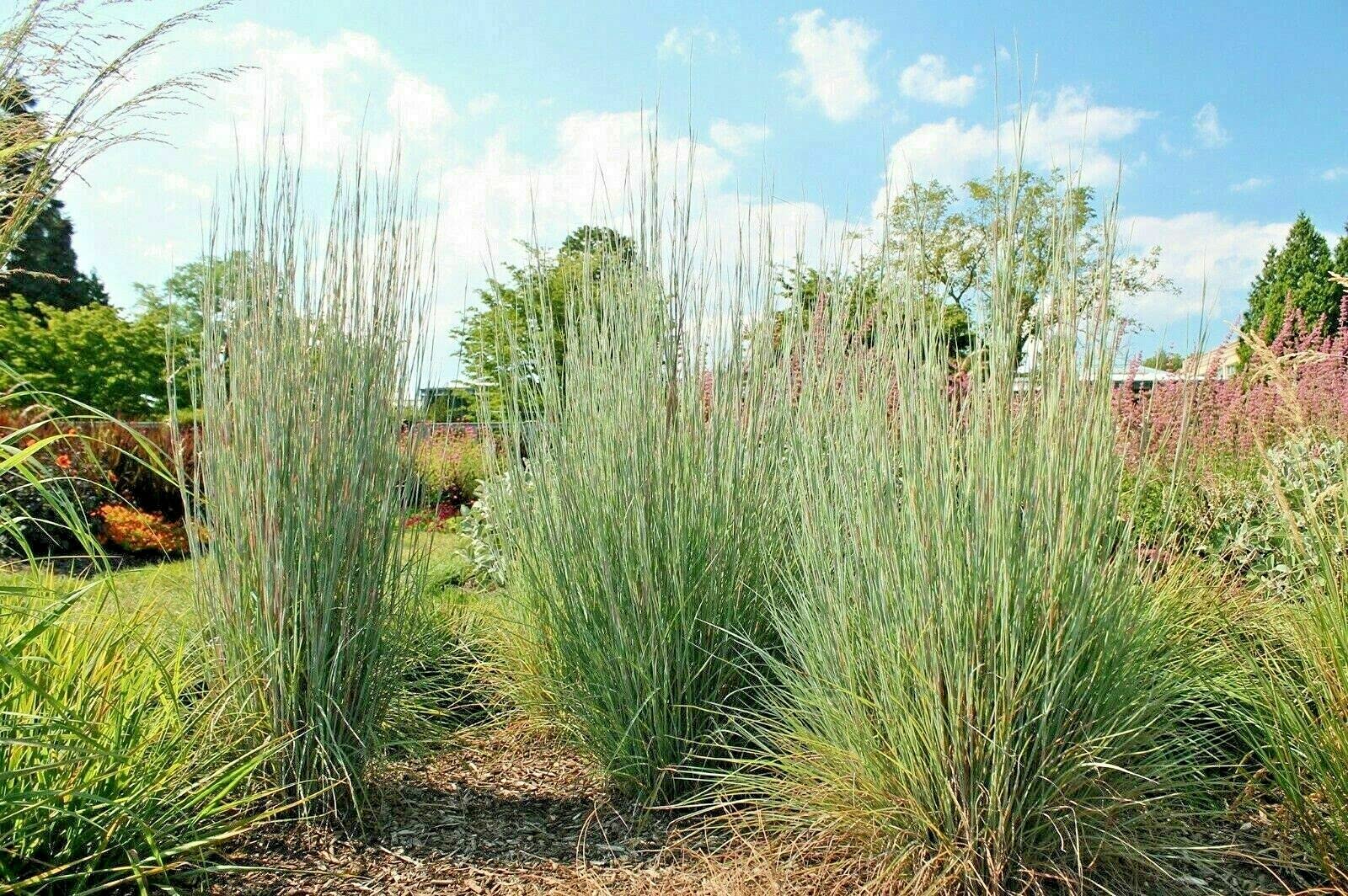
The Gardening World 1000 Big Bluestem Seeds American Native Prairie Grass Andropogon gerardii blue TGW-ANGE 0
$3.49
by The Gardening World



Color: Blue Plant Height: 84 Cycle: Perennial Light Requirements: Full Sun Sowing: Direct sow either in late fall or early spring. Plant the seed just below the surface of the soil, compacting the soil very firmly. Keep the soil lightly moist until germination, since this seed cannot germinate in dry soil. Growing: Water seedlings regularly until they become established. This plant prefers dry and well-drained soil, and tolerates drought and heat well. It also adapts well to various soil types such as sand, rocky soil, and clay. Do not fertilize, since this plant actually prefers poor soil. It will eventually spread by rhizomes and self-seeding. This plant makes an very good choice for erosion control, and also provides forage and cover for birds and other wildlife. It is an excellent ornamental grass and attracts butterflies. This is probably the most popular native grass of the tallgrass prairie. It is a warm-season grass, so it does not really get going until the summer heat sets in. It grows very tall in fertile soil, and the stems turn a lovely rusty color in the late fall and into winter. Sometimes known as the "king of the grasses," this species towers over all the other natives of the tallgrass prairie region. In the past, it grew thickly over many miles of prairie and provided an important food source for bison. Its extensive root system makes it a valuable plant for erosion control, as well as being one of the most commonly chosen species for prairie restoration and native landscaping. The genus name "Andropogon" comes from the Greek words for "man's beard," referring to the stiff hairs that develop on the ornamental seed head.