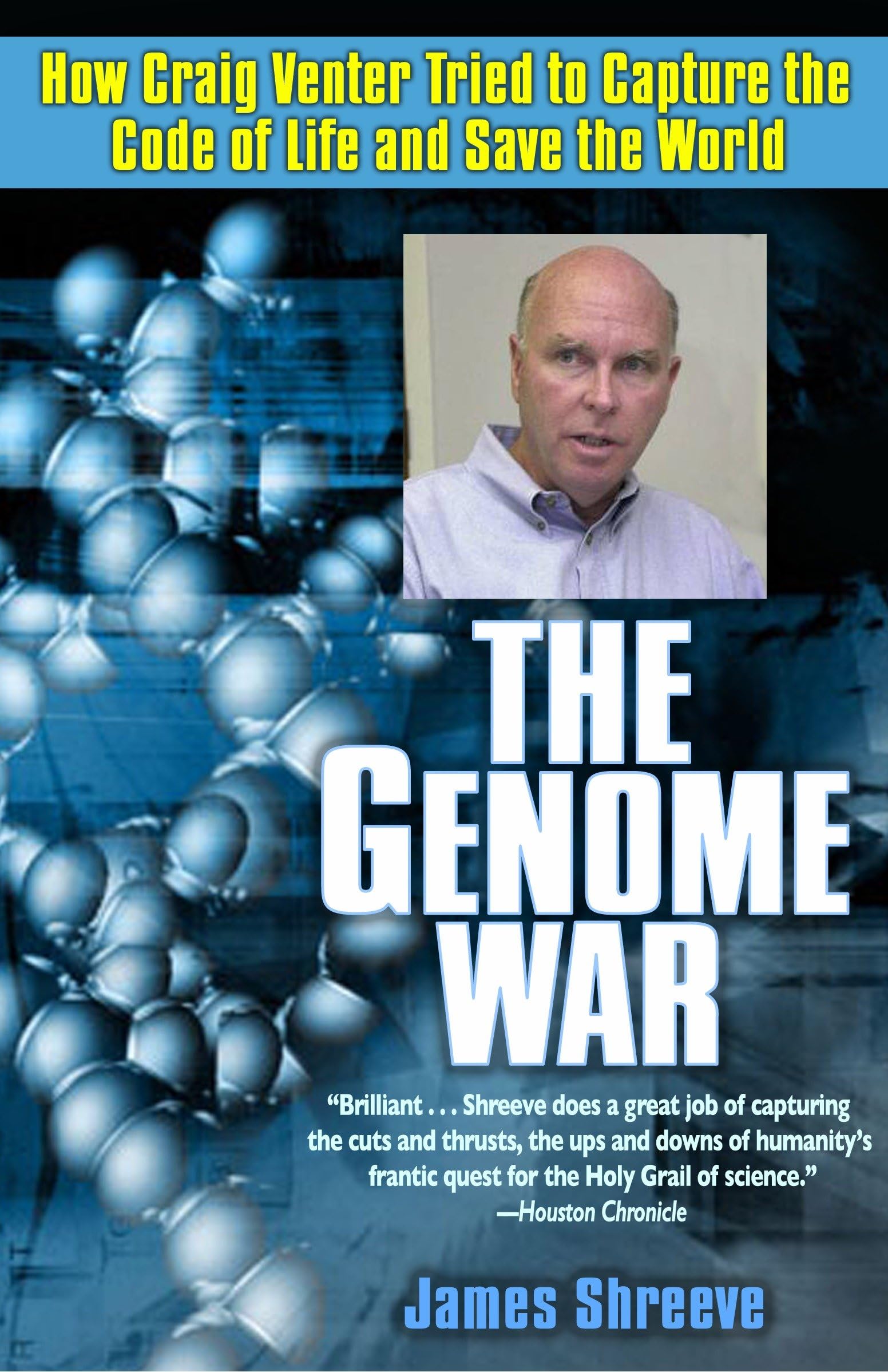
The Genome War: How Craig Venter Tried to Capture the Code of Life and Save the World
$13.10
by James Shreeve



The long-awaited story of the science, the business, the politics, the intrigue behind the scenes of the most ferocious competition in the history of modern science—the race to map the human genome. On May 10, 1998, biologist Craig Venter, director of the Institute for Genomic Research, announced that he was forming a private company that within three years would unravel the complete genetic code of human life—seven years before the projected finish of the U.S. government’s Human Genome Project. Venter hoped that by decoding the genome ahead of schedule, he would speed up the pace of biomedical research and save the lives of thousands of people. He also hoped to become very famous and very rich. Calling his company Celera (from the Latin for “speed”), he assembled a small group of scientists in an empty building in Rockville, Maryland, and set to work. At the same time, the leaders of the government program, under the direction of Francis Collins, head of the National Human Genome Research Institute at the National Institutes of Health, began to mobilize an unexpectedly unified effort to beat Venter to the prize—knowledge that had the potential to revolutionize medicine and society. The stage was set for one of the most thrilling—and important—dramas in the history of science. The Genome War is the definitive account of that drama—the race for the greatest prize biology has had to offer, told by a writer with exclusive access to Venter’s operation from start to finish. It is also the story of how one man’s ambition created a scientific Camelot where, for a moment, it seemed that the competing interests of pure science and commercial profit might be gloriously reconciled—and the national repercussions that resulted when that dream went awry. The long-awaited story of the science, the business, the politics, the intrigue behind the scenes of the most ferocious competition in the history of modern science--the race to map the human genome. On May 10, 1998, biologist Craig Venter, director of the Institute for Genomic Research, announced that he was forming a private company that within three years would unravel the complete genetic code of human life--seven years before the projected finish of the U.S. government's Human Genome Project. Venter hoped that by decoding the genome ahead of schedule, he would speed up the pace of biomedical research and save the lives of thousands of people. He also hoped to become very famous and very rich. Calling his company Celera (from the Latin for "speed"), he assembled a small group of scientists in an empty building in Rockville, Maryland, and set to work. At the same time, the leaders of the government program, under the direction of Francis Collins, head of the National Human Genome Research Institute at the National Institutes of Health, began to mobilize an unexpectedly unified effort to beat Venter to the prize--knowledge that had the potential to revolutionize medicine and society. The stage was set for one of the most thrilling--and important--dramas in the history of science. "The Genome War is the definitive account of that drama--the race for the greatest prize biology has had to offer, told by a writer with exclusive access to Venter's operation from start to finish. It is also the story of how one man's ambition created a scientific Camelot where, for a moment, it seemed that the competing interests of pure science and commercial profit might be gloriouslyreconciled--and the national repercussions that resulted when that dream went awry. "From the Hardcover edition. James Shreeve is the author of The Neandertal Enigma: Solving the Mystery of Modern Human Origin, and coauthor of Lucy’s Child: The Discovery of a Human Ancestor. His articles have appeared in The Atlantic Monthly, Discover, National Geographic, Science, Smithsonian, and other publications. He has been a fellow of the Alfred P. Sloan Foundation and of the Alicia Patterson Foundation. Shreeve lives in South Orange, New Jersey. CHAPTER 1 MAY 1998: "YOU CAN DO MOUSE" On May 8 of that year, three months before the Nantucket race, Nicholas Wade, a veteran science writer for the New York Times, entered the lobby of the St. Regis hotel on Fifth Avenue. The day before, he had received a call from a public relations representative of the Perkin Elmer Corporation in suburban Connecticut, offering him an exclusive story on an exciting development. Wade was leery. Public relations people often overestimate the media interest in their company's announcements. In the brash, upstart world of biotechnology, moreover, Perkin Elmer was an unglamorous player--a maker of instruments, not news. But the PR rep mentioned that Craig Venter was a player in the new enterprise. Wade knew that Venter would not be involved in anything unglamorous. He agreed to meet with Perkin Elmer's executives over breakfast. Wade crossed the lobby and squeezed into an elevator just as its doors began to close. A slightly built,