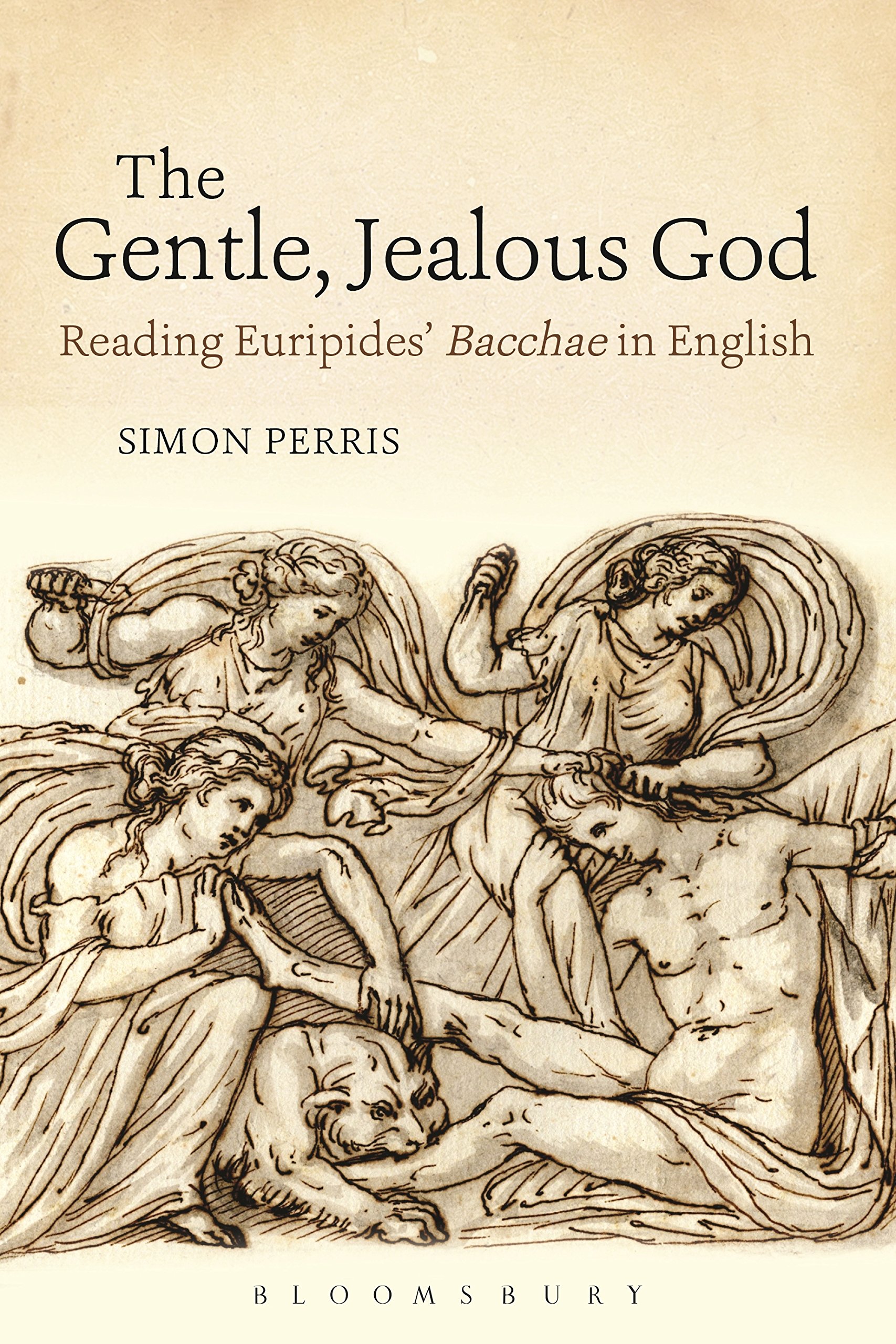
The Gentle, Jealous God: Reading Euripides' Bacchae in English (Bloomsbury Studies in Classical Reception)
$26.75
by Simon Perris



Euripides' Bacchae is the magnum opus of the ancient world's most popular dramatist and the most modern, perhaps postmodern, of Greek tragedies. Twentieth-century poets and playwrights have often turned their hand to Bacchae , leaving the play with an especially rich and varied translation history. It has also been subjected to several fashions of criticism and interpretation over the years, all reflected in, influencing, and influenced by translation. The Gentle, Jealous God introduces the play and surveys its wider reception; examines a selection of English translations from the early 20th century to the early 21st, setting them in their social, intellectual, and cultural context; and argues, finally, that Dionysus and Bacchae remain potent cultural symbols even now. Simon Perris presents a fascinating cultural history of one of world theatre's landmark classics. He explores the reception of Dionysus, Bacchae , and the classical ideal in a violent and turmoil-ridden era. And he demonstrates by example that translation matters, or should matter, to readers, writers, actors, directors, students, and scholars of ancient drama. “ The Gentle, Jealous God is a helpful addition to the growing body of scholarship on the reception of classical literature and should be regarded as the standard work on the reception of the Bacchae in English in the late twentieth and early twenty-first centuries. I expect that Perris’s book will also be of interest more generally to those who engage in translating and/or adapting ancient texts for English-speaking audiences.” – Bryn Mawr Classical Review “This book compellingly proves Perris's emphatic conclusion that "Translation matters" … This book is of value to students and teachers alike, particularly its summary of approaches to translation and reception studies in the Introduction and its close readings of poetic translations.” - Classical Journal Simon Perris is Senior Lecturer in Classics at Victoria University of Wellington, New Zealand. He has published numerous articles on Greek tragedy and classical reception.