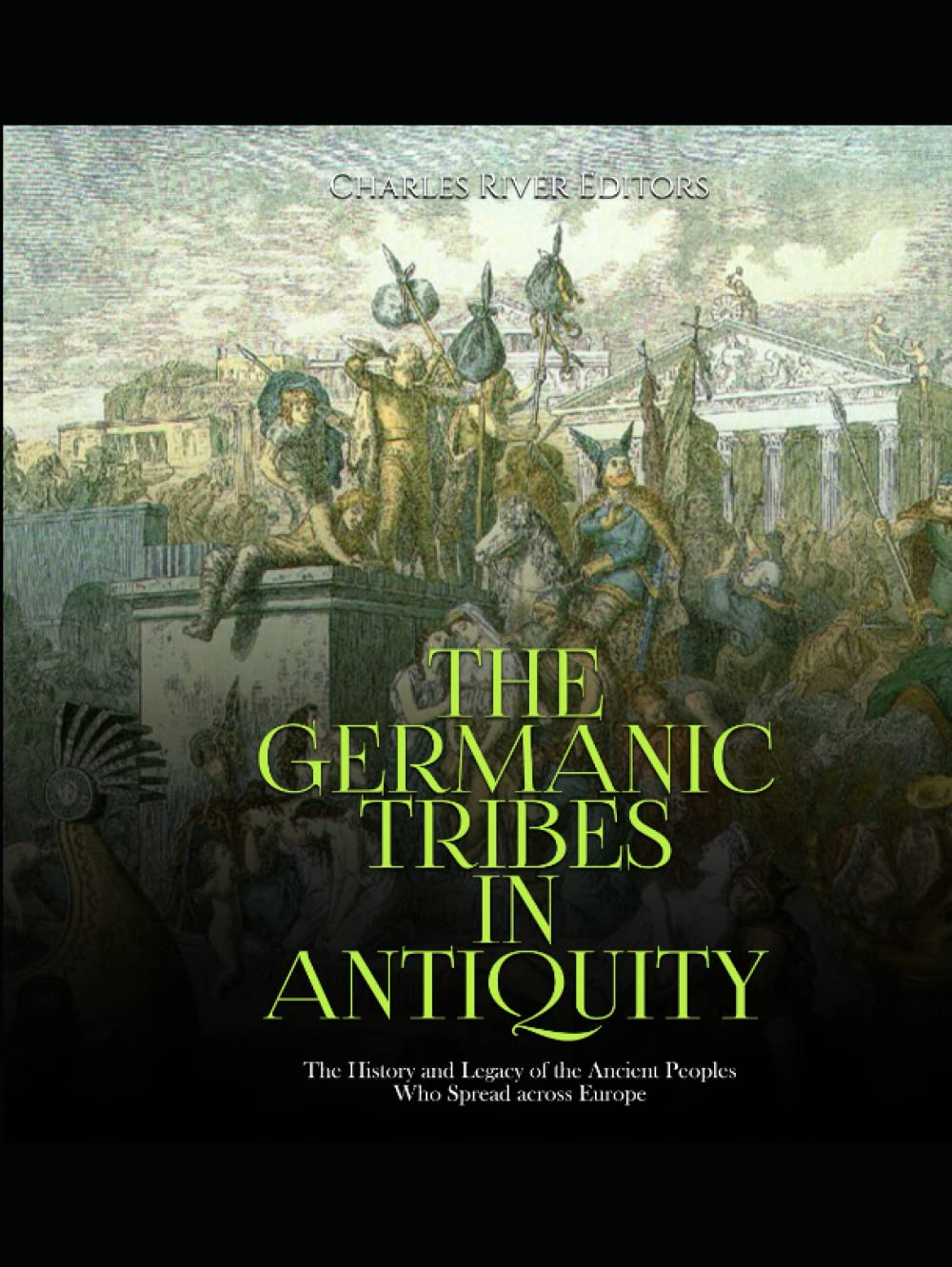
The Germanic Tribes in Antiquity: The History and Legacy of the Ancient Peoples Who Spread across Europe
$20.71
by Charles River Editors



Despite all the accomplishments and widespread victories and conquests that the ancient Romans accrued over the centuries, one of their most critical failures was the inability to subjugate Germany. Indeed, historians have singled out this one failure as central to the ultimate downfall of Rome, as the constant wars against the Germanic tribes and the need to defend the frontier on the Rhine helped bring the Roman Empire to its knees. There are elements of truth in such a conclusion, but the reality was far more fluid than is often realized. From the 1st century BCE until the collapse of the Western Roman Empire in the 5th century CE, the relationships between the Romans and those living in what is now modern Germany were extremely complicated, involving much more than simple warfare. As a Roman territory, Germania at one point included significant areas of land east of the Rhine, all the way up to the Elbe. The Romans would maintain a significant force on this eastern side until the 3rd century CE, but eventually a Frankish invasion ended that presence, and the term Germania came to refer specifically to the territory west of the Rhine, which included the two provinces of Germania Superior and Germania Inferior, or Upper and Lower Germany. Those provinces were key to the defense of the empire, so much so that Triers provided the location of one of the four seats of government near the end of Rome’s reign. The people that came to be known as Germans originally came from Scandinavia and were mainly shepherds and hunters, but they comprised a number of distinct groups. Within each group, there were separate tribes, and as their populations grew, the land they occupied in Scandinavia was unable to support them, so they began migrating south, settling outside the borders of the Roman Empire. The Germans were fierce warriors who employed rather crude but effective tactics in battle. Their main approach was one of charging directly at an enemy and fighting hand-to-hand using their long swords and shields. Body armor was unknown, and they wore only animal-skins. Most warriors wore their hair long, dyed red and greased into ponytails. Friction between Rome and the German tribes can be traced back as far as 113 BCE, and the next 500 years brought full-scale campaigns by the Romans against the various individual tribes, resulting in numerous battles and constant uprisings wherever any part of the land east of the Rhine was occupied for any length of time. The impact of this constant warfare on both sides cannot be underestimated, and all the while, the fighting and other interactions had massive cultural and political influences going in both directions. The Germans who lived on Gaul’s side of the Rhine proved to be more amenable to Roman culture and were willing to ally with and even give obedience to the Romans, but those who lived north of the Rhine were completely recalcitrant and obstinate when it came to any outsiders, Roman or otherwise. Rebellions among the Celts in Gaul (roughly equivalent to modern France) in 59 BCE forced Caesar to lead a major campaign into the province, which ultimately resulted in the suppression of the Celts, but the Germans north of the Rhine remained independent. Although Caesar led two secondary campaigns across the Rhine against the Germans, both were unsuccessful.