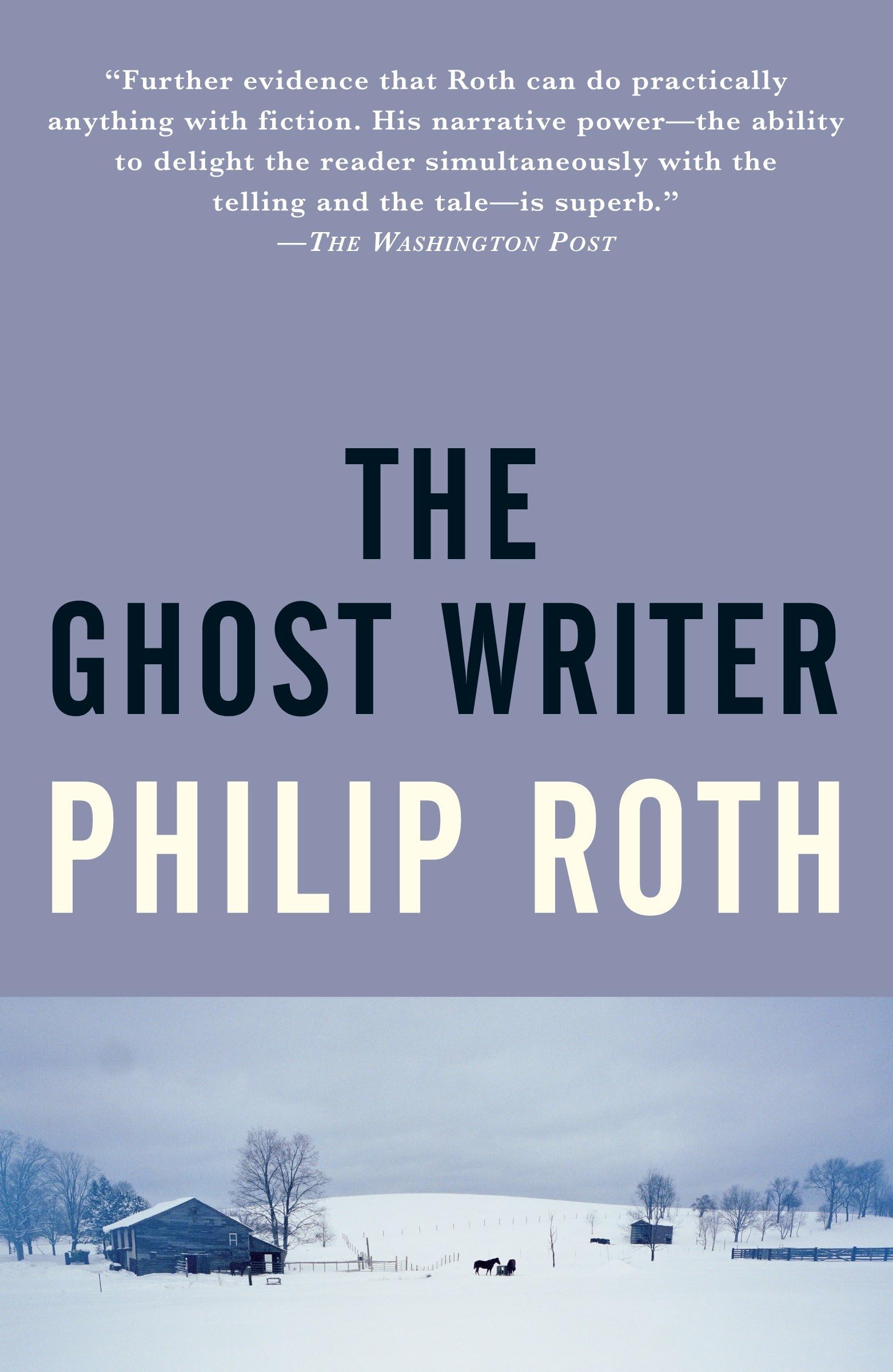



The novel that first introduced the Pulitzer Prize–winnning author’s most acclaimed character, Nathan Zuckerman, a budding writer infatuated with the Great Books, who meets a haunting young woman at the secluded New England farmhouse of his idol. "Further evidence that Roth can do practically anything with fiction. His narrative power—the ability to delight the reader simultaneously with the telling and the tale—is superb." — The Washington Post At Lonoff's, Zuckerman meets Amy Bellette, a haunting young woman of indeterminate foreign background who turns out to be a former student of Lonoff's and who may also have been his mistress. Zuckerman, with his active, youthful imagination, wonders if she could be the paradigmatic victim of Nazi persecution. If she were, it might change his life. The Ghost Writer is about the tensions between literature and life, artistic truthfulness and conventional decency—and about those implacable practitioners who live with the consequences of sacrificing one for the other. A middle-aged writer recalls his younger self. At 23, Nathan Zuckerman has had four stories published and a small, flattering Saturday Review up-and-coming-author profile (complete with a photo of him playing with his ex-girlfriend's cat), which he purports to scorn. As genuine and polite as he seems, Zuckerman has already hurt his family with his autobiographical art and ruined his relationship with adultery and honesty. Visiting his reclusive idol (famed for his "blend of sympathy and pitilessness") in the Berkshires, the writer watches himself watching himself and attempts to confront his work and life. Instead he finds himself turning reality into metafiction. A quote he happens upon from Henry James only complicates matters further: "We work in the dark--we do what we can--we give what we have. Our doubt is our passion and our passion is our task. The rest is the madness of art." Events, however, have their revenge, weaving more out of control than even he can anticipate or ask for. Philip Roth is the master of the uncomfortable, and his alter ego a connoisseur of self-involvement, self-loathing, and self-examination. ("Virtuous reader, if you think that after intercourse all animals are sad, try masturbating on the daybed in E. I. Lonoff's study and see how you feel when it's over.") Both these novels follow protagonist Nathan Zuckerman through different times in his life?Ghost Writer, dubbed a "glowing work of fiction" by LJ's reviewer (LJ 9/1/79), introduced the character in his youth, while 1981's Unbound offers him in his mid-30s. Roth's many fans will be happy to see these again. Copyright 1995 Reed Business Information, Inc. "Roth's most controlled and elegant work ... serious, intelligent, dramatic, acutely vivid, slyly and wickedly funny ... seductive far beyond its brief efficiency." — Village Voice "I had only to read the two opening sentences to realize that I was once again in the hands of a superbly endowed storyteller." — The New York Review of Books "Further evidence that Roth can do practically anything with fiction. His narrative power—the ability to delight the reader simultaneously with the telling and the tale—is superb." — The Washington Post ost Writer introduces Nathan Zuckerman in the 1950s, a budding writer infatuated with the Great Books, discovering the contradictory claims of literature and experience while an overnight guest in the secluded New England farmhouse of his idol, E. I. Lonoff. At Lonoff's, Zuckerman meets Amy Bellette, a haunting young woman of indeterminate foreign background who turns out to be a former student of Lonoff's and who may also have been his mistress. Zuckerman, with his active, youthful imagination, wonders if she could be the paradigmatic victim of Nazi persecution. If she were, it might change his life. The first volume of the trilogy and epilogue Zuckerman Bound , The Ghost Writer is about the tensions between literature and life, artistic truthfulness and conventional decency—and about those implacable practitioners who live with the consequences of sacrificing one for the other. PHILIP ROTH won the Pulitzer Prize for American Pastoral . In 1998 he received the National Medal of Arts at the White House and in 2002 the highest award of the American Academy of Arts and Letters, the Gold Medal in Fiction. He twice won the National Book Award and the National Book Critics Circle Award. He won the PEN/Faulkner Award three times. In 2005 The Plot Against America received the Society of American Historians’ Prize for “the outstanding historical novel on an American theme for 2003–2004.” Roth received PEN’s two most prestigious awards: in 2006 the PEN/Nabokov Award and in 2007 the PEN/Bellow Award for achievement in American fiction. In 2011 he received the National Humanities Medal at the White House, and was later named the fourth recipient of the Man Booker International Prize. He died in 2018. Used Book