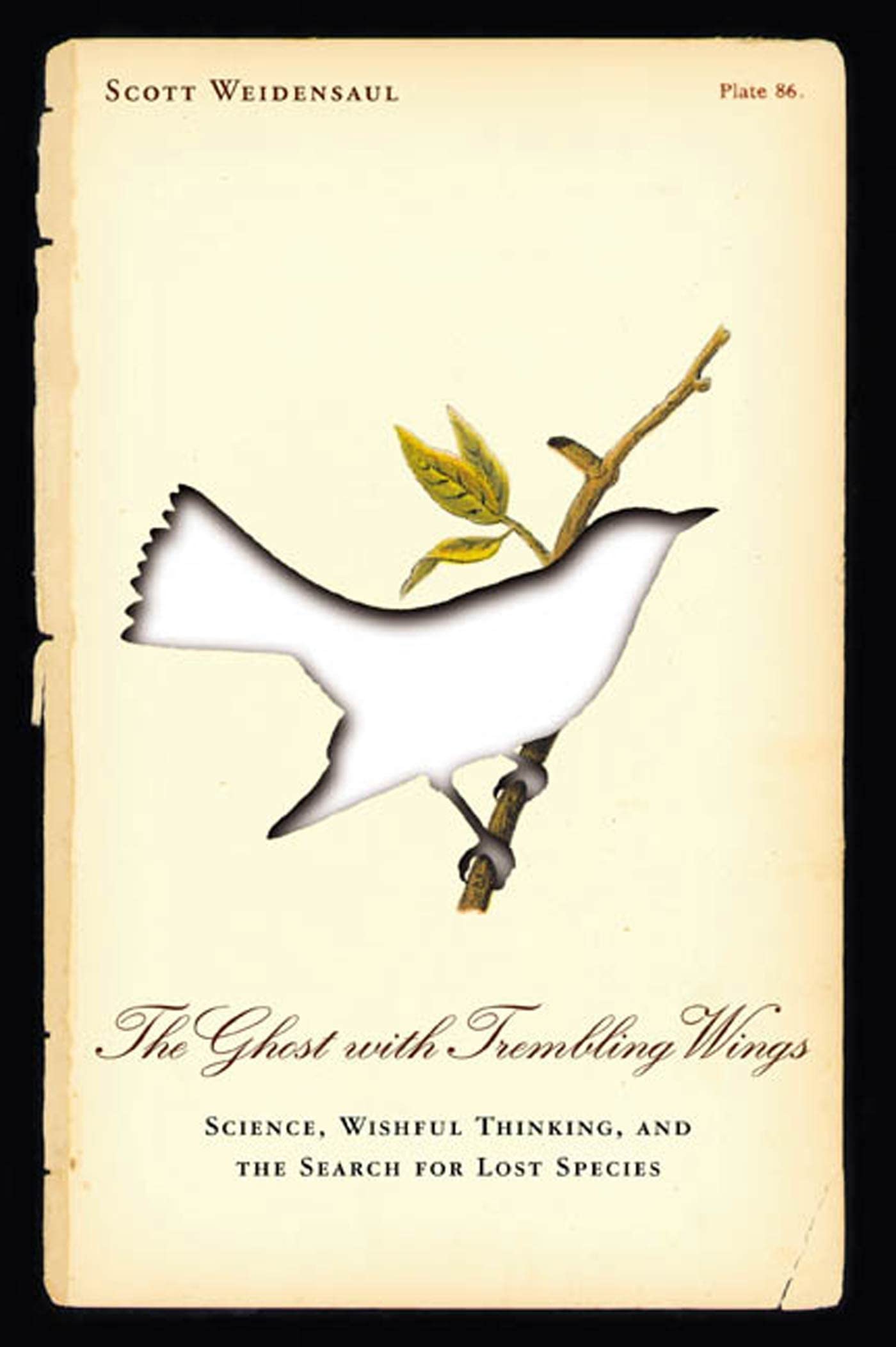
The Ghost with Trembling Wings: Science, Wishful Thinking and the Search for Lost Species
$13.09
by Scott Weidensaul



"A thoughtful examination of the machinery of extinction . . . By turns harrowing and elegiac, thrilling and informative." ―Michiko Kakutani, The New York Times Three or four times an hour, eighty or more times a day, a unique species of plant or animal vanishes forever. And yet, every so often one of these lost species resurfaces. "Having adventures most of us can only dream about" ( The Times-Picayune ), Scott Weidensaul pursues stories of loss and recovery, of endurance against the odds, and of surprising resurrections. “Part natural history, part adventure story (starring Mr. Weidensaul as a kind of ecological-minded Indiana Jones, roaming the world in search of missing species).” ― Michiko Kakutani, The New York Times “At the core of Weidensaul's book are fundamental questions about who we are, the state of our planet, and the faltering health of our ecosystems . . . [It] is as much about people as the animals they search for.” ― Anthony Doerr, The Boston Globe “Scott Weidensaul ranks among an elite group of writer-naturalists--Bruce Chatwin, John McPhee and David Quammen come to mind--whose straightforward eloquence elevates ecology to the level of philosophy.” ― Janice P. Nimura, Los Angeles Times Scott Weidensaul is the author of Living on the Wind: Across the Hemisphere with Migratory Birds , which was a Pulitzer Prize finalist, Return to Wild America , The Ghost with Trembling Wings and Mountains of the Heart . He lives in the Pennsylvania Appalachians. The Ghost with Trembling Wings Science, Wishful Thinking, and the Search for Lost Species By Scott Weidensaul North Point Press Copyright © 2003 Scott Weidensaul All right reserved. ISBN: 0865476683 Chapter One The Ghost with Trembling Wings * * * The overnight rain had stopped, leaving the forest heavy with moisture and the trail slick with mud. I moved down the path in the dim green predawn light, beneath palms and tall mahogany trees hung with vines, keeping half an eye on the ground?mindful that a snake, one of the big, venomous fer-de-lances that blend so well with fallen leaves, might be returning late from a night of hunting. The air was overflowing with bird songs, only a few of which I recognized; the clear, piercing whistles of rufous-throated solitaires, and the buzzy, hurry-up-and-wait melody of the tiny bananaquits, which flitted ahead of me like yellow insects. The path wound its way down into ravines, across small, clear jungle streams, and back up again, and wrapped around the base of sodden cliffs covered with ferns, from which choruses of tree frogs still called, unwilling to relinquish the night. After an hour of hiking, I rounded a bend and the forest fell away suddenly into a deep gash. I could finally see what I'd already known ?that I was high on the side of a steep mountain, overlooking narrow valleys enclosed by craggy, tree-covered hills, their summits made indistinct by ragged gray clouds that whipped across them on the strong breeze. St. Lucia lies midway down the Windward Islands of the Lesser Antilles, where the chain crooks like a bent finger toward Venezuela, 400 miles to the south. It is a volcanic island, heavily mountainous and covered in forest?the very picture of a tropical paradise, known through history as "the Helen of the Caribbean" for its natural beauty. Tourist resorts rim the coasts, while the interior is largely protected in a series of government forest reserves; unlike many of its neighbors in the Caribbean, St. Lucia has maintained much of its native habitat, making it an emerging mecca for ecotourism. The northeast trade winds, which blow almost constantly through the winter dry season, wicked the sweat from me as I settled down at the edge of the overlook for a rest, unslinging my binoculars. In 1994, when a hurricane swept the region, torrential rains loosened the soil, producing catastrophic landslides across the island. The damage was far less in the forest reserves, where the thick jungle held the soil in place better than farmland or scrub did, but this hillside had nevertheless torn loose, entombing hundred-foot-tall trees in a slurry of heavy mud that roared into the valley below. Now, years later, the dizzyingly steep wall of the old slide zone was covered with fresh green growth, edged by a few old canopy trees that somehow escaped the carnage and stood lonely and tall. A pair of large parrots, growling and squawking like preschoolers, flew out of the mist and down into the valley, blue and yellow flashing on their wings before they were swallowed by the trees. A broad-winged hawk wheeled overhead, giving a high, thin scream, then landed near the top of one of the tall trees and began to meticulously preen its feathers. Sometimes, in the forest, it pays to play a hunch. I don't know why, but as I watched the hawk, I froze, binoculars halfway to my eyes, then very slowly turned my head to look behind me. An agout