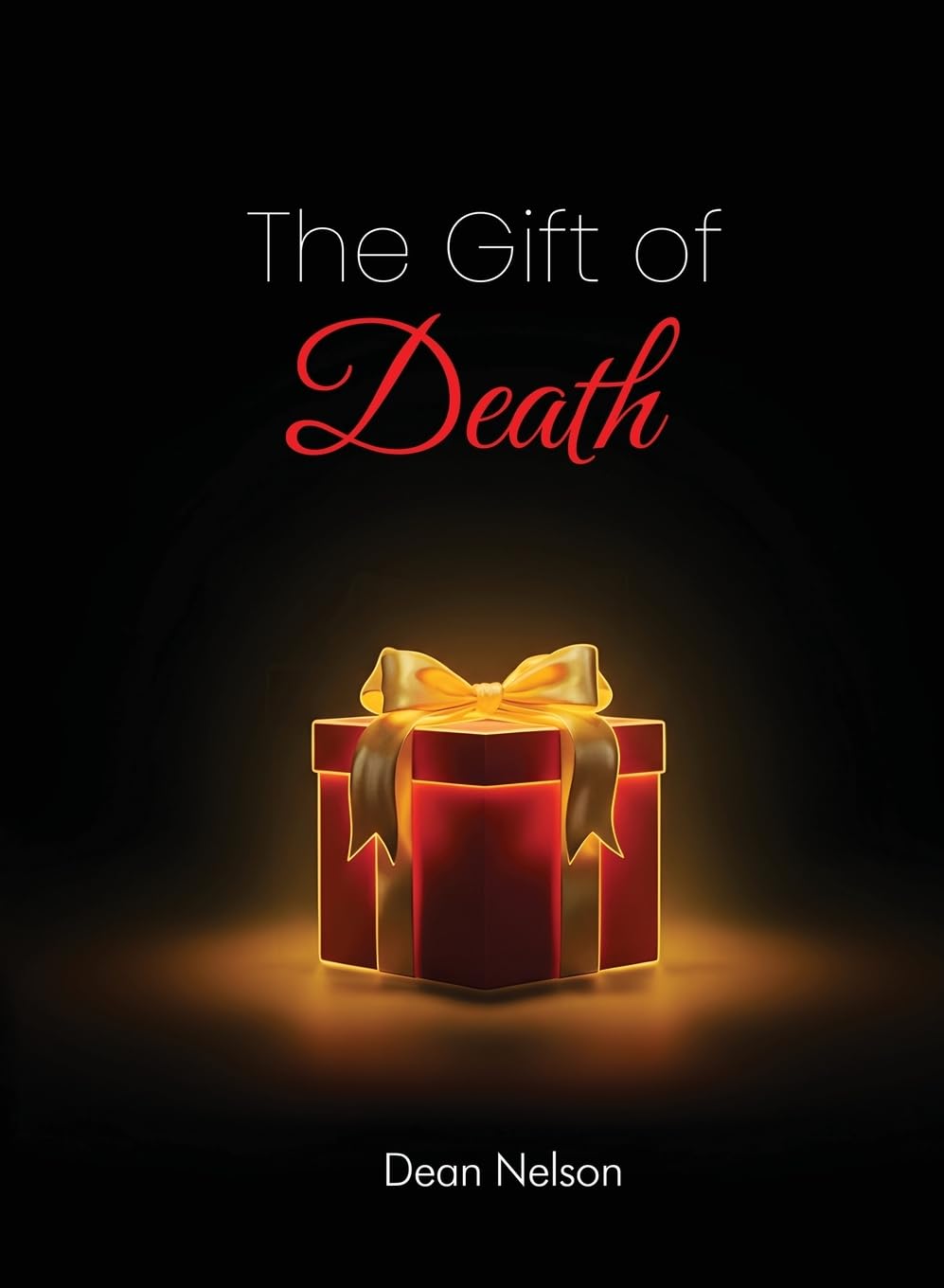



Death is inevitable. Avoiding it is optional. We rarely speak honestly about death. We soften the language, look away, or treat it as something that happens to other people. Yet when we allow ourselves to face mortality without denial, something unexpected occurs: life becomes clearer. The Gift of Death offers a gentle, thoughtful exploration of what mortality reveals about living. With honesty and compassion, Dean Nelson guides readers through fear, regret, grief, time, legacy, and the quiet lessons that emerge when we stop turning away from the end we all face. This book does not offer easy answers or comforting illusions. Instead, it creates space—space to think, to feel, and to reflect on what truly matters while time is still ours. Through personal reflection, philosophical insight, and lived experience, Nelson explores: • why the awareness of death sharpens meaning • how regret can become a teacher rather than a weight • what we leave behind in the lives we touch • how grief reshapes love rather than ending it • what it means to live honestly in the presence of impermanence Whether you are grieving, questioning, or simply ready to look at life more clearly, The Gift of Death offers calm, grounding, and perspective. This is not a book about dying. It is a book about living with presence, courage, and meaning. Must read Five-Star Review Clarity in the Face of the Inevitable: A Gentle, Honest Companion for Living Well in the Face of Mortality SYNOPSIS The Gift of Death is a philosophical reflection on mortality written for readers who prefer clarity over consolation and understanding over belief. Rather than treating death as a distant abstraction or a subject to be softened, the book invites an honest and unflinching examination of finitude and its role in shaping a meaningful life. Through calm, accessible prose, the author explores how acknowledging death can sharpen awareness, refine values, and bring greater presence to everyday experience. The focus is not on dying itself, but on how living with mortality in view can reduce fear, deepen gratitude, and clarify what truly matters. This is a secular, reflective work that avoids prescription and dogma. It does not offer answers so much as perspective—inviting readers to reconsider their relationship with death and, in doing so, their relationship with life. Death is not just an event that happens later. Death is also the boundary that gives urgency, proportion, and meaning to the present. In a culture that often treats aging as a failure and death as a malfunction to be avoided, Dean Nelson's The Gift of Death offers a careful and composed alternative. The book's most compelling contribution to the discussion of death is its description of death—and dying—as a conceptual "frame." Nelson's insight aligns closely with psychological theories that examine how mortality awareness shapes behavior. Instead of viewing death as a terrifying end, we should see it as a lens that filters out life's trivialities to reveal our most meaningful obligations. For readers familiar with Irvin Yalom or Kathryn Mannix, Nelson's voice will feel recognizably grounded. He offers moral seriousness without dogma, allowing space for uncertainty while insisting on attentiveness to what matters. His discussion of "The Final Hours" describes death as a physical continuity rather than annihilation, echoing the idea that energy is not erased but transformed through relationship and memory. As my own parents pass their mid-nineties, the reality of mortality is just as Nelson describes. Death is no longer an abstract idea. The book reframes grief not as something to resist, but as something that can coexist with gratitude and love. Although I am unable to know exactly the day my parents will pass, when the day comes, I expect to be a bit more ready because of the author's thoughtful reflections. I was especially struck by the book's closing reflection, which I found both unsettling and consoling: "We speak so often of fear, of death's mystery, of its finality. But what if it is not a punishment? What if it is simply a return, to the same absence we came from, to the same silence, to the same rest? There was no suffering before you existed. Why should there be fear in becoming what you once were?" The Gift of Death is a humane, thoughtful companion for anyone navigating aging or loss. It is not a book of easy answers about death itself, but an invitation to live, and to attend to life, more carefully. His thoughts are now, and will continue to be, invaluable for reminding me of what's most important as my parents slowly pass, second by precious second: paying attention, speaking what matters, and valuing time as something borrowed rather than owned. Laura Hattersley is Senior Copyeditor for Focus on Fabulous Magazine and Proofreader for Qbook, International. She has 3 ELT certifications from Cambridge University, a Master's Degree and has presented research papers on