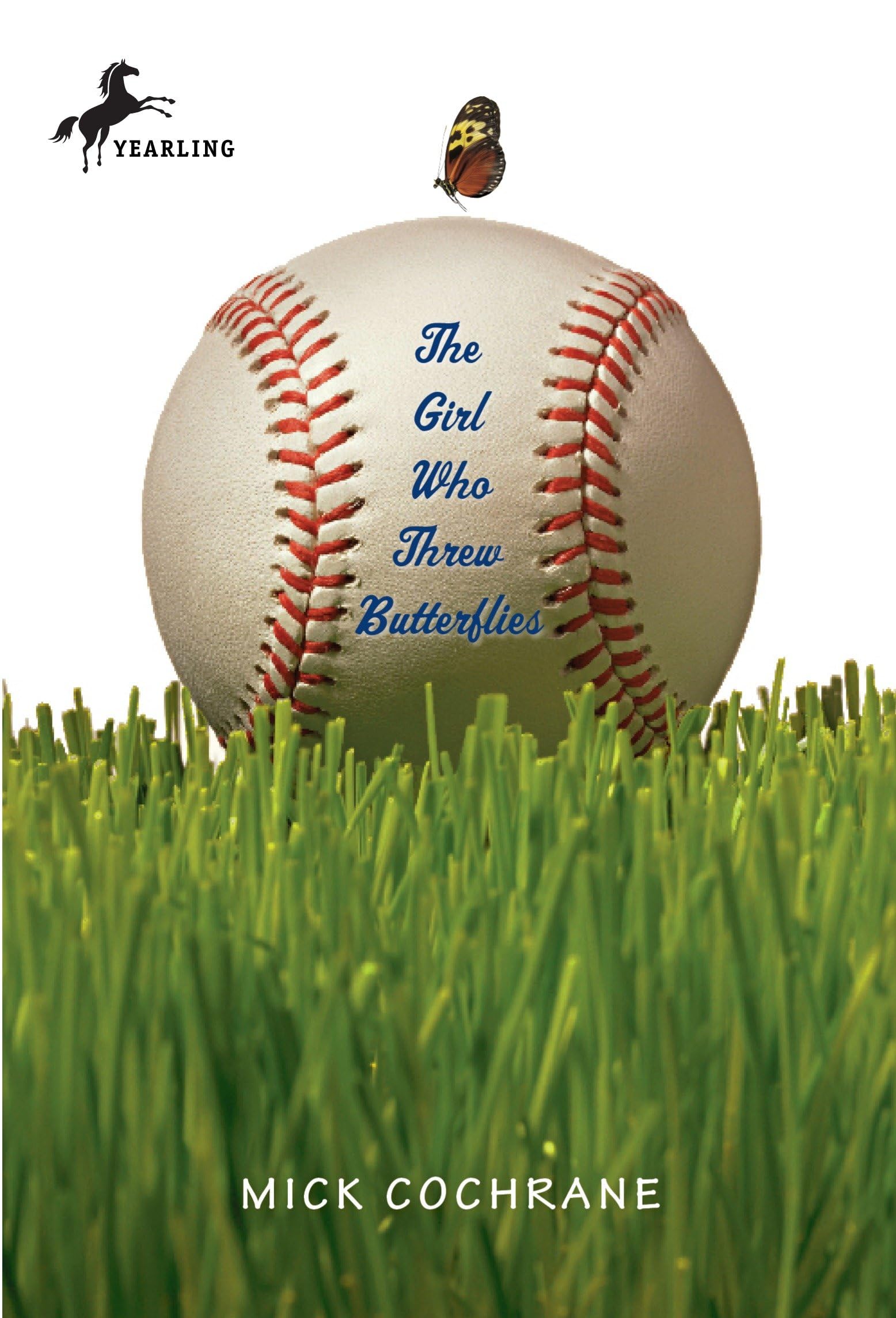



For an eighth grader, Molly Williams has more than her fair share of problems. Her father has just died in a car accident, and her mother has become a withdrawn, quiet version of herself. Molly doesn’t want to be seen as “Miss Difficulty Overcome”; she wants to make herself known to the kids at school for something other than her father’s death. So she decides to join the baseball team. The boys’ baseball team. Her father taught her how to throw a knuckleball, and Molly hopes it’s enough to impress her coaches as well as her new teammates. Over the course of one baseball season, Molly must figure out how to redefine her relationships to things she loves, loved, and might love: her mother; her brilliant best friend, Celia; her father; her enigmatic and artistic teammate, Lonnie; and of course, baseball. Mick Cochrane is a professor of English and the Lowery Writer-in-Residence at Canisius College in Buffalo, New York, where he lives with his wife and two sons. Starred Review, Kirkus Reviews , January 15, 2009: “Impeccable syntax lends authenticity to the rocky road that is middle school, baseball practices and games, and to Molly’s relationships with her peers and with her mother. Lovely and memorable.” Mick Cochrane is the author of two adult novels, Flesh Wounds and Sport . He is a professor of English and Lowery Writer-in-Residence at Canisius College in Buffalo, New York, where he lives with his wife and two sons. 1. A HEARTBREAKING DREAM ABOUT TOAST On Monday, after band rehearsal and intramurals, when Molly got home from school, her mother was sitting at the kitchen table going through the day's mail. It was after six, daylight saving time now, and still light, thank god. Even in Buffalo, the snowiest, grayest place on earth, spring eventually came. Her mother had changed from her work clothes into her white designer sweats, matching pants and top with padded shoulders, which made her look to Molly like a fencer--all she needed was a little red heart. She had cable news playing low on the countertop portable, a bottle of water and a pile of catalogs in front of her. It was what her mother did after work. Her ritual unwinding. She'd page through the glossy daily stack of catalogs one by one, turning the pages mechanically, looking irritated, angry even, fierce lines on her forehead. It seemed mysterious to Molly. Was her mother mad at Eddie Bauer? At Pottery Barn and Talbots? Dissatisfied with L.L.Bean's selection of boots and raingear, with Williams-Sonoma's pots and pans? It didn't make any sense. Her mother occasionally bought stuff, blouses and sweaters usually, always the same color, teal, which was weird enough--how much teal-colored clothing do you need, really? As far as Molly could tell, her mother almost always returned whatever she bought. The UPS guy brought packages, and her mother opened them, unpinned and unfolded and held things up, sometimes tried them on. But then she'd usually just reassemble the packages and readdress them. She drove them around in her car for a few days and eventually dropped them off at the post office. To Molly, it seemed like a lot of work. Why subject yourself to such misery? What was the point? Molly had learned not to interrupt her. Her mother was in some distant, ticked-off, unreachable place--the Planet of Inexplicable Exasperation. Molly put down her backpack and saxophone case, grabbed an apple from the fridge, sat down, and waited. There was nothing that looked like dinner happening anywhere in the kitchen. Why bother cooking for just the two of us? her mother had gotten into the habit of asking. Sometimes, with her dad at work, they used to make dinner together, Molly and her mother. They used to wash and chop vegetables and talk and even joke a little. Molly liked it--it was like their own little cooking show. But no more, not for a long time. That show got canceled. Nowadays they mostly ordered out, subs or Chinese, pizza and wings. Molly missed her dad's cooking. He had only a handful of meals, spaghetti and stir-fry and omelets and meat loaf, that was his rotation, nothing fancy, but always tasty. On television the square-headed security czar seemed to be changing the threat level while baseball scores crawled across the bottom of the screen. The Cubs had beaten the Pirates, 12-1, which pleased Molly, because it would have pleased her father. They were his team. He'd grown up listening to their games on the radio. The Cubs were lovable losers. They hadn't won the World Series for something like a hundred years. No matter. Her dad had always paid attention to the scores, and now, out of habit, Molly couldn't help but do the same. "So how was your day?" her mother asked, her eyes still scanning the Sharper Image catalog in front of her--ionizing air cleaners, massage chairs, turbo-groomers. "Fine," Molly said. Most days this was the right answer. It meant that she had negotiated another day without disaster, steered her little boat th