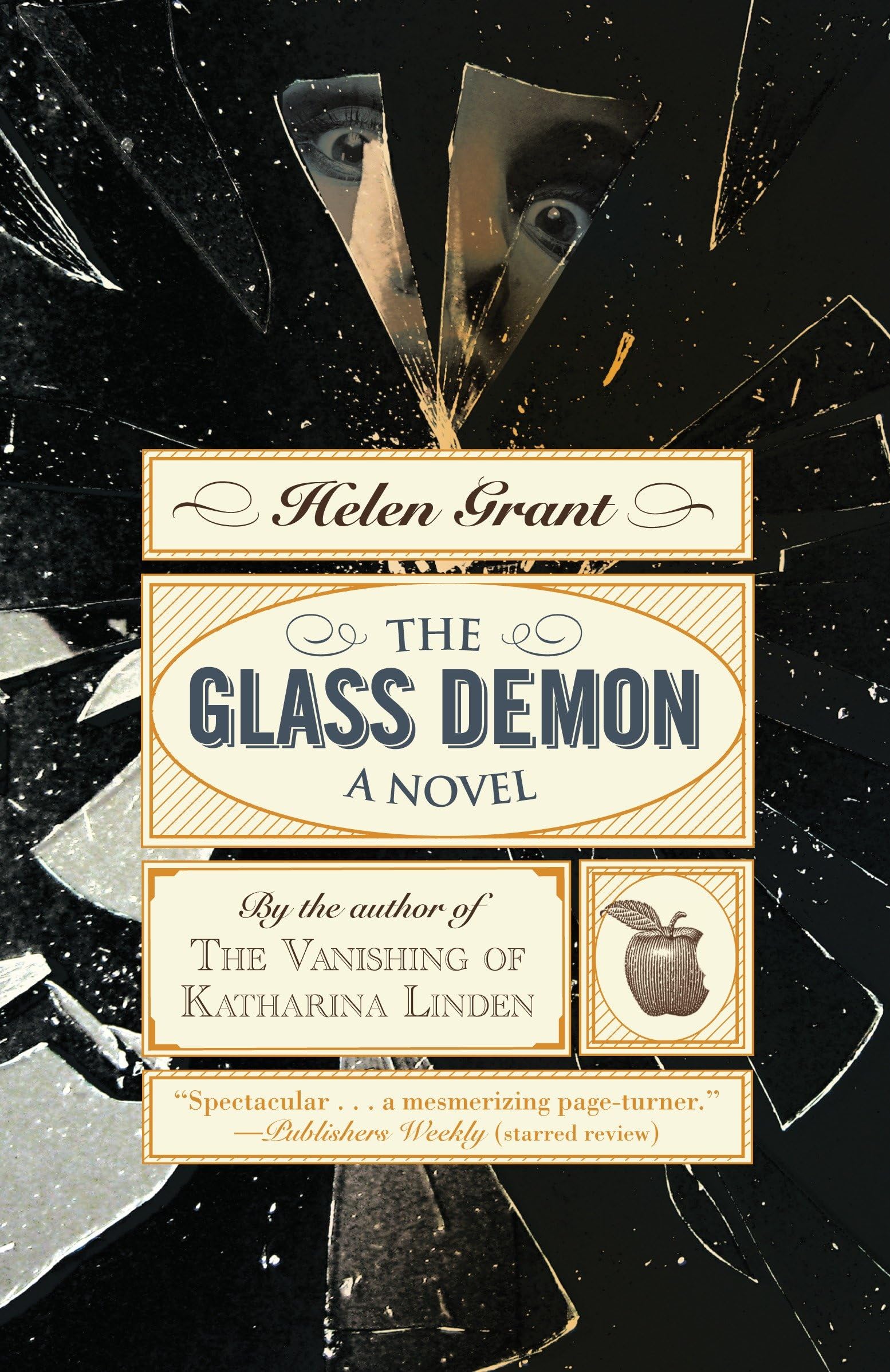



Sometimes the path to the truth is paved with broken glass. Teenager Lin Fox is a stranger in a strange land—Germany, where her father has come on a quixotic quest to locate a priceless artifact. The medieval (and possibly mythical) Allerheiligen stained glass is believed by some to be lost, by others to have been destroyed, and by virtually all to be haunted. A mysterious letter persuades Dr. Oliver Fox that he can be the one to find it—but someone else is determined to ensure that the glass stays hidden forever. First, an elderly stranger is found dead in an orchard, then one of Oliver’s contacts is mysteriously drowned—both bodies inexplicably surrounded by shards of colored glass. As dark superstitions simmer, Lin embarks on her own search to find the glass. As her life comes to resemble the grimmest of fairy tales, she realizes that what she must find is not only the truth about the legendary glass but a way to save the lives of those she loves. Praise for The Glass Demon A spectacular mix of history and horror that expertly draws from numerous genres….Skillfully mixing the strains of a dysfunctional family with the rising terror of the supernatural, Grant has produced a mesmerizing page-turner that brilliant depicts the claustrophobic fear of a young woman grappling with the deadly secrets of the forest and the demonic nightmare lurking within.” —Publishers Weekly (starred review) “Sure to cement her growing reputation as an original storyteller and elegant writer…. Grant expertly builds suspense…. With its fascinating information on medieval folklore,unique setting, and increasingly claustrophobic sense of terror, this is an exhilarating page-turner that offers a cerebral blend of horror and mystery.” —Booklist (starred review) “Page-turning and portentous, mysterious and chilling, this will attract readers who loved Pamela Dean’s Tam Lin and fairy tales and legends in modern settings.” —Library Journal “The Glass Demon is a riveting tale from Helen Grant, who proves she is a master of suspense. From beginning to end, I was kept guessing by this spine-tingling tale that interweaves family relationships, folklore, deadly glass, and dangerous secrets.” —Stefanie Pintoff, Edgar Award-winning author of In the Shadow of Gotham "Skillfully mixing the strains of a dysfunctional family with the rising terror of the supernatural, Grant has produced a mesmerizing page-turner that brilliantly depicts the claustrophobic fear of a young woman grappling with the deadly secrets of the forest and the demonic nightmare lurking within." -Publisher's Weekly, starred review “A gripping and atmospheric adventure.”— The Observer (U.K.) Praise for Helen Grant’s The Vanishing of Katharina Linden, winner of the ALA Alex Award and shortlisted for the Booktrust Teenage Prize and the CILIP Carnegie Medal “Steeped in spooky legends and set in a country that, for all its present-day serenity, can’t fully escape the burden of its harrowing past, this is a mystery with unusual resonance.” —The Washington Post “A contemporary story that feels age-old, too . . . dotted with creepy tales.” —The New York Times Helen Grant is the author of The Glass Demon and The Vanishing of Katharina Linden, winner of the American Library Association Alex Award and shortlisted for the Booktrust Teenage Prize and the CILIP Carnegie Medal. Chapter One If anyone were to ask me, “What is the root of all evil?” I would say not “Money” but “Food.” It was food—specifically the lack of it—that killed my sister, or at least assisted at the death. And the old man that day in the orchard in Niederburgheim was the only person I have ever seen who died of eating an apple. He was lying in the long grass, and all we could see of him at first was a checked shirt and the worn knee of a pair of blue overalls. We all thought he was asleep. “Just nip out of the car and ask that man in the grass,” said Tuesday. “I think he’s asleep,” I said doubtfully. “I’m sure he won’t mind,” she replied in a severe voice. “And shut the door when you get out, will you? It’s windy and I don’t want my hair—” I slammed the car door, cutting her off in mid-sentence, and waded through the tall grass. It was the end of a long, hot summer and the grass was dry and brittle, with a pleasant smell like hay. “Entschuldigen Sie bitte?” I called, peering at the recumbent figure. There was no reply. I could almost feel Tuesday’s impatient gaze pecking at my back. “Entschuldigen Sie bitte?” I repeated, more loudly. For a moment I thought I saw movement, but it was only the wind ruffling the grass. A fat bumblebee buzzed past close to my face and instinctively I put up a hand to ward it off. I took a step closer to the supine figure in the grass. He was a very sound sleeper, whoever he was; perhaps he’d had too much beer with his lunch. I could see part of that lunch lying close to his outstretched hand—a large, rosy-looki