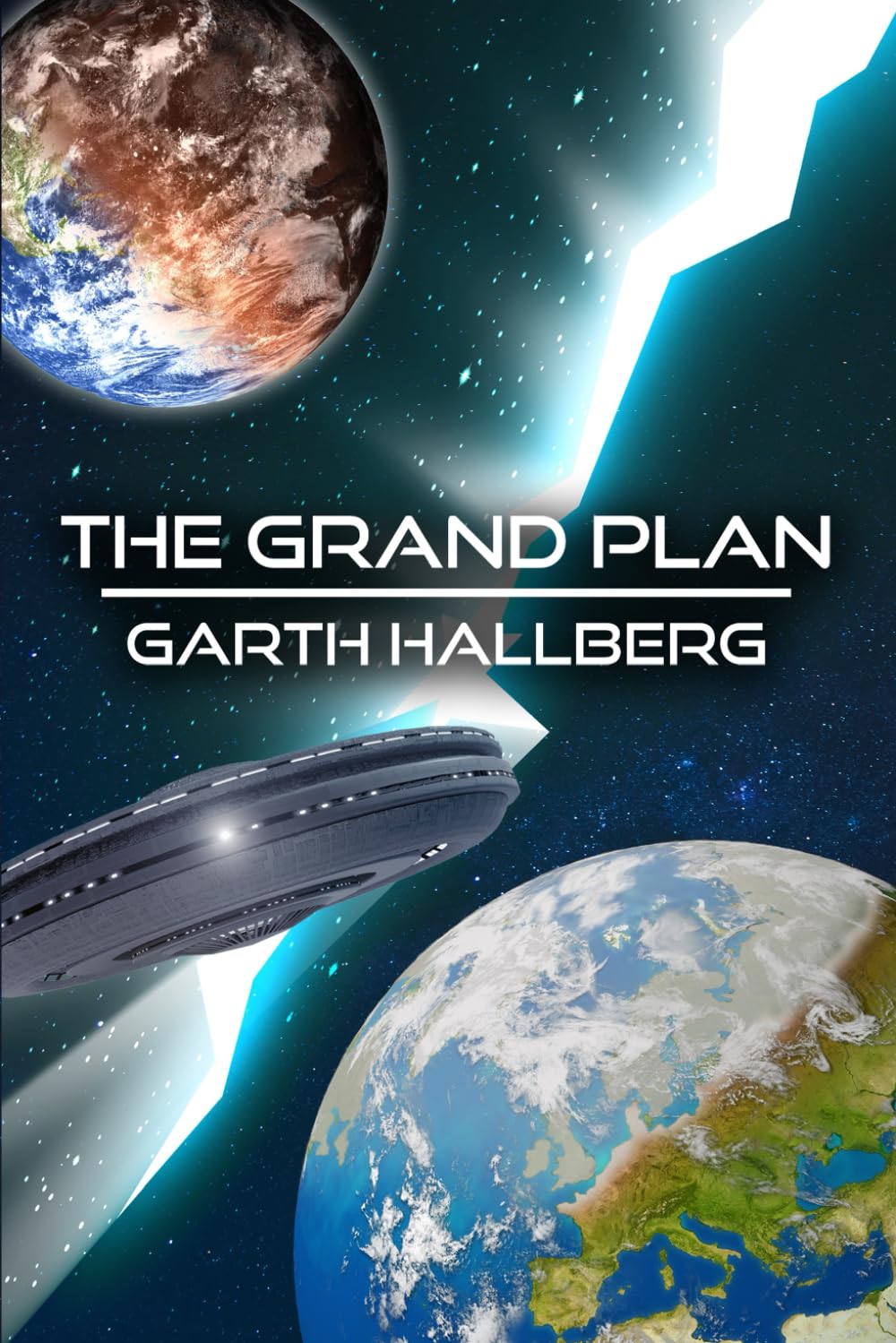



Did civilization come from the stars? Earth is in crisis, suffering from “the Torments,” social and political turmoil brought on by runaway climate change. On board the Abzu, astrogeologist Nick Adamstock and physician Helena Minnahan are speeding through a fold in spacetime to the barren, outermost planet in the solar system. Their mission: to mine the gold desperately needed for artificial photosynthesis to save Earth. But when the spacetime fold fails, the Abzu is marooned in a distant galaxy on an eerily familiar planet, rich with gold but also teeming with Earth-like life based on identical DNA. As they explore their new home, the two scientists stumble upon “the People,” a clan of primitive hunter-gatherers who appear intelligent but seem to lack the mental spark—curiosity, imagination, inventiveness—that makes intelligence truly useful. The exception is Ava, an attractive and exceptionally gifted member of the clan. Nick and Ava soon fall in love, and she persuades the People to help the Abzu crew mine the gold and grow the crops necessary for long-term survival. In return, Helena and Nick, now a family man, introduce the clan to new ideas and tools, and teach them the basic elements of law, economics, and government. Discovering life beyond Earth was astonishing enough, but discovering “life like us” stretches the bounds of credibility and chance. As they watch the People quickly adapt to their new way of life, Nick and Helena speculate that it was no accident that brought them to “New Earth,” but something more far-reaching and consequential. Are they part of a “grand plan” to spread civilization throughout the universe? The Grand Plan is an epic reimagining of the origin story of the birth of civilization on Earth, drawing on the ancient Sumerian legends and poems that predate the Bible by thousands of years and provide the earliest account of a universal flood.