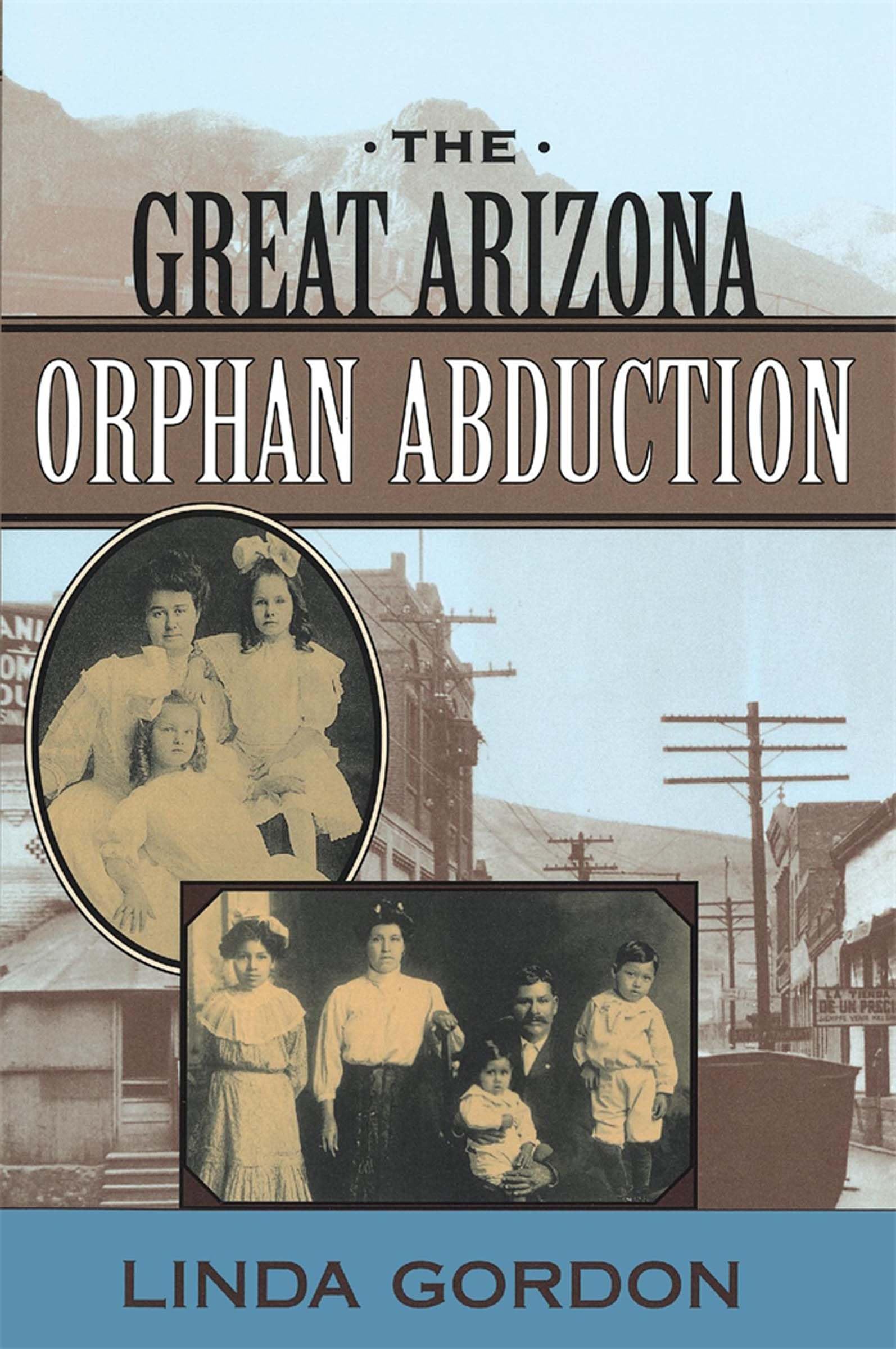



In 1904, New York nuns brought forty Irish orphans to a remote Arizona mining camp, to be placed with Catholic families. The Catholic families were Mexican, as was the majority of the population. Soon the town's Anglos, furious at this "interracial" transgression, formed a vigilante squad that kidnapped the children and nearly lynched the nuns and the local priest. The Catholic Church sued to get its wards back, but all the courts, including the U.S. Supreme Court, ruled in favor of the vigilantes. The Great Arizona Orphan Abduction tells this disturbing and dramatic tale to illuminate the creation of racial boundaries along the Mexican border. Clifton/Morenci, Arizona, was a "wild West" boomtown, where the mines and smelters pulled in thousands of Mexican immigrant workers. Racial walls hardened as the mines became big business and whiteness became a marker of superiority. These already volatile race and class relations produced passions that erupted in the "orphan incident." To the Anglos of Clifton/Morenci, placing a white child with a Mexican family was tantamount to child abuse, and they saw their kidnapping as a rescue. Women initiated both sides of this confrontation. Mexican women agreed to take in these orphans, both serving their church and asserting a maternal prerogative; Anglo women believed they had to "save" the orphans, and they organized a vigilante squad to do it. In retelling this nearly forgotten piece of American history, Linda Gordon brilliantly recreates and dissects the tangled intersection of family and racial values, in a gripping story that resonates with today's conflicts over the "best interests of the child." “In her gripping book, The Great Arizona Orphan Abduction , Linda Gordon has written a model study of the creation and maintenance of race relations that manages to capture both the breathless sensationalism of the era's tabloids and the complexity of social status, shifting racial codes and the multiple uses of sex roles in social action...Gordon divides her story into six scenes, most of them devoted to some portion of the four days when the orphans' arrival engulfed Clifton-Morenci in a near riot followed by a mass kidnapping. Spliced between each scene is the history--long-term and proximate--of the towns' sociocultural landscape. It is an ingenious narrative device that enables her to reconstitute the distinct social structures of the area while rendering a taut journalistic account of the unfolding drama...The magnificence of her achievement [is] her masterly assembly of historical detail and acute sensitivity to the intricacies of human relations as mediated by power, prejudice and the passing of time.” ― Stephen Lassonde , New York Times Book Review “If Gordon's book did nothing more than redeem from obscurity the story of the Arizona orphans, it would be an extraordinary contribution to social history. But Gordon has gone beyond that scanty written record, mainly from the court proceedings, to explore the motives of the Mexican and Anglo women...Gordon's achievement is that she so effectively and fair-mindedly delved into the site and unearthed this appalling and poignant story.” ― Michael Kenney , Boston Globe “This is an unusual and interesting work of history, whose chief strength lies in the way it lovingly recreates the spirit of a particular Arizona community and, through its insistence on micro-historical detail, gives the reader a clear sense of how racial assumptions and antagonisms operated within everyday life.” ― Paul Giles , Times Literary Supplement “A story of racism, vigilantism, and injustice that retains its grim fascination after nearly a century...The sordid but suspenseful story is told against a background that encompasses the mining industry, labor unions and even a waffling U.S. Supreme Court.” ― Parade Magazine “Gordon's extraordinary achievement in this book lies in her narrative strategy as much as in her insights as a social historian: she alternates dramatic short chapters detailing the events in the mining communities of Clifton-Morenci from the first to the fourth of October 1904 with longer, denser ones that reconstruct the conflation of class, gender, racial, religious, and economic interests that initiated the children's journey west from New York City and underlay their distribution by Father Mandin, the local priest.” ― Gay Wachman , Women's Review of Books “Linda Gordon has used [the orphan abduction's] events to explore issues of race, gender, class, economics and theories of the family in a beautifully constructed narrative and analysis of a flashpoint in American domestic history...Gordon uses her multiplicity of sources with great skill, all the time reminding us that some participants in the story have left no record of their experiences, particularly the children's birth mothers, the children themselves, and the Mexican families with whom they were to be placed. She contextualises the event superbly, g