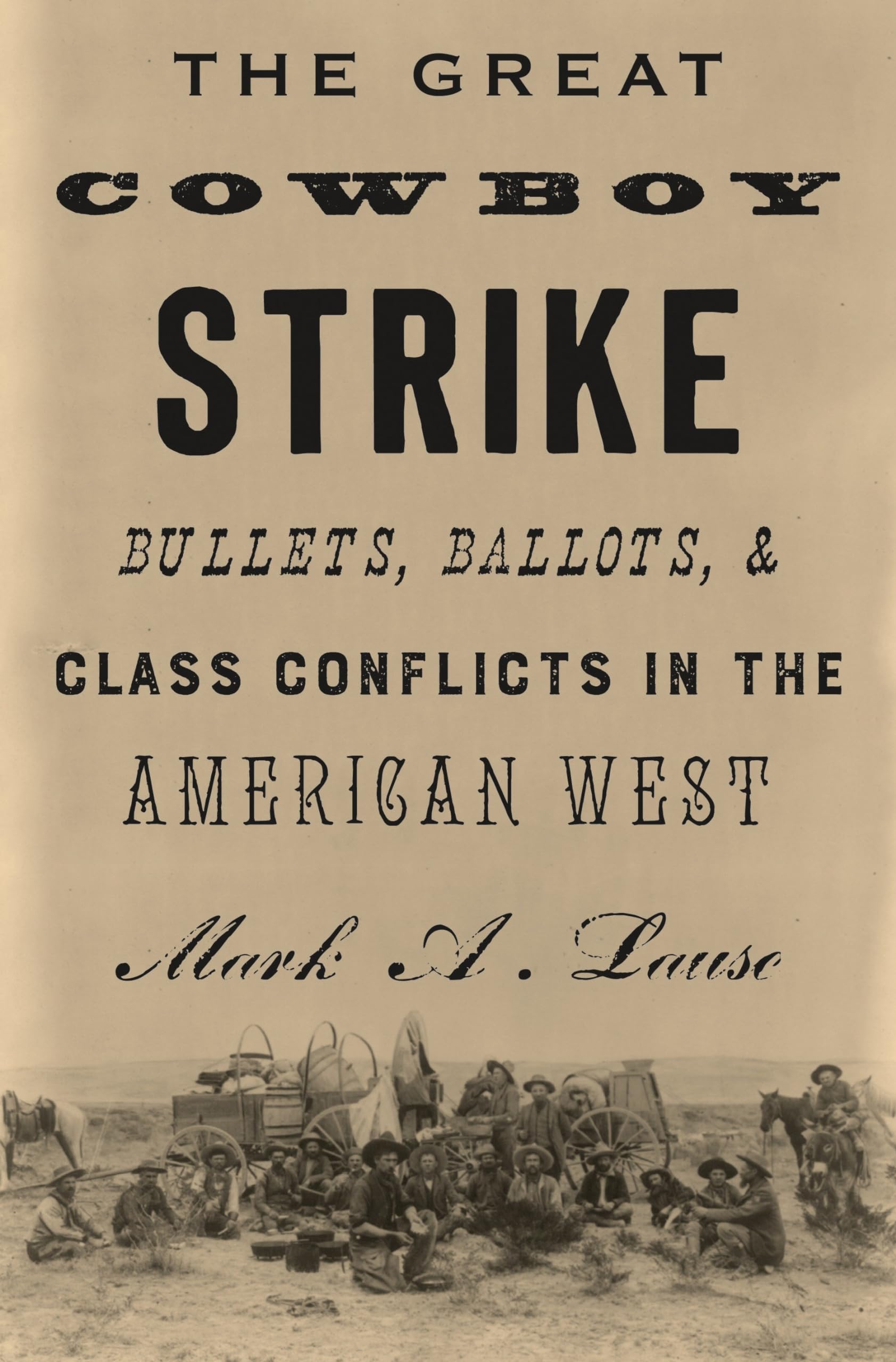
The Great Cowboy Strike: Bullets, Ballots & Class Conflicts in the American West
$29.95
by Mark Lause



When cowboys were workers and battled their bosses In the pantheon of American icons, the cowboy embodies the traits of “rugged individualism,” independent, solitary, and stoical. In reality, cowboys were grossly exploited and underpaid seasonal workers, who responded to the abuses of their employers in a series of militant strikes. Their resistance arose from the rise and demise of a “beef bonanza” that attracted international capital. Business interests approached the market with the expectation that it would have the same freedom to brutally impose its will as it had exercised on native peoples and the recently emancipated African Americans. These assumptions contributed to a series of bitter and violent “range wars,” which broke out from Texas to Montana and framed the appearance of labor conflicts in the region. These social tensions stirred a series of political insurgencies that became virtually endemic to the American West of the Gilded Age. Mark A. Lause explores the relationship between these neglected labor conflicts, the “range wars,” and the third-party movements. The Great Cowboy Strike subverts American mythology to reveal the class abuses and inequalities that have blinded a nation to its true history and nature “Widely ranging across time and space, this engaging history moves gracefully from cowboy work culture, to politics, to The Wizard of Oz . Lause enhances his stature as the US historian most able to connect agrarian radicalism to union organizing. A stirring account of western labor radicalism and its limitsat times in the face of racism and of unity among settlers across class lines.” —David Roediger “Focusing on industrial workers in the Northeast and Chicago, US labor history largely ignores the rural proletariat, leaving the impression that none such existed in the vast expanse of the cattle and agribusiness industries west of the Mississippi. Historian Mark Lause has turned that erasure upside down with this meticulously researched and beautifully written history of the of cattle worker’s militancy and organizing. Although the 1880s cowboy strikes are at the heart of the story, Lause takes the history from the Civil War’s Missouri Confederate guerrillas and ethic-cleansing Texas Rangers and the genocidal campaigns of the Army of the West against the Plains peoples of the bison and the Apaches, into the 20th century and the organized revolt of tenant farmers in Indian Territory in opposition to conscription for World War I, the 1917 Green Corn Rebellion. Both these proletarian actors, cowboys and landless farmers, were made up of not only the white cowboys-as-gunslingers of Hollywood imagination, but Black, Indian, Mexican, and Anglo.” —Roxanne Dunbar-Ortiz “Mark Lause has made a major contribution to Western US history, to areas of working class history little understood, and to the connection of these developments with a drastic change in regional ecology. This book will stand, and suggest much about the current ‘Gilded Age’ that will be vital to understand today.” —Paul Buhle “Lause’s book roams a West that sounds suspiciously familiar as corporations use any means to strengthen their positions at all costs. And it stops to tell other surprising stories—about, for example, the Industrial Brotherhood, an interracial labour movement that originated in Missouri and ran some of the first integrated schools, or vigilante groups like Stuart’s Stranglers, who were hired to hunt for strike-leading cowboys and other troublemakers.” —Maclean’s “With his tale of the Great Cowboy Strikes of the mid-1880s, Mark Lause sweeps the dust off of the historical record and introduces us to the ordinary men—Jack Flagg, Tom Harris, and Broncho John Sullivan—who drove cattle to northern rail heads, boldly demanded a living wage, and sought, without success, to sustain organizations that might challenge increasingly concentrated and violent corporate control of the West. Lause also lends a fresh perspective to the stories of more familiar characters and events, such as Billy the Kid, Henry George, and the Coffyville, Kansas, bombing. He has an eye for detail, which not only give depth to the people and events he describes but also explode the mythology about the West.” —Theresa Ann Case, author of The Great Southwest Railroad Strike and Free Labor “In the fictional world of America’s favorite rugged individualist, the cowboy exists in a place out of time, unconnected to his real world, late nineteenth-century Gilded Age America. But, cowboying as an occupation was as much a result of industrialization as factory or railroad work. This book pointedly connects the economic and political struggles of the new urban industrial working class to that of the brutally exploited seasonal agricultural workers known as cowboys. While they were indeed overworked and underpaid, as demonstrated in this fine work, cowboys were no fools. They saw the staggering gap between the fortu