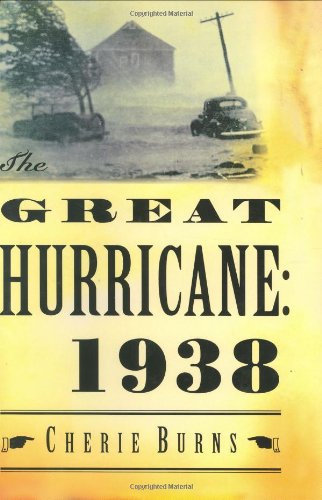



On the night of September 20, 1938, the news on the radio was full of Hitler's pending invasion of Czechoslovakia. Severe weather wasn't mentioned; only light rain was forecast for the following day. In a matter of hours, however, a hurricane of unprecedented force would tear through one of the wealthiest and most populated stretches of coastline in America, obliterating communities from Long Island to Providence, destroying entire fishing fleets from Montauk to Narragansett Bay, and leaving seven hundred people dead. They never knew what hit them. Early that morning, several fishermen heading out on calm seas noticed a sudden drop in the barometer and decided to turn back. Hurtling toward them at the unheard-of speed of 67 miles per hour was a fierce storm. It struck Long Island first with the tide at an all-time high under a full, equinox moon. The sea rose out of its shores like a demon, with waves riding a surge of fifty feet that hit the earth so hard they were registered by a seismograph in Alaska. Winds whipped up to 186 miles per hour, trashing boats and smashing homes from West Hampton to Connecticut and Rhode Island. Using Newspaper reports, survivor testimony, and archival sources, Cherie Burns reconstructs this harrowing day and the amazing tales of heroism, survival, and loss that occurred: The Moore family, from Napatree Point, were swept out to sea huddled on a raft that was formerly their attic floor. Young Adam Nickerson was trapped on a northbound train to school, water rushing in and the trestle buckling underneath. Providence's urbanites stared in disbelieve as their city's swelling river drowned rush-hour commuters. Burns investigates one of the deadliest natural disasters in New England's history. Although pipped at the post by R. A. Scotti's Sudden Storm: The Great Hurricane of 1938 (2003), Burns' rendition is solid and will engage the imaginations of those who wonder, as she posits, "What would I have done?" In September 1938, nothing in the sky seemed unduly threatening to the late-summer vacationers and fishermen of eastern Long Island and Rhode Island, and the weather service did nothing to disabuse them of that notion. Establishing background by recounting people's livelihoods in the Depression and their immediate activities on the day of the disaster, such as travel plans, a wedding ceremony, or work at the Providence Journal , Burns follows several survivors through the ordeal. The clouds gather, the winds increase, the tide rises, and the terrible realization comes that no escape is possible. Integrating data of the storm's force and the coastal topography that intensified its devastation, Burns perceptively distills the experience of a tragedy that swept away some 700 lives. Gilbert Taylor Copyright © American Library Association. All rights reserved The Great Hurricane 1938 By Cherie Burns Atlantic Monthly Press Copyright © 2005 Cherie Burns All right reserved. ISBN: 9780871138934 Chapter One Milt Miller was awake by five. Like the whalers and fishermen in his family before him, he'd always been an early riser. He'd started fishing, he liked to say around Montauk, as soon as he could walk. Now that fishing was good, he often stayed on board the boat overnight to make the most of each day. His wife of three years was used to that, and he was making over two hundred dollars a month, which made it easier. When he came up on deck of the 110-foot dragger, the dawn sky was hazy but unremarkable. The sea was flat calm. There had been stars in a clear sky the night before when he turned in after he and the rest of the five-man crew had iced and shipped a boatload of cod and porgies west to New York City. Fish was bringing in ten cents a pound. Life, for a twenty-five-year-old man conditioned by the Depression, was pretty good. But as he moved slowly into the day, preparing to take the boat out and pick up a net they'd left the night before on Gardiners Island, an eighty-year-old fisherman on the dock called out, "If you're going to go, you'd better get over there and get back. I've never seen the barometer so low." Milt took note. He knew the old-timer had what fishermen called a "weather eye," a squint that could tell what the weather was going to be better than any other kind of forecast. Montauk Point, at the end of Long Island, thrusts east toward the dawn while the rest of America is still in darkness. To the northwest lay Long Island Sound, and just over the horizon were the sleeping coasts of Connecticut and Rhode Island. East toward the sun was the Atlantic. Tidal waters swirled around the point, into the sound, and back again, carrying schools of bait and the larger fish that fed on it. There was money to be pulled from the gray waters off Montauk. Milt pulled away from the dock at the Promised Land fish factory and eased the boat across mirror-flat waters toward the sound. It had been nearly 2:00 A.M. when he finally moored the boat and