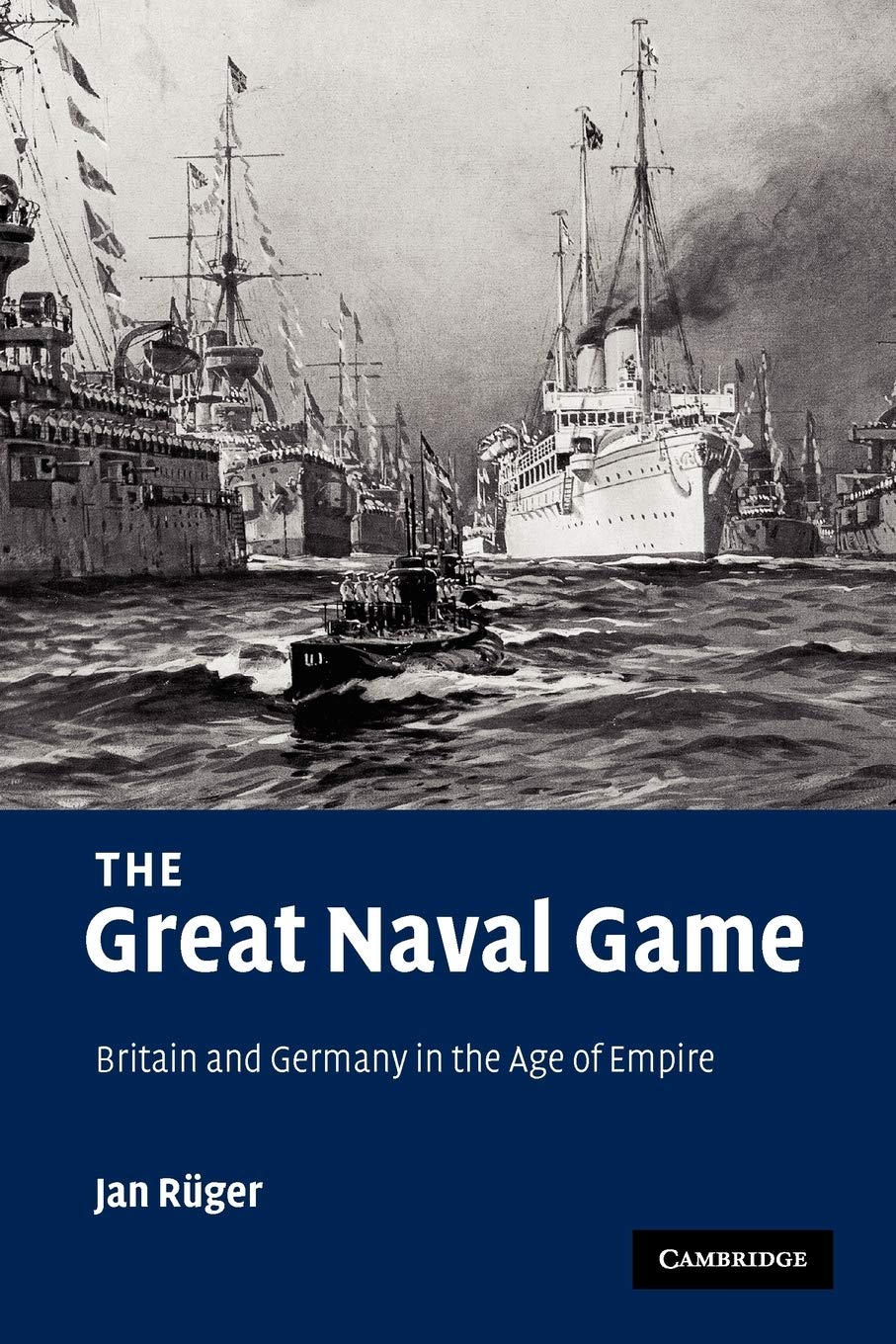



This book is about the theatre of power and identity that unfolded in and between Britain and Germany in the decades before the First World War. It explores what contemporaries described as the cult of the navy: the many ways in which the navy and the sea were celebrated in the fleet reviews, naval visits and ship launches that were watched by hundreds of thousands of spectators. At once royal rituals and national entertainments, these were events at which tradition, power and claims to the sea were played out between the nations. This was a public stage on which the domestic and the foreign intersected and where the modern mass market of media and consumerism collided with politics and international relations. Conflict and identity were literally acted out between the two countries. By focusing on this dynamic arena, Jan Rüger offers a fascinating new history of the Anglo-German antagonism. "Rüger...is skillful in bringing out the navalism and the competition between Britain and Germany." -Jeremy Black, H-Albion "Rüger's fine monograph demonstrates that naval theater was a significan cultural and social dynamic, and as such an important aspect of the Anglo-German naval rivalry." -Jon Sumida, Journal of Modern History "It will constitute required reading for specialists of early twentieth-century history as well as comparative European cultural history, and for scholars interested in research on the origins of the First World War, from both the British and German angles. It should, of course, be in all university libraries." -Antoine Capet, H-Albion "...a great read, a rare quality in research monographs." -Kenneth E. Hendrickson, The Historian "Students of German or British nationalism, imperialism, militarism, and consumerism will not want to miss this book." -Christopher A. Molnar, H-German 'With the publication of The Great Naval Game, Jan Rüger makes an original contribution both to cultural history and naval history. But, it is much more than that. … Throughout the process, he repeatedly challenges various historiographical assumptions … In each chapter, Rüger utilizes a variety of sources to tell an articulate story and make a compelling argument.' -German Studies Review "Jan Rüger has written a wonderful book that brings together military, cultural, and comparative history in an exemplary manner. His study offers a new, highly original perspective on the flourishing of the Anglo-German antagonism before the First World War." -Dirk Bonker, Journal of British Studies "A path-breaking study … striking and original … The writing is elegant, and the research impressive." -International History Review "Researched with admirable depth and intensity … should be widely read and discussed." -Journal of Military History "Students of German or British nationalism, imperialism, militarism, and consumerism will not want to miss this book." -H-net "Incisively written, a compelling analysis." -Mariner’s Mirror "This is an important book that can rightly claim to have examined the Anglo-German antagonism during the pre-1914 period from a new perspective." -Central European History An innovative study of the cult of the navy in the age of empire. Jan Rüger teaches history at Birkbeck College, University of London. In 2002-3, he was a visiting fellow at the Yale Center for International and Area Studies, Yale University.